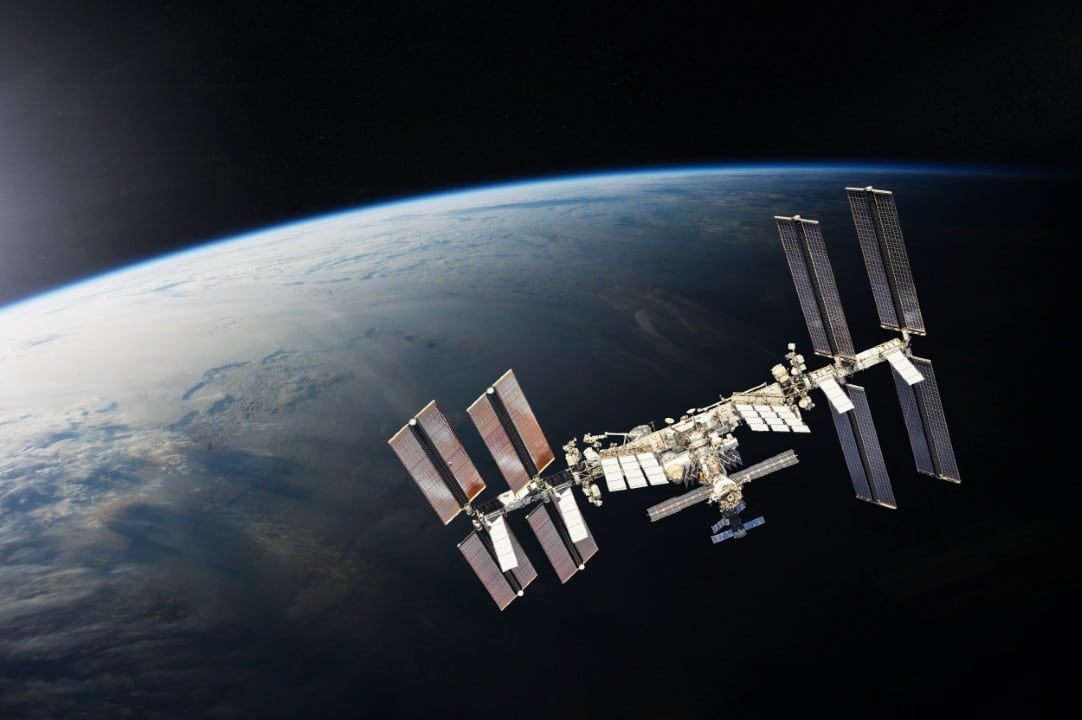
The crew aboard the active orbital laboratory recently recorded a sequence of night photographs of the Indian territory from low Earth orbit. The captures document the subcontinent illuminated by its vast network of urban infrastructure, highlighting the population density as the spatial structure flew over the Mar Arábico region towards the Himalaia mountain range. The photographic material exposes the contrast between the densely populated metropolitan areas and the darker rural areas of the Asian country.
Light mapping of Asian territory
The visual record makes it possible to identify the main highways and logistical connections that unite Indian metropolises. The distribution of artificial lighting works as a real-time demographic map, indicating where most economic and residential activity is concentrated.
The country’s geographic borders and extensive coastline become perfectly delineated by the contrast between the darkness of the ocean and the brightness of the coastal cities. Aglomerados specific urban areas form nuclei of high luminous intensity that stand out in the photographic record.
In addition to large capitals, the sensitivity of the equipment on board was able to capture the presence of thousands of smaller communities and villages. Essa capillarity of the electrical grid demonstrates the expansion of energy infrastructure across vast areas of the national territory.
Orbital capture equipment and techniques
Nighttime recordings require the use of high-performance digital cameras, operated manually by crew members. The equipment receives specific lenses and is configured to deal with the extreme speed of displacement of the space platform.
The fundamental technique applied in these photographs is the long exposure of the photographic sensor. Este method allows the lens to remain open for additional fractions of a second, absorbing the maximum amount of photons emitted by artificial sources on the planet’s surface.
To prevent images from becoming blurred due to orbital movement, astronauts use mechanical tracking systems or manually compensate for displacement. Technical precision is essential to guarantee the clarity of urban roads and geographical contours.
The result of this photographic process reveals not only visible light, but also subtle atmospheric details. Formações of clouds and variations in land relief, such as mountains and deep valleys, appear as dark silhouettes that partially block the lighting of underlying cities.
Public repercussion and digital engagement
The publication of the photographic material generated immediate mobilization on digital platforms, attracting the attention of astronomy enthusiasts and Indian citizens. The public began to analyze the images looking for familiar landmarks, trying to identify their hometowns and specific regions through the lighting pattern. The clarity with which the outline of the subcontinent was recorded has become the main point of discussion among independent observers who follow the space mission updates.
The engagement around the photographs demonstrates civil society’s continued interest in activities carried out in low Earth orbit. Especialistas in cartography and ordinary users have debated the accuracy of urban lights in representing the current population density of the Asian nation. The visual contrast between the predominantly dark northern mountainous areas and the brightly lit central plains served as the basis for discussions about regional development and the distribution of energy resources.
Research laboratory orbital parameters
The scientific platform responsible for these captures operates at an altitude that constantly varies between 370 and 460 kilometers above sea level, moving at an approximate speed of 28,000 kilometers per hour. Devido at this extreme orbital speed, the structure completes an entire lap around the planet every 90 minutes, which gives the crew the experience of witnessing around 16 sunrises and sunsets every 24-hour period. Essa continuous and fast trajectory allows observation equipment to scan different bands of the globe in short time intervals, facilitating the monitoring of dynamic weather phenomena, the evolution of tropical storms and the capture of high-resolution nighttime images of practically any inhabited land mass. Maintaining this orbit requires periodic altitude corrections, carried out by activating the thrusters of coupled cargo ships, ensuring that the laboratory does not lose height due to the residual atmospheric drag present in this region of space.
Scientific applications of terrestrial monitoring
Night photographs transcend the visual aspect and constitute a fundamental database for several areas of scientific research. Continuous monitoring of artificial lighting helps researchers understand global dynamics.
Research institutions use this photographic collection to analyze environmental and socioeconomic variables on a planetary scale. The main focuses of study based on these captures include:
– Mapeamento of the expansion of urban areas over the decades.
– Avaliação of energy efficiency and waste of artificial light.
– Estudo of the effects of light pollution on nighttime ecosystems.
– Monitoramento infrastructure recovery after natural disasters.
– Correlação between light intensity and regional economic activity.
Multinational cooperation structure
The orbital complex represents the largest joint effort in the history of space exploration, involving direct collaboration between government agencies from 15 countries. Desde the launch of its first module in the late 1990s, the facility has operated uninterruptedly, maintaining a constant human presence outside the Earth’s atmosphere and serving as a model of international science diplomacy.
Complexity of space engineering
The physical size of the orbital installation is often compared to the length of a professional football field, making it the largest structure ever assembled by humanity in space. Sua total mass exceeds 400 tons, distributed between gigantic solar panels, thermal control radiators and habitable pressurized modules.
Construction of this outpost required dozens of space shuttle flights and heavy-lift rockets over more than a decade. Cada component was designed to fit with millimeter precision in the vacuum of space, withstanding extreme temperature variations and the constant bombardment of micrometeorites and cosmic radiation.
Continuing Advances in Microgravity
The microgravity environment offered by the facility allows experiments to be carried out that would be physically impossible to carry out on the Earth’s surface. Pesquisadores focus on the development of new materials, protein crystallization for the pharmaceutical industry and studies on the behavior of fluids. The data collected in these surveys has direct applications in improving industrial processes and medical treatments available to the general population.
Simultaneously, the platform acts as a rigorous testing ground for life support systems and resource recycling technologies. Detailed understanding of how the human body adapts to long periods of isolation and weightlessness is the main biomedical objective of the current mission. Essas biological and technological information forms the knowledge base necessary to enable future manned expeditions into deep space and other celestial bodies in the solar system.
