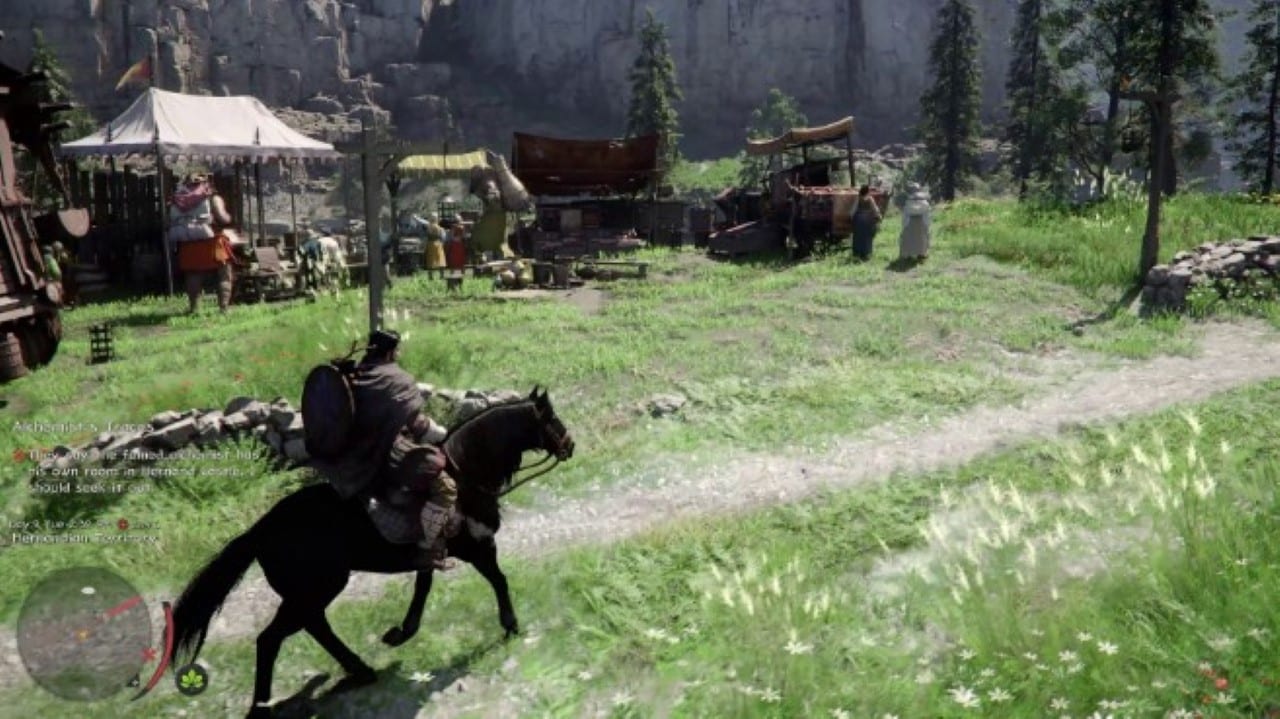
The first hands-on demo of Pearl Abyss’s highly anticipated action RPG running on Sony’s latest hardware has brought definitive answers to the gaming community. Especialistas in technical hardware and software analysis evaluated the title’s performance, highlighting a level of graphical fidelity that takes full advantage of the console’s updated processing capacity. The released material ends months of speculation about how the developer’s proprietary graphics engine would behave outside of high-performance computers.
Anticipation surrounding game optimization was high, driven by previous presentations that focused only on theoretical resolutions and static display modes. The public demanded a real sample of how the open world works, with camera movement, accelerated combat and texture loading in real time. The new technical assessment filled this information gap, offering a clear overview of the fluidity of the adventure.
The gameplay section analyzed demonstrates that the transition to the most robust tabletop platform on the market occurred efficiently. Rigorous frame rate and image stability tests indicate that the project can establish itself as a visual benchmark for the current generation of video games, delivering an immersive experience for technology enthusiasts.
Visual and processing advances on new Sony hardware
The Sony’s enhanced console was specifically designed to eliminate the need to choose between performance modes and graphics quality modes, a common dilemma on current generation base devices. The internal architecture features a significantly larger graphics processing unit and faster memories, allowing dense virtual worlds to be rendered with greater ease. Technical analysis confirmed that the Pearl Abyss title utilizes these hardware advantages to maintain a high pixel count, even during chaotic action sequences with multiple enemies simultaneously on screen.
In addition to brute force, the implementation of artificial intelligence-based image reconstruction technologies plays a key role in the game’s visual presentation. The device’s native upscaling system works in conjunction with the graphics engine to fill in details in distant objects and smooth out jagged edges, resulting in a sharp image on high-resolution televisions. Essa synergy between the game code and the operating system tools ensures that performance remains stable without sacrificing the geometric complexity of the scenarios.
Technical details about ray tracing and lighting
One of the central points of the technical evaluation was the application of ray tracing to all display modes available on the device. Essa technology simulates the physical behavior of light, calculating reflections, refractions and shadows realistically in real time.
The execution of this lighting system was classified as highly efficient, ensuring that internal and external environments present a transition of natural luminosity. Existe just a small technical caveat related to noise reduction in areas of very high contrast, where light interacts with very dark surfaces.
Despite this minor detail, the implementation vastly surpasses what has been seen in other recent big-budget releases, which often suffer from unwanted visual artifacts. The polish achieved avoids the annoying grainy visual effect, maintaining the integrity of the image during map exploration.
Global lighting completely transforms the atmosphere of the open world, altering the depth perception of forests, mountains and villages as the day and night cycle progresses within the game universe.
Texture mapping and realism of virtual scenes
The level of detail of virtual surfaces received special attention during hardware stress tests. Texture mapping has been described as a significant advancement for the simulation of organic and inorganic materials within a three-dimensional interactive environment.
Ordinary elements of the scene, such as the moss on the rocks, the roughness of the tree bark and the irregularity of the muddy terrain, present an impressive visual volume. Essa rendering technique makes objects appear to have real geometry, rather than just being digitally painted flat surfaces.
The wealth of details contributes directly to the player’s immersion, transforming a simple walk around the map into an experience of visual contemplation, where each region of the virtual continent has unique and tangible geological characteristics.
The developer’s history in creating digital universes
The ability to deliver a product with such technical expertise is directly linked to the South Korean developer’s history in creating massive digital ecosystems. The company gained global notoriety with its flagship multiplayer title, which was already recognized for pushing the graphical limits of computers at the time of its release. The studio has always used an in-house built graphics engine specifically designed to handle thousands of simultaneous players on a continuous map. By pivoting this open-world rendering expertise to a single-player focused experience, the development dynamic changed drastically. The programming team managed to allocate all processing resources exclusively to detailing the protagonist, enemies and the immediate environment. Sem the constant need to calculate network latency and the unpredictable actions of other users in real time, the studio gained unprecedented creative freedom. Essa slack in processing allowed the implementation of much more complex artificial intelligence routines for the non-playable characters that inhabit the cities and roads. Physics systems have also received substantial improvements, ensuring accurate collisions and realistic reactions during intense melee combat. The practical result of this transition of focus is an extremely dense universe, where interaction with the scenery occurs in a totally organic and believable way. From the destruction of small wooden structures during battles to the physical reaction of undergrowth to the passage of wind, the title consolidates years of technological research into a single interactive entertainment package.
Scheduled launch and availability on platforms
The official schedule establishes March 19th as the title’s arrival date on physical shelves and digital stores. The launch will take place simultaneously for the Sony desktop consoles, the Xbox Series X|S line devices and also for personal computers.
Confirmation of the high technical quality of the most powerful platform on the current market generates widespread optimism about the state of polish of the source code. The expectation is that software engineering teams will be able to scale performance appropriately to ensure fluid gameplay even on less powerful hardware.
Initial reception of the electronic games market
Public validation by technology experts acts as a strong catalyst for consumer interest. In a market where performance problems on launch day have become frequent, certificates of technical stability directly boost pre-sale campaigns and investors’ confidence in the commercial success of the project.
Quality standards for future open world titles
The level of graphic quality and fluidity demonstrated in this technical evaluation sets a new standard for the open-world adventure genre. Competing studios will have to closely observe the rendering solutions applied in this project to remain competitive.
The combination of a highly customized graphics engine with the cutting-edge hardware available in living rooms proves that the current generation of video games still has vast scope for visual evolution, promising years of interactive experiences increasingly closer to photorealism.
