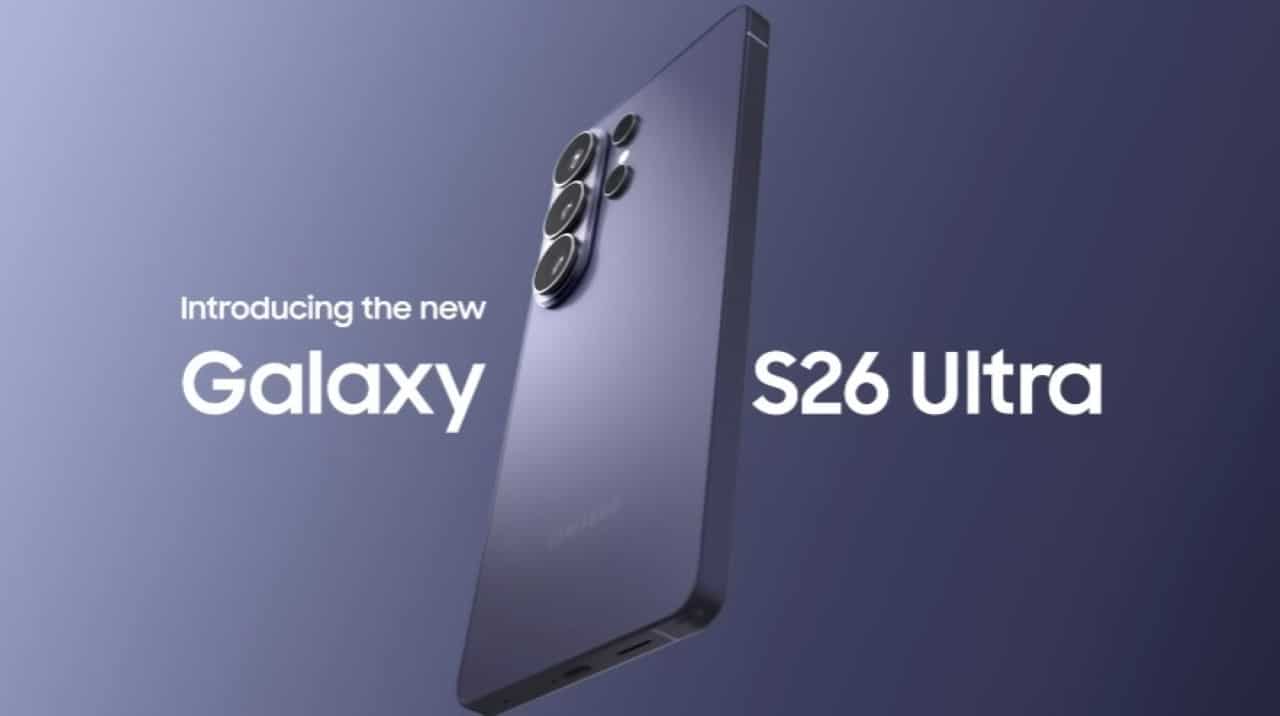
The South Korean manufacturer responsible for the Galaxy S26 Ultra line has released a technical document about the new screen protection system integrated into the device. The feature natively restricts the lateral visibility of the bright display. The measure aims to increase the security of confidential information accessed in public environments with high circulation.
The system works as a directional filter built directly into the smartphone’s hardware, without the need for external components. Essa engineering allows only the person positioned exactly in front of the display to be able to read texts or view images clearly. The interface returns to the normal panoramic light emitting state when the function is disabled by the owner in the settings.
The official documentation highlights that the tool does not guarantee absolute invisibility against external observers, despite advances in display engineering. The efficiency of the visual barrier depends on external lighting conditions and manual adjustments of the device. The user needs to understand the physical functioning of the technology to avoid accidentally exposing bank details or corporate passwords.
Evolution of physical security on mobile devices
The implementation of directional filters in the pixel matrix represents a leap in portable equipment engineering. The technology eliminates the need for dark films that often impaired image quality and touch sensitivity. The development reflects a change in the behavior of modern society, which carries out high-value financial transactions exclusively via cell phone.
The semiconductor and display industry invests in continuous research to refine liquid crystals and light-emitting diodes. The main objective is to create panels that can switch between open and closed viewing angles fluidly. Essa transition must occur without loss of color fidelity or drop in frame refresh rate during navigation.
Hardware-based security becomes as fundamental as software encryption in today’s operating systems. The information protection ecosystem begins on the physical surface of the device itself, blocking visual interception. The light barrier acts even before the data reaches the device’s main processor or is transmitted over the network.
Optical side locking mechanism
The panel’s architecture utilizes an advanced polarization layer that alters the dispersion of photons from individual pixels. Optical engineering creates a restricted cone of vision, blocking light traveling at oblique angles. The brightness is directed straight, darkening the screen for those who observe the equipment from side positions.
The mechanism combats the practice of shoulder spying, common in subway cars, airports and food courts. The device creates a visual exclusion zone around the main user by limiting the lateral spread of light. Capturing information from distant security cameras or people sitting in adjacent seats becomes significantly more difficult.
Light factors that change the effectiveness of the resource
Optical physics dictates that no current screen barrier can block all light in all imaginable scenarios. The functioning of the visual block is directly proportional to the brightness level configured at the time of use. Telas operating at maximum light emission capacity generates an intensity that escapes the restriction cone designed by the engineers.
High-contrast elements, such as black text on white backgrounds or colored logos, become partially readable outside of the ideal angle. The lighting of the external environment also acts as a determining factor in data hiding performance. The contrast generated by the panel draws attention in excessively dark places, making it easier for others to perceive shapes.
The system needs to automatically increase brightness in direct sunlight to maintain readability for the device owner. Essa luminous elevation compromises the lateral privacy barrier established by the screen engineering, allowing light to leak. The interaction between light and the environment requires constant attention from those who use the resource at different times of the day.
Reflective surfaces close to the user, such as glass windows on public transport or mirrors, bounce the directed light. Esse reflection reveals the screen content indirectly to whoever is positioned behind the smartphone owner. Spatial perception of the environment is a mandatory requirement for the proper functioning of the visual protection tool.
Technical recommendations for use in public places
The main technical guideline to ensure safety when navigating in open spaces is to keep the smartphone positioned parallel to the face. Qualquer Excessive tilting of the wrist to the sides or upwards breaks the cone of vision protected by the polarization layer. Essa movement unintentionally exposes the content to people around it, defeating the purpose of the directional filter. The physical distance between the device and potential observers makes up the information security equation. Manter the device closer to the eyes reduces the angle required for external viewing.
Manually adjusting brightness is an essential measure recommended for anyone accessing financial applications or confidential documents in high-traffic areas. Reducing brightness to the minimum level comfortable for reading strengthens the lateral opacity generated by the display technology. The practice also saves the device’s battery charge, optimizing the energy consumption of the light panel. The adoption of advanced visual restriction technologies requires a learning curve on the part of consumers, who need to understand the physical limits of their devices in different lighting environments.
Interference from external films and accessories
The use of third-party protective films interferes with the refraction of light projected by the original smartphone panel. Adding extra layers of tempered glass or plastic over the display spreads the light unevenly. Esse optical deviation cancels out part of the engineering effort applied to the factory filter, drastically reducing the efficiency of side blocking.
System limitations in high circulation environments
The physical proximity of other people nullifies the advantage of angle restriction in extreme crowding scenarios, such as large events or crowded public transport. The technology cannot differentiate who is authorized to read the screen and who is an intruder when an observer is positioned on almost the same visual axis as the owner, looking over their shoulder just inches away.
The physical barrier becomes ineffective in these specific situations of spatial confinement, and data protection becomes dependent on the user’s preventive behavior. The hardware system acts as a damage reducer, but does not replace the need to lock the phone immediately when noticing close eyes or suspicious movements around the device while entering passwords.
Integration between hardware and software in the new generation
The deep integration between the physical components and the operating system allows the privacy barrier to be activated instantly through quick settings in the main menu. The smartphone’s image processor dynamically adjusts color rendering and contrast level to compensate for the loss of natural brightness that occurs when the directional filter is on. Esse real-time processing maintains image quality for those in the center of vision, preventing the screen from appearing too dark for the owner. Engenheiros of display focused on miniaturizing these security layers so as not to compromise the thickness of the device or the touch sensitivity on the glass screen. The result achieved in this generation of mobile devices is an internal component that is imperceptible to human touch, but that drastically changes the physics of the display’s light emission when activated by system commands, establishing a new standard for panel manufacturing in the technology industry.
