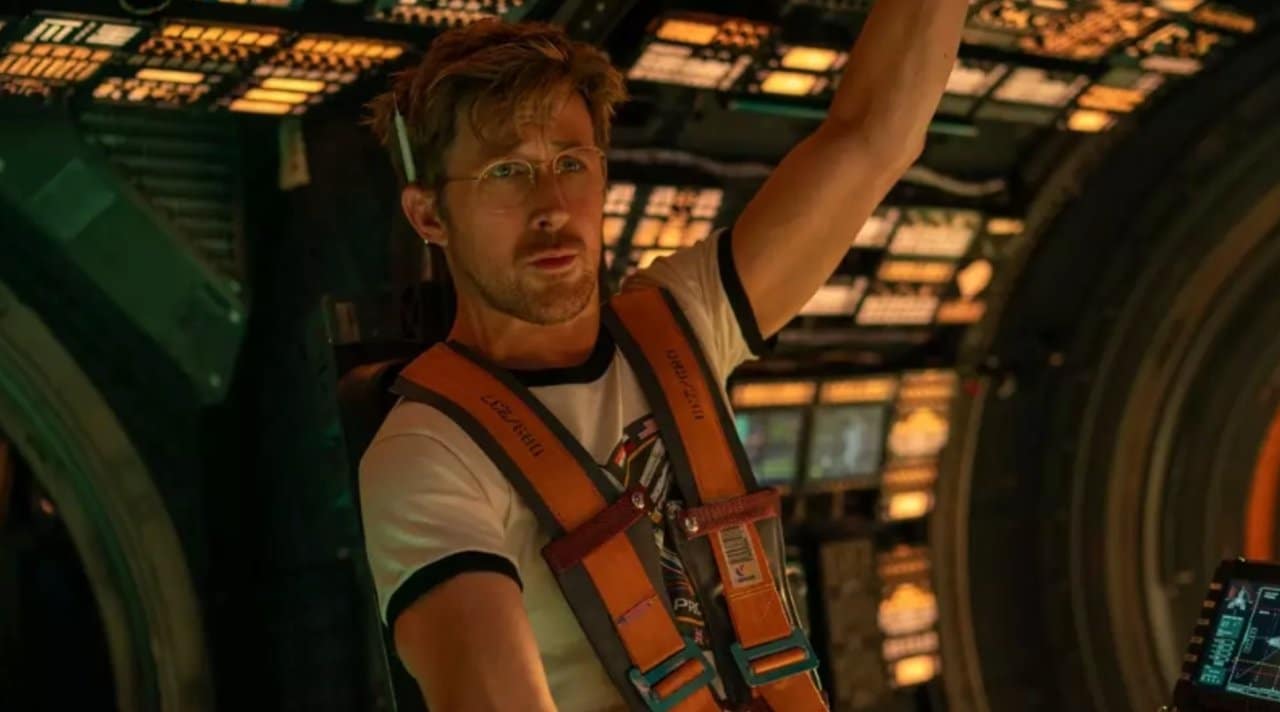
The film industry is preparing the launch of a new science fiction superproduction that adapts a recent literary success. The feature film focuses on a critical space mission motivated by an astronomical event that threatens the continuity of life on the planet. The work hits Brazilian cinemas on March 19th, featuring well-known names from Hollywood in the main roles and on the technical team.
The plot follows the trajectory of an elementary school science teacher who suddenly finds himself at the center of a global survival operation. The narrative mixes elements of theoretical physics, biology and astrophysics with the urgency of a climate crisis on a planetary scale. Especialistas point out that the production maintains a high level of scientific precision in its dialogues and situations.
The project direction focuses on an immersive visual aesthetic, prioritizing practical effects and sets physically built in the studio. Essa decisão técnica visa afastar a obra do excesso de imagens geradas por computador, conferindo maior realismo às cenas ambientadas no espaço sideral. The end result seeks to attract both genre enthusiasts and the general public looking for fact-based entertainment.
Solar threat and global scientific mobilization
The starting point of the story occurs when astronomical observatories detect an anomaly named Linha of Petrova. The Esse phenomenon is visualized as a trail that connects the planet Vênus to the Sol, indicating a constant drain on solar energy. The weakening of the system’s central star causes a drastic drop in the temperatures of Terra.
Preliminary calculations indicate that humanity only has a few decades left before global cooling makes agriculture impossible and causes a mass extinction. Diante In this scenario, governments from different nations put aside their geopolitical differences to form an emergency coalition. The sole objective becomes understanding the anomaly and searching for a viable solution.
During deep space monitoring, researchers identify a distant star system that does not suffer the same energy-loss effects seen in other nearby stars. Essa isolated discovery becomes the basis for the development of Projeto Hail Mary. The initiative consists of building and sending a manned spacecraft to that location to investigate the reason for that specific star’s immunity.
The intergalactic journey is designed as a one-way mission, requiring extreme sacrifices from the selected crew. Astronauts must travel in a state of induced coma for years to endure the distance and adverse conditions of the journey. The operation represents the culmination of the technological and financial effort of the entire human civilization.
Literary adaptation and production team
The film’s script adapts the book Project Hail Mary, written by Andy Weir, an author recognized for his science fiction works with a strong technical basis. Transposing the 424 pages of the original work into audiovisual format required meticulous work of narrative condensation. Screenwriter Drew Goddard took on the task of translating complex concepts from literature into cinematic language.
The feature film was directed by the duo Chris Miller and Phil Lord, professionals with a history in animation and action films. The choice of directors reflects the studio’s intention to balance the tension inherent in the survival plot with moments of lightness and situational humor. The technical team worked to ensure that the 2 hours and 36 minutes of screening maintained a constant and engaging pace.
Main acting and character development
Actor Ryan Gosling plays Ryland Grace, the protagonist who awakens on the spaceship with no immediate memories of his identity or his purpose. The performance requires the artist to act alone for much of the first act, conveying the character’s disorientation and isolation. The gradual recovery of memory serves as a narrative device to reveal the details of the mission to the audience.
Grace’s characterization deviates from the traditional action hero stereotype, presenting an ordinary individual placed in extraordinary circumstances. The science teacher uses the scientific method and logic to solve mechanical and physical problems that arise on board the vessel. The interpretation seeks to humanize the figure of the scientist, highlighting his vulnerabilities and his sense of duty.
Alien encounter and cooperation dynamics
The structure of the narrative undergoes a significant change when the human ship intercepts another vessel of unknown origin in the destination star system. The protagonist establishes contact with an extraterrestrial being, nicknamed Rocky, who belongs to a species based on minerals and originating from the planet Erid. The creature also traveled to the location with the aim of saving its own world from an identical threat.
The interaction between the two beings of different species becomes the central core of the development of the story from that point on. Sem the possibility of direct verbal communication due to fundamental biological differences, they turn to mathematics and physics as translation tools. Building a common vocabulary based on universal scientific concepts allows the exchange of vital information.
The alliance forged by circumstances evolves into an efficient working partnership and a relationship of mutual respect. Characters combine the technological expertise of their respective civilizations to repair damaged equipment and perform joint laboratory experiments. The dynamic explores the idea that intelligence and curiosity are traits shared by different forms of life in the universe.
Photography and visual choices of the work
The photography department, led by Greig Fraser, adopted specific techniques to differentiate the claustrophobic environments inside the ship from the vastness of outer space. Interior lighting utilizes practical light sources integrated into control panels and hallways, creating harsh shadows that emphasize the solitude of the confined environment. In contrast, the exterior sequences feature a rich color palette and detailed textures to represent astronomical phenomena such as nebulae and the atmospheres of unknown planets. Image capture was optimized for display on large format screens, aiming to provide a complete sensory experience to spectators in cinemas.
The decision to limit the use of green funds and prioritize the construction of physical sets required complex logistical planning during the months of recording. The actors interacted with functional panels and mechanical props, which directly influenced the naturalness of the performances and the perception of weight and gravity in the scenes. Especialistas in visual effects were used mainly to refine the details of the alien character’s anatomy and to simulate the physics of fluids and objects in a microgravity environment. Essa methodological approach brings the aesthetics of the production closer to the classics of the genre released in previous decades, valuing the materiality of the elements on screen.
Relevance of the scientific method in the main narrative
Unlike productions that use science only as an aesthetic backdrop, the script positions logical reasoning and empirical experimentation as the true engines of action. Cada obstacle faced by the characters requires the formulation of a hypothesis, carrying out practical tests and rigorous analysis of the results obtained. The text details processes such as the synthesis of chemical compounds, the calculation of orbital trajectories and the manipulation of radioactive materials, always maintaining didactic clarity so as not to alienate the lay viewer. Conflict resolution does not depend on miraculous interventions or armed combat, but rather on the observation and deduction capacity of the individuals involved. Essa narrative structure values the profession of educator and researcher, demonstrating how the knowledge accumulated by humanity over the centuries can be applied in situations of extreme crisis. The work functions as a vehicle for scientific dissemination, presenting concepts of astrophysics and evolutionary biology integrated into high-budget commercial entertainment.
Theatrical release and distribution
The global distribution of the feature film involves a marketing campaign focused on highlighting the visual grandeur and originality of the premise. The responsible studio scheduled the premiere for March 19th, occupying a strategic space in the audiovisual industry’s release calendar. The market’s expectation is that the production will attract a diverse audience, consolidating itself as one of the main box office draws of the period and encouraging debates about space exploration and environmental preservation.
