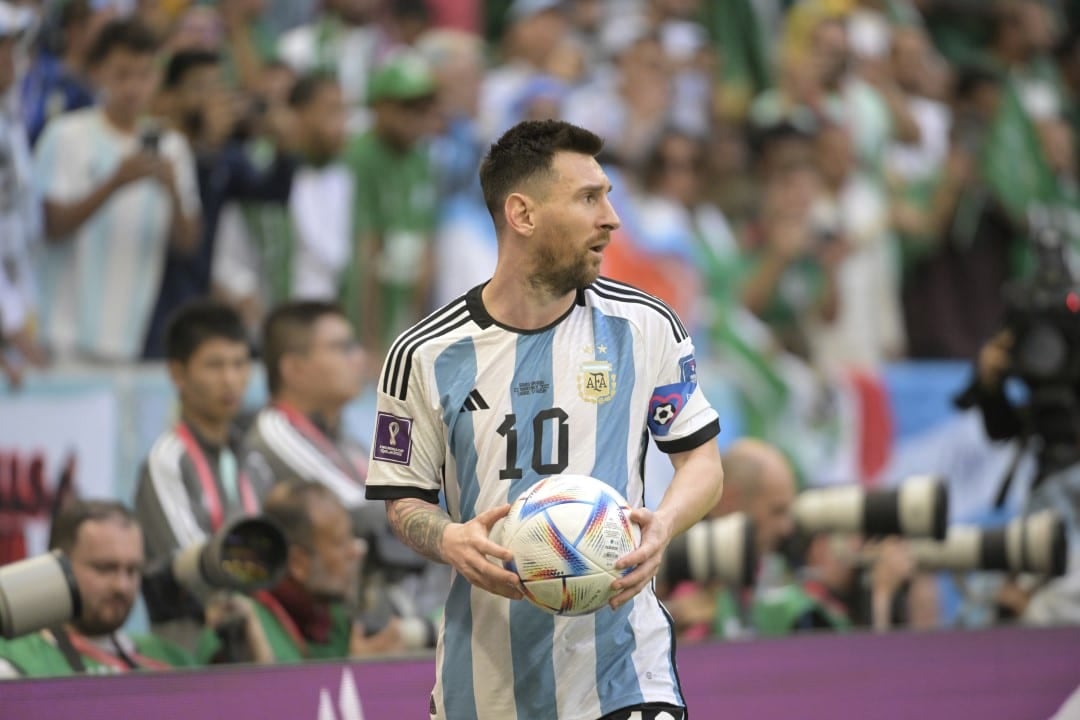
The long-awaited match that would put the champion teams of Copa América and Eurocopa face to face will no longer take place on the official world football calendar. The decision was confirmed by the organizing entities after a series of rounds of negotiations that did not result in a viable agreement for both parties.
The clash between the main teams of Argentina and Espanha was originally scheduled for March, with the city of Doha, in Catar, as the main venue. The negotiations directly involved the senior executives of the continental confederations and national federations of each country.
Factors external to the sporting sphere ended up determining the direction of the conversations, requiring changes in route that came up against a lack of available dates. The impossibility of ensuring security and adequate logistics at the primary location triggered a domino effect on the event’s structural discussions.
Geopolitical factors make the original headquarters in Catar unfeasible
The escalation of tensions in the Oriente Médio region turned initial planning into an insurmountable logistical challenge for the organizers of the sporting event. The Catar had been chosen months in advance due to its modern infrastructure, inherited from the last World Cup, and the ability to host major shows with easy access for fans from different continents. However, the involvement of neighboring nations in armed conflicts and the instability of regional airspace have raised red alerts in the security departments of football confederations.
Given the scenario of uncertainty, maintaining the match at Doha came to be seen as an unnecessary risk for athlete delegations, technical committees and the general public. The European federation, together with the South American entity, then began a race against time to find a new stage that offered the same financial and structural guarantees as the original agreement. Essa search for alternatives, however, turned out to be much more complex than expected, coming up against specific requirements of each national team.
Relocation proposals to European territory
One of the first alternatives put on the negotiating table involved transferring the single game to the Spanish capital. The Santiago Bernabéu stadium, belonging to Real Madrid, was offered as the main stage to keep the original date intact.
The proposal included a strictly equal division of the ticket load, ensuring that South American fans would have the same presence in the stands as their European counterparts. The Spanish club’s board expressed full support for the initiative to host the international event.
Despite the state-of-the-art structure offered by the newly renovated arena, the association that governs football in the South American country immediately declined the offer. The understanding was that playing at the opponent’s home would undermine the neutral field principle established when the tournament was created.
Without the approval of the current world champions to play in Madri under these conditions, the organizers had to discard the idea and return to the planning drawing board in search of new formats that would please everyone.
Round-trip format is on the discussion agenda
With the refusal of a single game at one of the competitors’ home, the idea of transforming the dispute into a two-game confrontation arose. The first duel would take place on European territory, maintaining the March window for the event to take place.
The return game would be scheduled for the Argentine capital, Buenos Aires, using a date reserved by world football’s highest entity at a future time. Essa solution aimed to balance the advantage of field control and please fans of both countries.
The complexity of the international calendar, however, made this alternative impractical in the short and medium term. The teams already have commitments made for the next windows of friendlies and qualifiers, which prevented the advancement of this double format.
Disagreements over neutral dates and locations
The search for a neutral field in the Europa continued to be the priority of the old continent’s organizing federation. Foram suggested arenas in Itália and other neighboring countries, with date options varying between the end of March and the first days of April.
The South American entity even agreed to hold the match on Italian soil, but requested a specific change in the day of the game to adapt the travel logistics of its athletes. The counter-proposal was rejected by the Europeans, who claimed it was impossible to change the transmission contracts and the already established schedule.
Origin and historical recovery of the intercontinental tournament
The meeting between the winners of the sport’s two most traditional continents has deep roots that date back to decades past, long before the current commercial nomenclature. Originalmente conceived as Troféu Artemio Franchi, the competition had sporadic editions in the eighties and nineties, serving as a thermometer of strength between the football schools of Europa and América of The resumption of this concept occurred recently, as a result of a strategic memorandum of understanding signed between the two main confederations on the planet. The central objective of this alliance was to strengthen institutional ties, promote technical exchange and create a highly profitable product for the television rights market. The inaugural edition of this new phase was held with great success in the city of Londres, in the iconic Wembley stadium, where the team led by Lionel Messi overcame the Italian team with an impressive victory. Esse triumph not only yielded an unprecedented trophy for the current generation of South American players, but also consolidated the credibility of the event before the global public and sponsors, making the cancellation of the next meeting a significant loss for the financial and sporting planning of the entities involved.
Official position of the federations involved
After exhausting all logistical possibilities, the national associations went public to clarify the reasons for the cancellation. The board that runs football in the South American nation issued a statement detailing its willingness to give in on several points of the negotiation, deeply regretting the lack of flexibility in the European calendar.
On the other hand, the entity responsible for the sport at Europa expressed frustration with the outcome of the negotiations, highlighting the ongoing efforts to save the event. European leaders emphasized that the priority was always to guarantee the safety of everyone involved, which justified the immediate departure of the Asian country.
Future planning of national teams
Without the dispute for the intercontinental trophy on the near horizon, the technical committees of both teams redirect their focus to the qualifying tournaments and preparatory friendlies. The tight calendar of modern football remains the main obstacle to the creation and maintenance of new competitions that require the transatlantic movement of full delegations.
