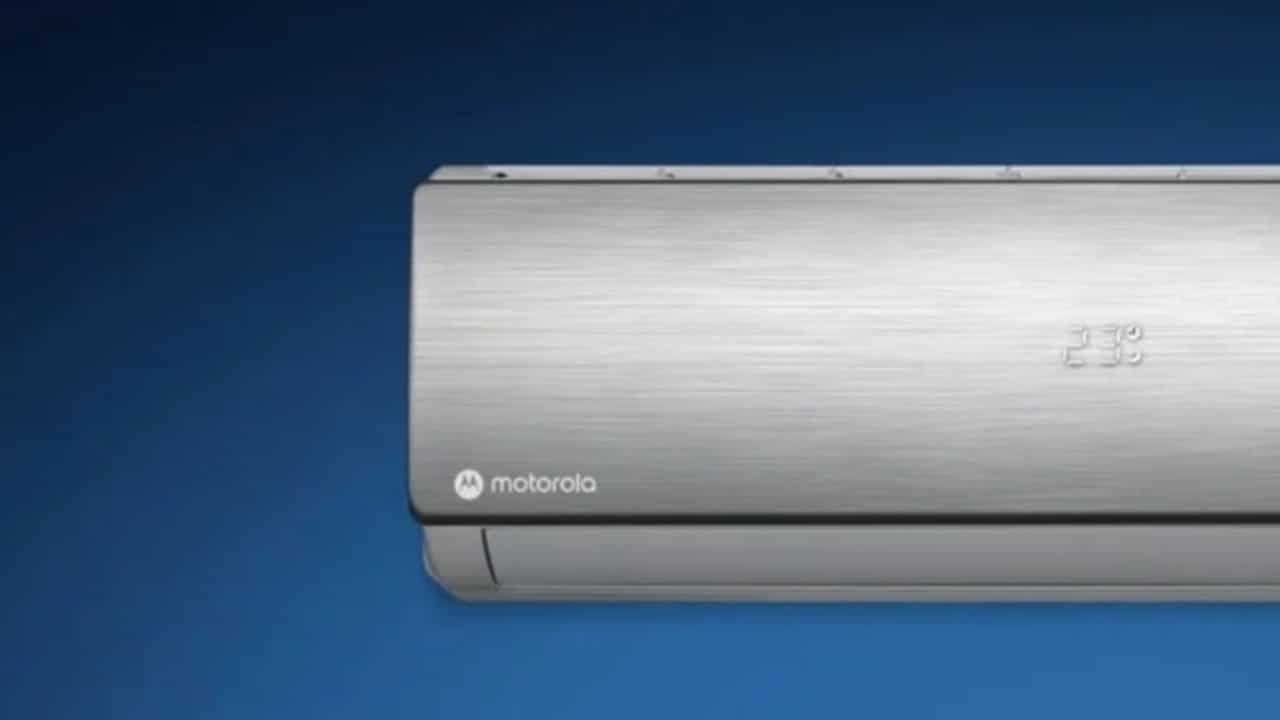
Motorola officially expanded its operations in the household appliances segment with the launch of a new air conditioning line aimed at home automation. The new equipment, initially available on the Indian market, represents a strategic step by the manufacturer to strengthen its Internet and Coisas ecosystem. The central purpose of the device is to raise the standard of the connected home, offering hardware that combines high cooling capacity with advanced machine learning algorithms.
The move underlines the company’s tactic of consolidating a robust offer within the white goods category, focusing on devices capable of withstanding the extreme thermal demands of emerging markets. The product’s differential lies in the continuous improvement of consumption efficiency and native integration with automation systems, indicating the brand’s maturity in developing solutions aimed at home comfort.
The main objective of the project is to provide consumers with an optimized user experience without constant manual interventions. The devices were designed to go beyond traditional cooling, being able to map, learn and adapt to residents’ schedules and temperature preferences throughout the weeks of use.
The arrival of this hardware at retail demonstrates a significant investment in research and development, structured around three fundamental operating pillars:
– Gestão intelligent power through variable compressors.
– Purificação continuous environment with hospital-grade filtration.
– Controle absolute remote via cloud connectivity and geolocation.
Expansion strategy in the home appliance sector
The brand’s entry into the air conditioning sector reflects a change in the global dynamics of technology companies, which seek to diversify their portfolios beyond mobile devices. The Asian market was chosen as a starting point due to its harsh climate conditions and the rapid adoption of smart home technologies by the rising middle class.
By focusing on a country with high demand for refrigeration, the manufacturer tests the resilience of its components in intense use scenarios. The strategy involves creating an ecosystem where the smartphone acts simply as a command center for a network of autonomous devices that communicate with each other to optimize the functioning of the home.
This approach allows the company to collect valuable data on consumer behavior regarding energy consumption. With this information, future firmware updates can further refine the savings algorithms, delivering added value that extends throughout the life of the equipment.
Visual architecture and integration into environments
The aesthetics of the internal units follow a minimalist guideline, with a matte white finish designed for discreet integration into contemporary architectural designs. The highlight of the design is the LED display hidden under the housing, which remains completely invisible when the device is turned off, maintaining the sobriety of the front panel and avoiding visual pollution in the room.
The luminous interface provides immediate feedback on the set temperature and network connectivity status. The chassis structure was also redesigned to facilitate preventive maintenance processes, ensuring simplified access for technicians and users themselves when carrying out periodic cleaning and replacing filter elements essential for the operation.
Thermal engineering and component durability
At the core of the refrigeration system, engineering implemented compressors equipped with Twin Rotary Inverter technology. Esta mechanical innovation guarantees fluid and highly stable operation, even when the external unit is subjected to extreme thermal conditions, withstanding ambient temperature peaks that can reach up to 55°C without loss of performance.
Workload management is carried out by microprocessors that adjust the engine rotation frequency in real time. Esse dynamic control avoids the traditional energy consumption peaks generated by the switching on and off of conventional models, drastically reducing the mechanical wear of parts and extending the useful life of the entire refrigeration assembly.
The durability of the equipment is reinforced by the use of coils made entirely of copper. Esses trocadores de calor recebem um banho de proteção anticorrosiva especial, elevando a resistência do metal contra a oxidação causada pela umidade e por agentes poluentes externos, garantindo a integridade do sistema contra vazamentos de gás refrigerante.
Data processing and home automation
The equipment’s software department uses artificial intelligence sensors to monitor the room’s climate variations. Based on continuous data reading, the system automatically adjusts the power of the airflow, taking into account not only the temperature, but also the relative humidity levels of the environment.
The software has a dynamic operating mode that allows the hardware to switch between different thermal capacities according to current requirements. Isso means that the device can operate at maximum power to cool a crowded room and then reduce its consumption to the minimum necessary just to maintain thermal comfort for a single sleeping person.
Connectivity is guaranteed by native support for dual-band Wi-Fi networks, operating at both 2.4 GHz and 5 GHz.
Integration with market virtual assistants allows full management of functions through voice commands. The system makes it possible to create routines based on geolocation, where the air conditioning identifies the user’s approach using the cell phone’s GPS and starts cooling the room minutes before their arrival at the residence.
Continuous purification and respiratory quality
The project’s intelligence extends to residents’ respiratory health through a triple-layer filtration system, which includes HEPA elements and meshes treated with silver ions. Essa physical and chemical barrier is capable of retaining microscopic particles of dust, pollen and inactivating microorganisms, ensuring the circulation of significantly cleaner air.
To maintain the efficiency of this filtration, the equipment has an automated self-cleaning function. The process executes thermal shock cycles in the evaporator unit, quickly freezing and thawing the fins to loosen accumulated debris, preventing the proliferation of mold and the emission of unpleasant odors during ventilation.
Commercial positioning and financial accessibility
The new air conditioning line was made available in a portfolio that covers different volumetric capacities, serving everything from small offices to large living rooms. Models range from 12,000 BTUs, 18,000 BTUs and 24,000 BTUs, ensuring thermal sizing is appropriate for the square footage of each residential or commercial project. Initial distribution occurs through exclusive partnerships with large local e-commerce networks, offering free installation as an attraction to accelerate the adoption of the technology by consumers. Sales prices start from approximately ₹28,990 in local currency. In a direct conversion, this amount is equivalent to around R$1,650. Para For economic contextualization purposes, this entry value for high-tech equipment is positioned extremely competitively, being practically equivalent to the current minimum wage of R$1,621, which demonstrates an aggressive pricing strategy to popularize home automation and access to high-efficiency Inverter compressors.
Expansão global do ecossistema conectado
The introduction of this equipment sets a new level of demand for the white goods market, forcing competitors to accelerate the integration of connectivity and artificial intelligence resources into their entry-level products.
