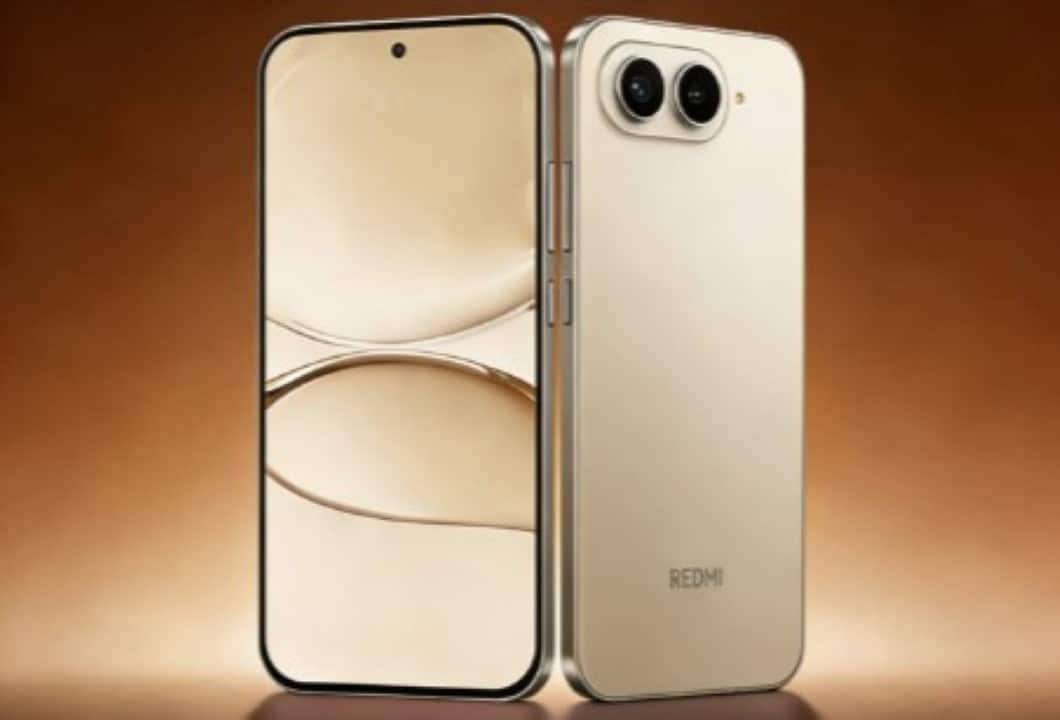
The Asian electronics manufacturer finalizes preparations for the global introduction of its latest series of mobile devices, marking a new advancement in hardware development. The new devices arrive on the market with the aim of redefining the standards of energy autonomy and processing capacity in the high-performance segment, serving an increasingly demanding public in relation to daily durability.
The strategic development of this generation focuses on solving the main demands of intensive users, who require long periods of continuous use without compromising the fluidity of the operating system. The internal engineering of the equipment integrates components recently launched by the semiconductor industry to guarantee operational stability under thermal stress.
The detailed technical specifications indicate a clear division between the family’s models, offering distinct options for different consumer profiles and budgets. The portfolio maintains the brand’s characteristic visual identity, combined with substantial innovations in the allocation of internal space to accommodate significantly larger power modules.
Processing architecture and graphics performance
The most advanced model in the series incorporates the MediaTek Dimensity 9500 processor, specifically designed to handle complex operations and heavy multitasking on portable devices. Este component works together with the Immortalis-G925 MC12 graphics processing unit, ensuring stability in rendering demanding applications and digital entertainment platforms.
The standard version of the device uses the Dimensity 8500 Ultra chip, which reaches operating frequencies of up to 3.4 GHz on its maximum performance cores. The architecture of this semiconductor has been optimized to balance raw power delivery and energy consumption during daily use, extending time away from outlets.
Visual management of the base model is handled by the Mali-G720 MC8 GPU, configured to support high and constant frame rates. The integration of these components aims to provide perfectly fluid navigation across all system interfaces, from menu transitions to the execution of image editing software.
Preliminary laboratory tests indicate that the devices’ new cooling configuration can dissipate the heat generated by the chips in a highly efficient way. The internal mechanism prevents forced performance reduction due to overheating, maintaining the integrity of the components even after hours of continuous uninterrupted processing.
Energy capacity and charging system
The energy matrix of the new devices adopts silicon-carbon anode technology, a fundamental innovation that allows greater electrical density to be stored in a considerably reduced physical space. The top model houses an impressive 8500 mAh cell, a size designed to support multiple days of moderate use or long media consumption sessions without the need for immediate recharging. The base version follows this technological evolution by offering a 6500 mAh component, which still represents a capacity far superior to the historical average found in direct competitors in the same current market segment.
To power these extremely high-capacity batteries in a timely manner, the manufacturer implemented support for 100W HyperCharge technology, with the high-power socket adapter already included in the product’s original packaging. The energy management system allows the recovery of a significant percentage of the total charge in a few minutes when connected to the electrical network, in addition to offering the option of wireless charging with power of up to 27W. The device’s engineering also includes reverse energy transfer, enabling the smartphone to act as a portable power source for compatible small electronic accessories, such as headphones and smart watches.
Screen Specifications and Visual Protection
The front interface of the main model features a 6.83-inch AMOLED panel with a resolution of 2772 x 1280 pixels, occupying almost the entire front area. The screen has been factory calibrated to display accurate colors and high contrast levels, optimizing the viewing of multimedia content in different ambient lighting conditions.
The entry-level model in the line has a slightly smaller display, measuring 6.59 inches diagonally, and a resolution of 2756 x 1268 pixels. Ambas versions use Corning Gorilla Glass 7i reinforced glass across the entire front surface, ensuring structural resistance against accidental impacts and scratches resulting from everyday use.
The refresh rate reaches 120Hz across the series, providing smooth transitions in system animations and web page scrolling. Maximum brightness reaches 2000 nits, ensuring perfect legibility of information even under direct sunlight in bright outdoor environments.
Attenuation technology and eye comfort
To minimize visual fatigue during nighttime use or in low-light environments, engineering implemented 3840Hz PWM dimming technology. The feature drastically reduces imperceptible screen flickering at low brightness levels, working together with support for the HDR standard to improve visual fidelity when playing videos without harming the user’s vision.
Image capture and optical stabilization
The rear photographic set integrates high-resolution sensors equipped with an optical image stabilization system, a fundamental mechanical feature for clear recordings on the move. The main device uses the 50-megapixel Omnivision Light Fusion 600 sensor with f/1.50 aperture, physically optimized to capture more light in dark environments and reduce digital noise in night photographs.
The standard version uses the Sony IMX882 sensor, also with 50 megapixels and f/1.59 aperture, maintaining optical stability for videos and photos. The system of both devices is complemented by an 8-megapixel ultra-wide-angle lens with f/2.2 aperture, while the 20-megapixel front camera manages video calls and self-portraits, supporting recording in 4K resolution with combined electronic stabilization for greater fluidity.
Advanced connectivity and software integration
The devices’ network infrastructure incorporates the Wi-Fi 7E standard, designed to support extreme data transfer speeds and minimize latency in wireless connections compatible with modern routers. Communication with peripheral devices occurs via the Bluetooth 5.4 protocol, which guarantees pairing stability with multiple accessories simultaneously and optimizes power consumption during continuous high-definition audio transmission. Management of all hardware functions is performed by the Android 16 operating system, on which the customized HyperOS 3 interface, developed by the manufacturer itself, operates. Esta software platform offers advanced visual customization features, encrypted secure folders to protect sensitive data, and artificial intelligence functions aimed at everyday productivity. Biometric authentication is performed by a fingerprint reader positioned under the main screen, while an infrared emitter located on the top edge allows the smartphone to function as a universal remote control for televisions and home air conditioning units.
Physical construction and commercial availability
The external structure of the devices uses a metal alloy in the main chassis, giving the equipment rigidity and a premium finish to the touch. The most robust model carries 12 GB of LPDDR5x
The standard version is 8.38 millimeters thick and weighs 201 grams in its base configuration. The equipment will be available on the international market in black, white and titanium, with the superior model initially priced at 529 euros, the equivalent of around 3,215 reais in direct conversion, while the base version has an estimated value in the range of 2,425 reais, establishing a direct competition strategy in the telecommunications sector.
