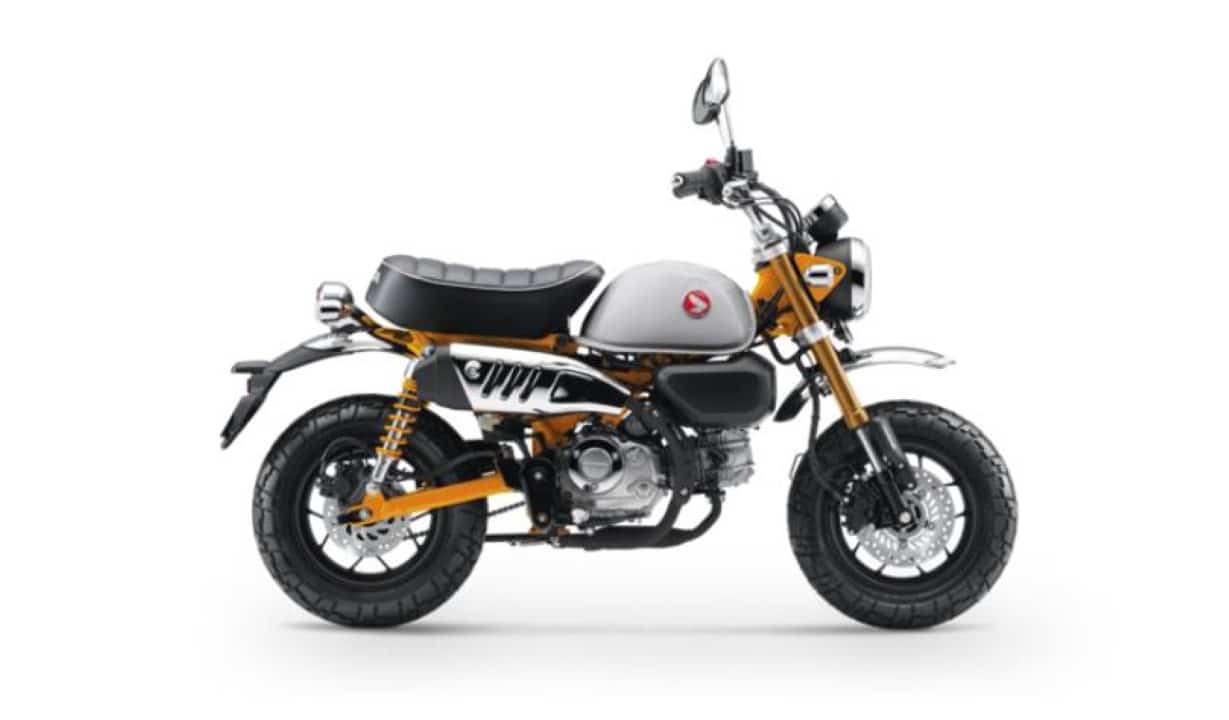
The motorcycle industry is seeing a growing movement to restore history through aesthetic modifications to modern platforms. Japanese workshop T.T.R
The project’s central proposal consists of adapting the straight lines and elongated profile of a four-cylinder motorcycle into a compact 125-cylinder chassis. Essa adaptation allows urban model owners to modify the appearance of their vehicles without the need for complex structural changes to the automaker’s original frame.
The modification package encompasses the following main components:
– Tanque of fuel with classic rectilinear shape
– Conjunto optical with period headlights and lanterns
– Assento elongated with textured finish
– Tampas sides with adjusted proportions
The initiative meets a specific demand from enthusiasts who seek to combine the mechanical reliability and agility of contemporary motorcycles with the visual appeal of legends of the past, consolidating a market niche focused on urban customization.
Aesthetic details and fidelity to the original project
The development of the Bakemon kit required a careful study of the proportions of the original CB400FOUR to ensure that the transition to the scaled-down Monkey 125 did not appear disproportionate. The design team focused on the exact reproduction of the fuel tank, which abandons the smooth curves of the current model in favor of sharp creases and flat surfaces.
The paint options offered follow the Honda factory catalog from 1974. Consumers can opt for the classic shades of red, blue and yellow, with a specific variation called Type 2 for the yellow color, which reproduces a particular graphic of the time with extreme precision.
The long seat, known for its tack roll style, reinforces the set’s vintage identity. The horizontal seams and the stepped shape were replicated to provide the same visual sensation as the motorcycle that inspired the project, while maintaining the comfort necessary for daily commuting in cities.
Applied engineering and innovations in the compact chassis
One of the main technical challenges faced by the development team was the integration of an elongated seat without compromising the usability of the motorcycle. The solution found resulted in a lateral opening mechanism for the seat, classified by the developers as an unprecedented innovation for the Honda Monkey 125 line on the global market.
This side hinge system allows the rider to quickly and safely access the storage compartment and electrical components under the seat. The applied engineering avoided the need for special tools to remove the part, something common in more radical customizations that alter the vehicle’s structure.
Images of prototypes in the testing phase reveal the kit’s integration with performance components from other renowned brands. The display motorcycle appears equipped with a short exhaust system supplied by Yoshimura, as well as a compact Asahi-style windshield positioned at the front.
These additional accessories demonstrate the versatility of the Bakemon package, which accepts integrations with aftermarket parts aimed at improving performance and aerodynamics, without detracting from the visual proposal established by the creating workshop.
Historical context of the four-cylinder legend
The Honda CB400FOUR was introduced to the global market in 1974, establishing itself as the second generation of the Japanese manufacturer’s four-cylinder medium motorcycles. The model gained immediate notoriety due to the innovative design of its exhaust manifolds, which were grouped in an asymmetrical way, and the characteristic sound emitted by the high-revving engine. Naquela time, strict changes in licensing and qualification laws in Japão created barriers to the acquisition of high-displacement motorcycles, transforming the 400 cc category into the main target of local consumers and boosting the automaker’s sales.
Despite facing initial sales resistance due to its high price and internal competition, the CB400FOUR has built a lasting legacy and achieved collector’s item status. Atualmente, preserved or restored units reach significant values in the international market for classic vehicles. The nickname Bakeyon emerged in this context, being used in the 1970s to describe customized motorcycles that tried to imitate the look of the coveted four-cylinder, a cultural phenomenon that directly inspired the baptism of the new T.T.R Motors kit.
Strategic partnership for component precision
To ensure that the Bakemon kit achieved the highest level of historical fidelity, T.T.R Motors, which already has extensive experience in customizing the CB family, established a technical partnership with Shi House. Esta store is widely recognized in Japão as the main reference in maintenance, restoration and supply of exclusive parts for the CB400FOUR. The collaboration allowed engineers access to original molds, factory specifications and finishing details that often go unnoticed in common replicas. Shi House’s strict supervision ensured that critical elements, such as the angle of the side covers and the positioning of the emblems, respected the essence of the 1974 motorcycle, resulting in a final product that meets the demands of the brand’s vintage vehicle specialists.
Expansion of the modification portfolio
The launch of the Bakemon represents a strategic step in the expansion of the T.T.R Motors catalog, which seeks to diversify its target audience in the motorcycle parts sector. Anteriormente, the company achieved impressive commercial results with the Efumon kit, a modification package based on the lines of the CB750F, which was widely adopted by the Asian customizer community.
The foray into the 125-cylinder segment demonstrates the brand’s intention to democratize access to classic design on lower-cost platforms. The workshop also maintains production of replacement components for larger models, such as reproduced fuel tanks for the CB750F and CB1000F, whose limited editions often sell out during the pre-order period due to high demand.
Official presentation at the Asian event
Tokyo Motorcycle Show was chosen as the ideal setting for the public reveal of the finished project. Durante the days of the event, visitors will have the opportunity to closely examine the demonstration unit, evaluate the quality of the matte black gel finishes used in the prototypes and check out the color variations available at the manufacturer’s stand.
Market and commercialization perspectives
To date, T.T.R Motors has chosen to keep information regarding the suggested price of the complete kit and the exact date for the start of retail sales confidential. The automotive sector’s expectation is that the company will use the public reception during the Tóquio show to define the volume of the first production batch and align the international distribution strategy.
The arrival of the Bakemon occurs during a period of strong growth in the global motorcycle market with nostalgic appeal. The possibility of transforming an efficient and economical urban platform into a rolling tribute to a 1970s icon attracts a new generation of motorcyclists to the world of factory customization.
