Terra annually experiences moments of solar balance that mark the transition between the seasons. One of these crucial events is the spring equinox, an astronomical phenomenon where sunlight falls practically equally on both hemispheres of the planet. Ele signals a new cycle, especially for the regions of Hemisfério Norte, carrying great relevance for science and diverse cultures.
On these specific days, the length of day and night becomes almost identical across the globe, representing a milestone for the beginning of periods of greater luminosity and the awakening of nature. Este event celebrates the advancement of light and the renewal of the cycles of life. It is a time of profound environmental transformation.
The proximity of the spring equinox in March invites reflection on the intricate dance of celestial bodies and their direct effect on earthly life. Este cosmic alignment influences everything from agricultural cycles to annual climate patterns. Sua arrival is a long-awaited event that carries with it the symbolism of renewal and hope.
The dynamics of the equinox on the calendar
The equinox occurs twice a year, defining the beginning of spring and autumn. The Esse event occurs when the Sol crosses the celestial equator, an imaginary line in the sky that projects from the earth’s equator. At the Nesse point, the tilt axis of the Terra is neither toward nor away from the Sol, resulting in an equal distribution of sunlight across the globe. Esse is a fundamental pillar of seasonal astronomy.
The accuracy of these moments is crucial to astronomy and meteorology, as they establish the landmarks for the seasons. Enquanto the spring equinox marks the advance towards longer days. Esse cycle directly impacts the length of days and terrestrial life constantly adapts to these changes.
March 2026: the exact date and its observation
For the year 2026, the spring equinox is expected to occur on March 20, at 09:02 Tempo Universal Coordenado (UTC). Esse exact moment is an astronomical watershed, marking the instant when Sol crosses the celestial equator from south to north. Este point is crucial to the solar calendar and the precise definition of the seasons.
The date and time of the equinox may vary slightly each year. Essa variation occurs due to the elliptical orbit of Terra around Sol and the length of the tropical year, which is not an exact number of days. Tais variations, although small, are observed and calculated with precision by astronomers, who guarantee the anticipation of celestial phenomena and improve these calculations every year.
Observers in different time zones will adjust this UTC time to their local time, but the fundamental astronomical phenomenon happens simultaneously for everyone on the planet. Esse event, invisible to the naked eye in terms of its precise transition, has visible and tangible impacts on climate change and the length of days, transforming the daily lives of millions of people.
Global impact on seasons
The occurrence of the spring equinox in March triggers a series of climate and environmental changes in Hemisfério Norte. Após this date, regions north of the equator begin to experience a gradual increase in day length, with sunlight persisting longer. Esse prolongation of the day heats the soil and atmosphere, preparing the ground for the new season.
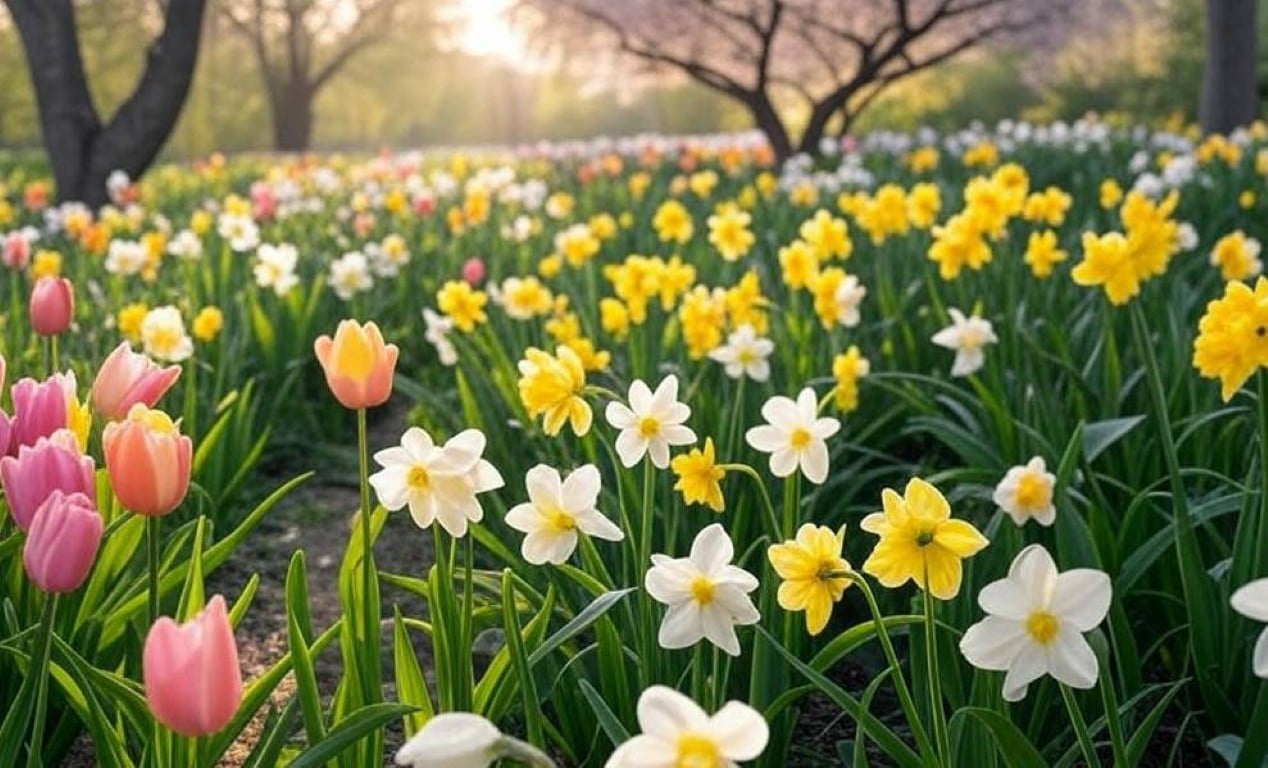
This increase in light and heat is vital for the restart of vegetation cycles in many parts of the world. Plantas sprout, flowers bloom and wildlife becomes more active, characterizing the renewal of spring. The phenomenon is a key catalyst for biodiversity and growth in temperate ecosystems, boosting agricultural productivity.
In Hemisfério Sul, the same March event marks the beginning of autumn. Lá, the days begin to progressively shorten, and temperatures tend to drop. Folhas fall from the trees, and nature prepares for winter. Essa opposite seasonal transition highlights the synchrony of the Earth system.
This duality is a fascinating reminder of the orbital mechanics of Terra. Ela shows how a single point in astronomical time can mean opposing seasonal realities in different parts of the planet, affecting millions of people and their daily activities. The complexity of climate cycles is an ongoing field of study.
Hemispheric and cultural differences
While Hemisfério Norte celebrates spring in nations such as Estados Unidos, Canadá, México, most European countries (Portugal, Espanha, África, the Hemisfério Sul, including countries such as Brasil, Argentina, Chile, África of the Essa distinction highlights the importance of understanding geographic context when referring to the equinox, as celebrations and preparations for the seasons vary widely, reflecting not only the climate but also the rich cultural tapestry of each region and how traditions adapt to local realities.
In several Hemisfério Norte cultures, the spring equinox is historically associated with festivals of fertility, renewal, and rebirth. Antigas civilizations, from the Mayans to the Celts and European agricultural societies, aligned their calendars and rituals with this astronomical event. Eles used it to plan plantations and harvests, marking a crucial period for subsistence. Ainda today, in many traditions, is a time to celebrate the growing light and the promise of abundance, and is looked forward to as a period of hope and new beginnings.
Astronomical influence and related phenomena
The inclination of the Earth’s axis, approximately 23.5 degrees in relation to the plane of its orbit around Sol, is the main factor that determines the seasons and, consequently, the equinoxes. Sem this inclination, there would be no defined seasons, and the length of day and night would be constant throughout the Terra. Durante the equinox, the sun’s rays fall perpendicularly on the Equador line, making the length of day and night almost equal at any point on the planet. Este is a transitional moment where the Terra moves from a position where one hemisphere is more tilted towards the Sol to a more neutral position, before tilting the other hemisphere. Este’s continuous movement and the constancy of its axial tilt are responsible for the regularity of the equinoxes and solstices, shaping climate and life on our planet in profound and predictable ways, allowing science to predict these events with high accuracy for millennia and contributing to the understanding of celestial mechanics.
How to prepare for seasonal changes
The arrival of the spring equinox is a natural reminder to adjust routines and preparations. Para many in the Hemisfério Norte, means time to rearrange gardens, plan outdoor activities and adapt to longer days and mild temperatures. No Hemisfério Sul, the focus turns to preparing for lower temperatures and the gradual change in the landscape, which requires adaptations in clothing and lifestyle. Essas adaptations are essential for well-being and productivity.
The historical and scientific relevance of the event
Since ancient times, the equinox has been a crucial reference point for humanity. Ancient Civilizações built monuments aligned with these celestial events, such as Stonehenge, in Inglaterra, and Chichen Itza, in México, to mark the passage of time and plan their agricultural and religious activities. Tais structures demonstrate deep astronomical knowledge and the importance of the equinox in the social and spiritual organization of these societies.
Today, modern science continues to study the equinoxes and solstices to refine climate models and better understand the orbital dynamics of Terra. Embora calculations are now made with advanced software and cutting-edge technologies, curiosity and fascination with these celestial phenomena persist. Isso connects us to our ancestors and the vast, complex universe, promoting an ongoing understanding of our position in the cosmos.
