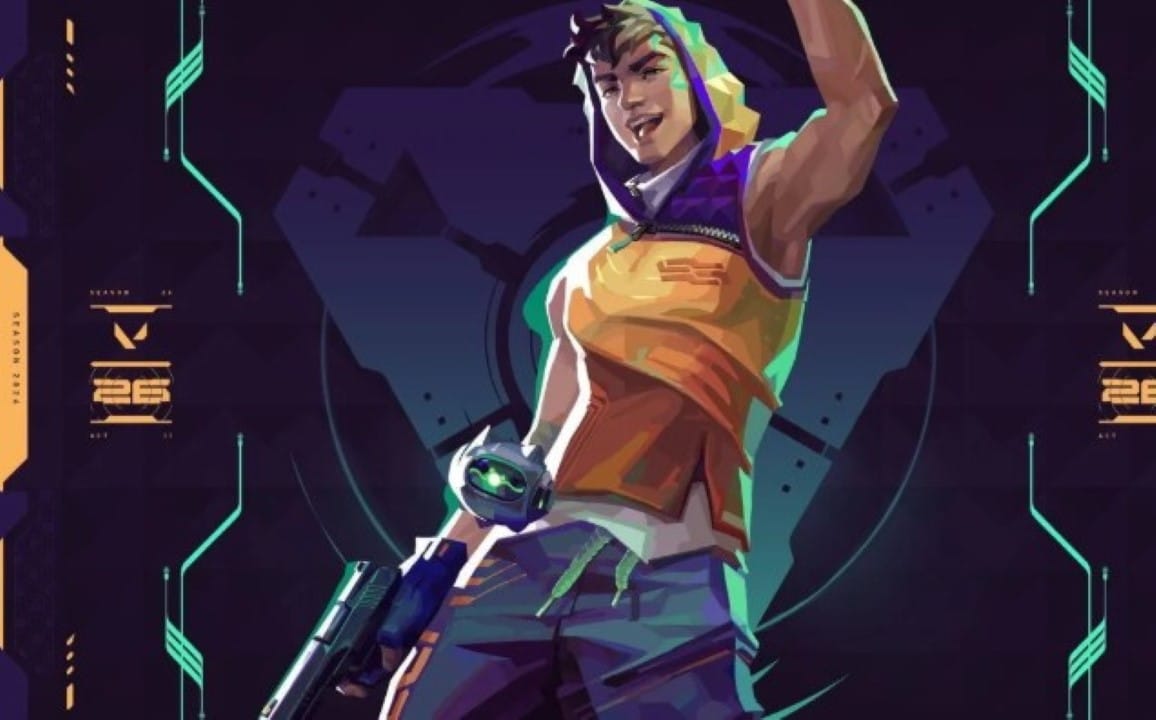
The tactical shooter scene receives a substantial expansion with Riot Games’s latest implementation of its flagship competitive title. The arrival of Season 2026 Act 2, made official on March 18, adds unprecedented layers of strategy to the game’s ecosystem. The main novelty lies in the integration of a new character focused on map control, in addition to a game modality that changes the traditional rules of engagement and survival in virtual arenas.
The deployment of the data package occurred simultaneously in all global regions, with servers receiving the update from 10am at Pacífico time. Essa synchronization ensures that the player base on different continents has immediate access to the newly added tools, allowing practical testing in casual and ranked queues to begin immediately. The update process also included interface adjustments and improvements in visual clarity during confrontations.
The developer structured this release with the goal of diversifying team compositions and offering alternatives to the standard gameplay rhythm. The introduction of mechanics based on sound waves and the creation of an environment focused on direct eliminations represent a continuous effort to maintain the vitality of the competitive scene, requiring both amateur and professional players to adapt their territorial dominance and resource management tactics.
Tactical profile and sonic abilities of the Croatian agent
The new member of the cast goes by the name of Miks, an agent originating from Croácia who assumes the role of controller within the title’s class division. Diferente than other characters in the same category, which focus almost exclusively on vision blocking and area denial, this agent’s design incorporates strong elements of direct support for allies. The character’s premise revolves around the manipulation of sound energy to dictate the rhythm of confrontations and sustain the team during prolonged firefights.
The skill called Harmonize exemplifies this collective-oriented approach. When activated, it grants a combat boost to both a selected ally and the user themselves. The strategic advantage of this tool is its ability to automatically renew with each confirmed kill, which allows you to maintain a constant offensive advantage while the team advances through hostile territories or defends crucial positions on the maps.
Another fundamental component of the arsenal is the M-Pulse device, which stands out for its situational versatility. The equipment allows the player to switch between two different frequencies before firing. Concussion mode projects waves that stun opponents in the area of impact, while healing mode emits regenerative frequencies that restore the physical integrity of nearby allies. Essa duality requires quick reading of the round’s progress to choose the most appropriate effect.
To fulfill its primary role as controller, the agent has the ability Waveform. The system allows the precise positioning of smoke in specific locations in the combat arena. The player selects the coordinates and activates the visual blocking clouds, a mechanic familiar to veterans of the role, but which has received adaptations to its interface to ensure fluidity in both computer commands and console controls.
Impact of ultimate ability on team strategies
The height of the new character’s power manifests itself through the ability Bassquake, his ultimate technique. Quando activated, the agent releases a massive frontal sonic wave that sweeps across a large area of the map. Opponents caught in the path of the impact suffer a combination of debilitating effects, including physical knockback, temporary hearing loss that negates the perception of steps and reloads, and a severe reduction in movement speed.
The practical application of this skill creates crucial windows of opportunity for executing collective tactics. The developer designed the visual and sound effect to simulate the physical impact of intense bass in live music performances. In the context of matches, the technique serves perfectly to dismantle consolidated defenses during the invasion of a bomb site or to delay the enemy advance when the team needs to buy time for the defenders to rotate.
Competitive dynamics of the new elimination format
The update goes beyond the addition of characters with the debut of the Knockout mode, a reinterpretation of the classic team deathmatch format. The modality abandons the traditional mechanics of planting and disarming explosives to focus entirely on tactical elimination rounds. The great innovation of this format is the performance-linked resurrection system: each kill achieved by a player automatically revives an ally who had previously been eliminated in the same round.
The structure of the arenas in this mode also has particularities, with the maps being divided by a central barrier at the beginning of the clashes. Teams need to compete for control of strategic orbs spread across the scene to conquer territory and establish positions of geometric advantage. The design encourages direct confrontation and quick decision-making, punishing excessive passivity.
The progression format states that the first team to win four rounds guarantees victory in the match. With an estimated duration of between eight and fifteen minutes, the modality offers shorter gaming sessions, but with a significantly greater density of action. The absence of static objectives directs all the focus to the precision of the shots, the exchange of eliminations and the coordinated movement through the scenario.
Accessibility for beginners and warm-up for veterans
The implementation of Knockout meets two distinct demands from the gaming community. For beginners, the environment serves as a less punishing gateway to learning the fundamental mechanics of shooting and positioning, eliminating the psychological pressure associated with managing the virtual economy and the complex map mastery executions present in the main mode.
For the veteran audience and high-level competitors, the sport works as an optimized warm-up tool. The continuous resurrection mechanic ensures that participants spend the majority of their time engaged in face-offs, drastically reducing idle observation periods after an elimination. The constant flow of targets and the need for quick communication refine reflexes before entering ranked matches.
Changes to the competitive ecosystem and character balancing
The introduction of a controller with healing capabilities substantially changes the possibilities of team formation in the competitive scenario. Historicamente, the hit point recovery function was restricted to specific support and initiation classes. The presence of Miks allows teams to structure compositions that mix the vision denial essential for map control with the life support necessary for prolonged confrontations, potentially freeing up space for the inclusion of more aggressive agents in other roles. Paralelamente In addition to this addition, the development team applied balance adjustments to established characters such as Yoru and Clove to maintain competitive integrity. The Lotus map also received structural updates to refine attack and defense routes, ensuring that innovations do not destabilize consolidated tactics, but rather add new variables to team planning.
Cosmetic rewards and progression in the current season
The Season 2026 Act 2 content cycle is accompanied by a new battle pass, structured to reward continued engagement from the user base. The progression system offers a series of cosmetic items unlockable by completing daily and weekly challenges. The highlight of the current catalog is the Blackthorn weapons collection, which introduces themed visuals and exclusive accessories for customizing player profiles, keeping the monetization model strictly focused on elements that do not affect performance in matches.
Community reception and global server stability
The first hours after the release of the data package saw intense activity on the servers, with the community actively testing the synergies of the new agent on the various available platforms. The developer monitors the technical performance of the update, ensuring that improvements implemented in the HUD and visual clarity of abilities work as designed, especially in situations with high density of on-screen effects.
Access to content occurs in a standardized way for users of computers and desktop consoles, maintaining resource parity between different systems. The evolution of the metagame will be watched over the coming weeks as amateur teams and professional organizations decipher the best applications for the Croatian agent’s sonic arsenal and integrate the new mode’s quick kill tactics into their training routines.
