NASA intensifies efforts to sustainably reestablish a human presence on Lua by adjusting the Artemis program to prioritize safer and more efficient paths for future missions. The American space agency works with industrial partners to overcome technical and logistical challenges identified in recent years. Essas changes aim to reduce risks before the first manned landing since the Apollo missions.
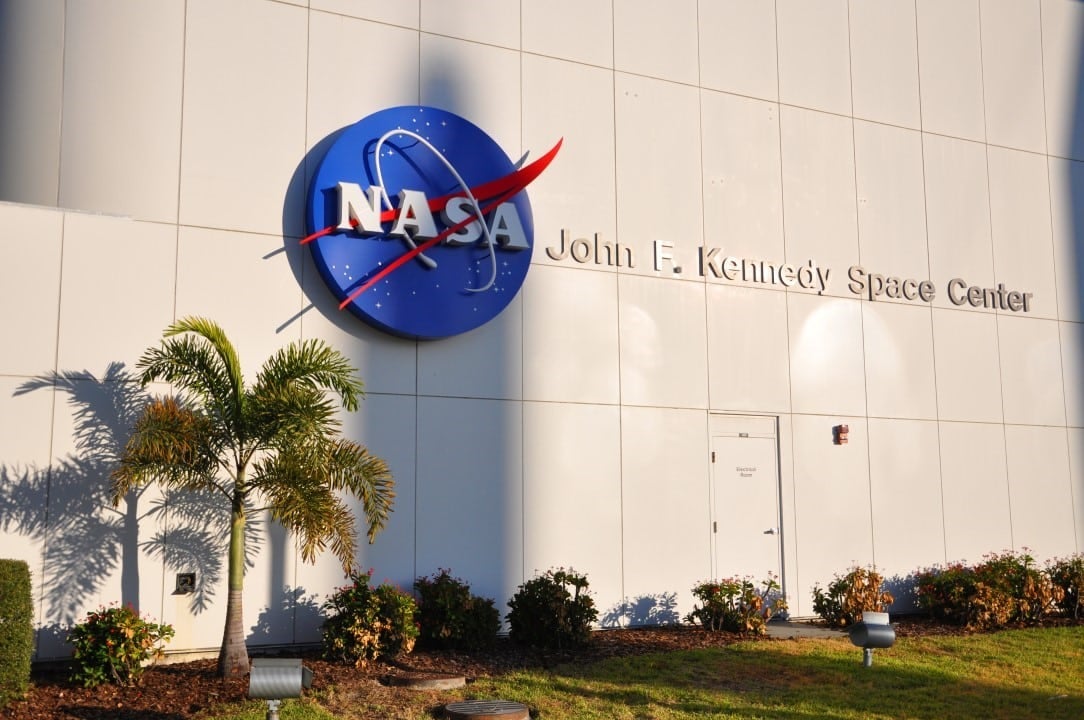
The current focus is on the Artemis 2 mission, scheduled for launch in early April 2026 from Centro Espacial Kennedy, on Flórida. Essa test trip will take four astronauts in lunar orbit for about 10 days, without landing on the surface. The crew includes Commander Reid Wiseman, Pilot Victor Glover, Specialist Christina Koch, all from NASA, and Specialist Jeremy Hansen, from Agência Espacial Canadense.
During the flight, astronauts will carry out detailed observations of the far side of Lua and polar regions, recording relief, colors and lighting conditions with portable cameras and tablets. Essas Human insights complement data from robotic sensors, capturing nuances that automated instruments may not accurately detect. NASA has prepared an interactive lunar atlas to guide observations, with updates planned according to the spacecraft’s actual trajectory.
Intensive crew preparation
The crew underwent three years of rigorous training, inspired by Apollo era techniques. The focus included lunar geology and fundamentals of scientific observation in the field.
Astronauts practiced accurate descriptions of the lunar surface to convey valuable information to scientists on Terra. Essa preparation ensures that records are useful for planning subsequent missions.
Human observations in lunar orbit
Human perception highlights subtle variations in terrain and lighting that elude robotic sensors. Essas observations will add up to six hours of dedicated blocks during the mission.
The data collected will help to better map little-explored regions, especially at the south pole, where the presence of water ice is suspected. The combination of human vision and technology enhances the collection of scientific information.
Architectural changes to program Artemis
NASA introduced a new mission in 2027 for low-orbit testing of Terra, postponing the first manned landing for Artemis 4 in 2028.
The lunar south pole remains a prime target due to the potential for resources such as frozen water. The agency has relaxed orbit and design requirements to facilitate the work of industrial partners and increase technical feasibility.
Robotic missions and risk reduction
Starting in 2027, frequent robotic missions will collect data on temperatures, soil composition and communications at the South Pole. Essas information reduces uncertainty for future crews.
NASA also tests in-orbit docking and new extravehicular spacesuits. The aim is to establish a lasting presence on Lua, with annual landings planned after 2028.
Interactive lunar training and atlas
The training emphasized confidence in the scientific description of Lua. Cindy Evans, responsible for preparation at Centro Espacial Johnson, highlighted the importance of accurate reporting.
The interactive atlas guides the crew to priority targets based on light and visibility conditions. Atualizações post-launch adapt the plan to the real trajectory.
NASA remains committed to safe and sustainable exploration, integrating technological advances and partnerships to overcome obstacles on the path to return to Lua.
