
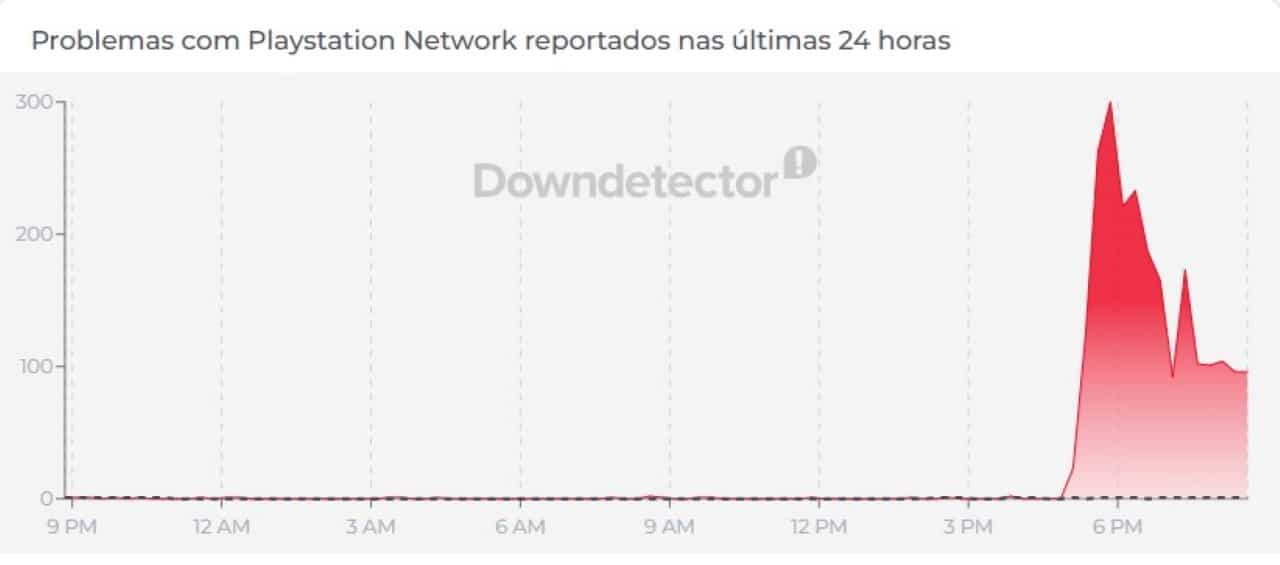
Sony’s online infrastructure experienced a massive outage that compromised thousands of users’ access to network resources on state-of-the-art equipment. The global technical problem knocked down connections simultaneously on several continents during the afternoon, generating a peak of more than five thousand error notifications on independent internet traffic monitoring platforms in a matter of minutes. The failure interrupted the normal flow of data between residential devices and the corporation’s central data centers.
The structural flaw directly affected the basic authentication of user profiles and participation in multiplayer matches of highly popular titles in the digital entertainment market. Equipes from the company’s engineering team confirmed the instability through official status channels, initiating routine investigation protocols to map the extent of the blackout. The initial focus of technical operations was on isolating faulty servers to prevent cascading failure from reaching cloud storage systems and virtual trophy databases.
The main objective of maintenance teams is to identify the root of the problem in the main routing nodes and reestablish the flow of information in a secure manner. During the period of prolonged inactivity, equipment owners reported severe obstacles when trying to use the systems, highlighting the high dependence of modern hardware on constant connectivity to validate licenses and run software acquired in digital format.
Geographical scope and first signs of the failure
The technical incident quickly spread across the brand’s main consumer markets, simultaneously affecting América, Norte, Europa, Ásia and América Latina. The first signs of instability appeared in the middle of the afternoon in the East Coast time zone of Estados Unidos, a moment that marks the transition to peak hours for entertainment data traffic.
This specific time coincides with the time when traffic volume usually increases substantially due to the beginning of the leisure period and the end of business hours. The simultaneous activation of millions of residential devices highlighted the following connection issues reported by the user base:
– Falha recurring in checking digital software licenses and blocking libraries.
– Desconexão abruptness of voice communication servers and chat groups.
– Erros data synchronization saved in the cloud.
– Bloqueio total access to monthly subscription service catalogs and game redemptions.
Anomalies recorded in diagnostic tests
Equipment owners have documented specific anomalies by running network diagnostic tests built into the consoles’ operating systems. The results often showed download rates within the normal standards contracted with local internet providers, indicating that the reception of data packets operated without severe restrictions at the physical layer of the residential connection.
However, upload rates suffered drastic reductions that were completely abnormal for the service standard required by the platform. In high-speed fiber optic connections, data sending capacity fell to margins close to two megabits per second, a technical bottleneck that makes it impossible to send player commands to central servers in a timely manner.
Direct impact on communication and interface
This extreme asymmetry prevented the two-way communication necessary to maintain stability in competitive online matches. The practical result involved automatic expulsions from game sessions due to the high latency recorded by third-party developers’ servers, which have strict systems for eliminating players with unstable connections to preserve the integrity of ranked matches.
In addition to the disparity in data packet transfer rates, the friend and social status management system persistently displayed incorrect information. Perfis of users appeared as disconnected or invisible, even when the equipment was able to establish basic communication with the local router and confirm broadband internet access through navigation tests in browsers built into the system.
Stopping of integrated entertainment services
The affected network architecture serves as the backbone for virtually all modern interactions on the brand’s hardware. The crash took down a wide range of integrated services essential for the full functioning of next-generation devices, temporarily transforming high-performance machines into media centers with capabilities severely limited to the offline use of physical disks.
Players of multiplayer-focused franchises, such as first-person shooters, sports simulators and battle arenas, have encountered insurmountable barriers on matchmaking screens. Isso made it impossible to form teams, join dedicated competition servers and progress through battle passes that require constant validation of experience points in publishers’ data centers.
The outage also paralyzed the platform’s e-commerce system, preventing the purchase of new titles, the redemption of prepaid card promotional codes and browsing through seasonal offer windows. The automatic renewal of subscriptions to premium services, which guarantee access to online mode and rotating game catalogues, has also been temporarily suspended, causing billing failures in integrated payment systems.
Secondary functionalities, but widely used by the global community, such as live transmission of game sessions to external video platforms and the organization of official tournaments approved by the manufacturer, were completely inoperative for hours on end. The failure to verify digital licenses generated an additional obstacle, blocking access to games purchased digitally that require periodic copyright validation via the internet.
Consumer mobilization and technical guidance
The lack of connectivity generated an immediate mobilization on discussion forums and public bulletin boards on the internet, where consumers of different nationalities published screenshots displaying the alphanumeric error codes generated by the operating system. The volume of messages demanding an official position and the rapid restoration of the online environment dominated the most talked about topics in several global regions, highlighting the scale of the blackout. User dissatisfaction was amplified by the fact that the outage occurred on a day traditionally dedicated to extended digital entertainment, frustrating the planning of thousands of virtual teams. Muitos reports highlighted the impossibility of taking advantage of limited-time events within specific games operated as an ongoing service, activities that require constant connection to record the progress of daily missions and distribute exclusive virtual rewards that expire in a few hours.
During the peak of systemic instability, networking technology experts strongly recommended that users avoid changing local settings, such as redirecting router ports or switching primary and secondary DNS server addresses. Modifying these home parameters during a massive external failure can generate new connection conflicts when the main data centers are finally reestablished by the corporation, making it difficult for the console to automatically return to the online environment. The standard technical guidance in these server blackout scenarios is to wait for the exclusive resolution by the responsible company’s engineering team, following real-time updates on the official service status page. Tentativas repeated and uninterrupted logins are also discouraged, as these massive actions can further overload authentication servers that are already operating at reduced capacity or in safe mode.
Data traffic normalization process
The normalization of data traffic occurred in a strictly progressive manner, with different geographic regions regaining access to servers at varying rates to avoid further overload on the global routing infrastructure. Cerca Two hours after the technical incident began, monitoring dashboards began recording a sharp drop in the number of connection error notifications, indicating that the disaster recovery protocols implemented by the engineering team were stabilizing the authentication databases. The manufacturer’s status page updated its visual indicators to signal that all network operations, account management and store services were functional again and operating within the expected statistical normality for the volume of active users. The company maintained active and reinforced monitoring in the following hours to ensure the stability of reestablished connections and avoid relapses in the central system, applying temporary traffic filters to manage the queue of players trying to simultaneously reconnect to popular game servers. The service restart process required the integrity check of millions of profiles to ensure that no financial transactions or game progress were lost during the abrupt power outage or software failure in the primary data centers.
Evolution of connectivity infrastructure
The technical incident highlights the complexity of keeping digital ecosystems operating without interruptions on the current generation of entertainment hardware. The network infrastructure supports not only basic gameplay, but the entire economy of software acquisition, remote storage and real-time social interaction, making the stability of data centers a non-negotiable pillar for the proper functioning of equipment and for preserving consumer confidence in the technology market.
