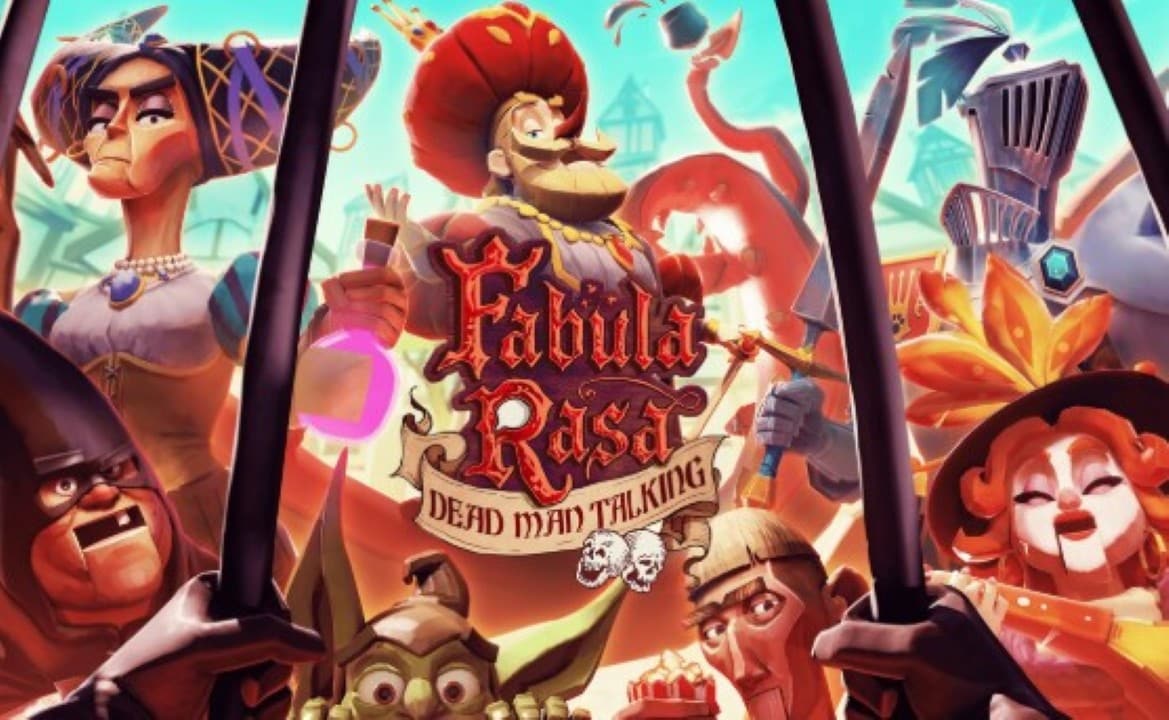
The launch of “Fabula The immersive experience proposed by the title promises to transcend the traditional limits of interactive narrative, offering players a dynamic universe that is responsive to their choices in unprecedented ways. Este technological advancement not only raises the bar for VR games, but also suggests a new era for the creation and consumption of digital stories.
The main innovation of “Fabula Rasa” lies in the AI’s ability to co-create the narrative in real time, adapting to players’ decisions and generating missions, dialogues and even secondary characters procedurally. Isso means that each journey within the game is potentially unique, with ramifications that unfold according to the individuality of each participant, from the way they interact with the virtual world to the alliances they form or the enemies they face. The promise is of unprecedented immersion, where the player’s sense of agency is amplified by a world that seems to genuinely react to their presence and actions.
The immersion of AI in virtual reality
The combination of artificial intelligence and virtual reality is a technological marriage that has the potential to revolutionize the way we experience digital entertainment. In “Fabula Rasa”, this synergy allows the game environment and its inhabitants to exhibit a degree of complexity and reactivity that was previously unattainable. NPCs (non-playable characters), for example, do not follow pre-determined scripts in their entirety, but rather AI algorithms that give them more organic and unpredictable behaviors.
This layer of unpredictability and adaptability makes for a more authentic and challenging experience, where players are constantly encouraged to think critically and adapt to ever-changing situations. Não is just about realistic graphics, but about a universe that breathes and evolves with the player, making each interaction feel meaningful and have tangible consequences. The AI architecture is designed to learn from each game session, improving its ability to create increasingly coherent and engaging scenarios and dialogue.
Dynamic narratives and player agency
One of the pillars of “Fabula Rasa” is its approach to narrative, which moves away from fixed linear or branching plots. Instead, the AI acts as a virtual game master, shaping the story based on the player’s choices and exploration. Essa’s ability to generate dynamic narratives is a game-changer for the RPG genre, which has historically struggled to offer a truly limitless level of agency.
Player agency is elevated to a new level, where the most trivial decisions can have complex and unexpected echoes throughout the game world. Isso not only increases immersion, but also replayability value, as each new campaign can be drastically different from the last. The technology behind “Fabula Rasa” allows the plot to adjust in real time, creating narrative arcs that are genuinely personalized to each individual.
Challenges and the future of RPGs
While the potential of “Fabula Rasa” is immense, integrating such advanced AI into a VR game presents its own challenges. The complexity of managing a world that continually adapts requires significant processing power and robust algorithms to avoid inconsistencies or breaks in immersion. Optimizing for different VR platforms and ensuring a fluid experience for all users are crucial considerations for developers.
Furthermore, the question of authorship and creative control arises when AI takes on such a central role in the creation of the narrative. Developers need to strike a balance between AI-generated freedom and maintaining a cohesive, satisfying vision for the story. The future of RPGs, as suggested by “Fabula Rasa”, could see a shift from games with fixed plots to platforms that allow players to truly co-author their own legends. Esta approach can democratize story creation, making it more accessible and customizable for a global audience.
The evolution of interaction with NPCs
The artificial intelligence in “Fabula Rasa” radically transforms the interaction with non-playable characters. Longe From being mere quest dispensers or pre-programmed dialog boxes, NPCs in the game are capable of interpreting the player’s emotions, remembering past interactions, and even developing their own emerging personalities and motivations. Isso means that conversations can be deeper and relationships more complex.
The ability for NPCs to react in context and exhibit more human behavior adds a layer of depth that is rarely seen in other titles. Eles can form opinions about the player based on their actions, spread rumors or even change sides in conflicts, all driven by AI algorithms that simulate a form of consciousness. At every step, the player is challenged to consider the social and political implications of their choices.
The impact on the gaming industry
The success of “Fabula Rasa” could have a seismic impact on the gaming industry, encouraging other developers to explore the fusion of AI and VR in their own projects. The demand for more personalized and immersive experiences is growing, and this game could be the catalyst for a new wave of innovation. Smaller Estúdios, with access to increasingly sophisticated AI tools, could compete with industry giants by offering radically different gaming experiences.
The technology employed in “Fabula The modding community can also benefit, with AI tools that allow the creation of custom content with greater ease and complexity, opening the door to unprecedented collaboration between creators and players.
Technological and creative perspectives
The technological and creative perspectives opened up by “Fabula Rasa” are vast. The continued evolution of AI, including advanced language models and neural networks, promises to further enhance the ability to create worlds and narratives that are indistinguishable from reality. Combined with advancements in VR hardware, such as lighter glasses with a larger field of view and accurate eye tracking, will only intensify the immersion.
Creating tools that allow players themselves to contribute elements to the AI-generated world, or even code their own “rules” for the AI to follow, could create a truly community-based and ever-evolving gaming ecosystem.
* Desenvolvimento of AI content creation tools for gamers.
*Integração of player feedback to refine AI algorithms.
* Expansão of game universes through AI-generated modules.
The player experience redefined
Ultimately, “Fabula Rasa” represents a fundamental redefinition of the player experience. Não is just a game to be consumed, but a universe to be explored and shaped. The promise of a story that is truly yours, that adapts and reacts at every turn, is what sets this title apart and positions it as a milestone in the evolution of RPGs. The border between creator and consumer becomes increasingly blurred, and the player is invited to be an active participant in the construction of their own fable.
