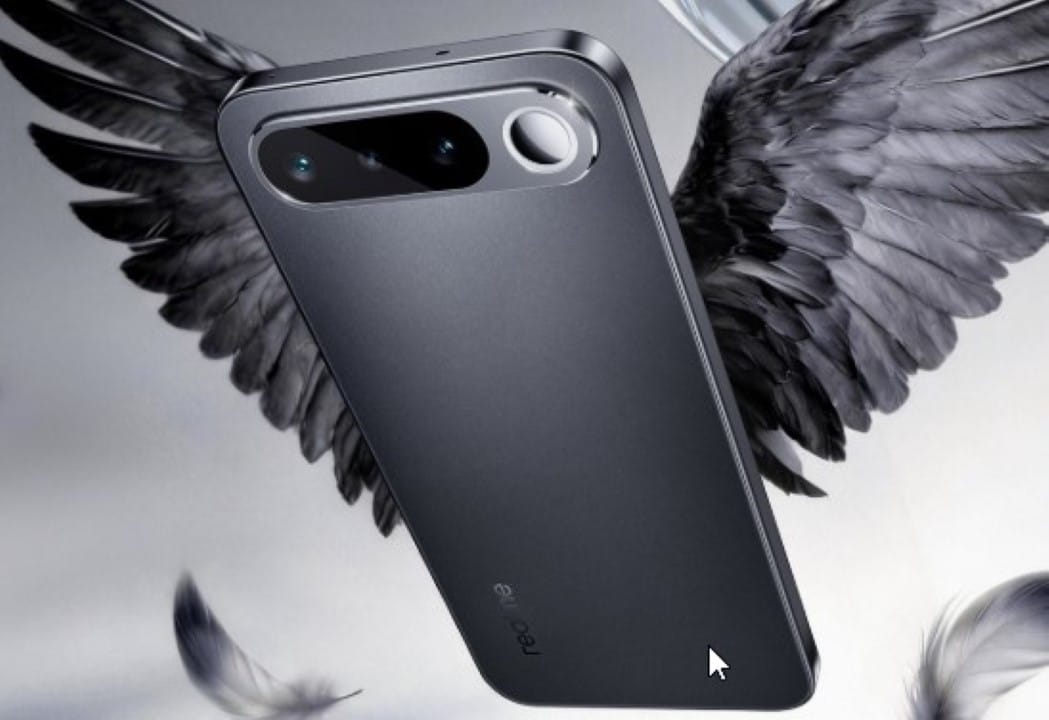
The electronics manufacturer officially announces the arrival of a new device aimed at the intermediate segment, highlighting physical innovations aimed at capturing images. The device introduces a simple but unusual mechanical feature in today’s industry, focused on changing the way users record self-portraits on a daily basis. The central purpose of the hardware is to provide practical tools that optimize the production of visual material without the need for complex editing software.
The main design change involves the inclusion of a small circular reflector positioned next to the main lens module. The modification allows the use of the larger capacity rear sensor for frontal photographs, eliminating the exclusive dependence on the smaller lens located on the device’s screen. The mirror acts as a real-time visual guide for the correct framing of people and scenes.
Designed to feel lighter.
Built for what’s next.#SpreadYourWings#realme165G coming soon.Know more:https://t.co/HowgqnllGjhttps://t.co/xYvczBv20A pic.twitter.com/UGrheefGpI
— realme (@realmeIndia)March 24, 2026
- Main photographic module equipped with a 50 megapixel sensor for greater light capture.
- Power component with extended capacity for long periods of operation away from the socket.
- Certifications for resistance against external elements, including submersion in water and exposure to dust.
The device began its commercial journey in selected Asian markets earlier this year and is now moving towards wider global distribution. The commercial strategy aims to reach consumers who are looking for advanced content creation tools without the cost associated with premium category models. Large-scale distribution should occur through e-commerce platforms and local retail partners.
Innovation in the rear photographic module
The reflective component integrated into the back structure solves a historical technical limitation of mobile phones. By allowing the user to view their own frame through the physical mirror, the system makes it possible to use the 50 megapixel main lens, equipped with the Sony IMX852 sensor, to capture selfies and personal videos with superior quality.
The transition from using the front to the rear camera guarantees a leap in light capture and in the fidelity of recorded colors. The integrated laser focusing system works in conjunction with image processing algorithms to optimize the final result, delivering files with a higher level of detail even in environments with unfavorable or backlit lighting.
Screen specifications and data processing
The front panel of the equipment uses AMOLED technology distributed over a 6.57-inch surface. The screen operates with a 120Hz refresh rate, a feature that provides fluid transitions when browsing applications, reading long texts and playing high-definition audiovisual materials.
Display protection is guaranteed by the application of DT Star D+ glass, a material developed to withstand friction and accidental impacts from routine use. The panel’s maximum brightness level has been calibrated to maintain information legibility and color accuracy even under direct sunlight in outdoor environments.
The management of internal operations is the responsibility of the MediaTek Dimensity 6400 Turbo processor. The component works together with RAM memory options that vary between 8GB and 12GB, in addition to offering a standard internal storage space of 256GB, with support for physical expansion through memory cards in microSD format.
Energy capacity for long-term use
The internal structure of the device houses an energy cell with a capacity of 7000mAh, a volume significantly higher than the average found in direct competitors in the same segment. The technical specification translates into extended autonomy, allowing the device to remain operational for multiple days under moderate or intense use.
Battery consumption is managed by the Android 16 operating system, modified by the proprietary Realme UI 7.0 interface. The software applies background optimization routines to suspend inactive processes and reduce energy consumption of applications that are not in immediate use by the phone owner, maximizing screen-on time.
To compensate for the large volume of the battery, the manufacturer implemented a quick recharge system with a power of 60W. The technology drastically reduces the time needed for the component to recover its full charge when connected to the electrical network, minimizing the period in which the device needs to remain inactive while attached to a power cable.
The device also offers reverse charging functionality through its bottom connection port. The tool turns the phone into a portable power source, capable of transferring charge to wireless headphones, smart watches or even other smartphones in situations where there are no outlets available.
Structural strength and durability certifications
The physical construction of the equipment was subjected to rigorous insulation tests, resulting in the obtaining of IP68 and IP69K certifications. Estes technical seals attest that the device’s casing is completely sealed against the entry of dust microparticles and supports continuous submersion in fresh water. The IP69K rating, specifically, indicates that the phone resists high-pressure and high-temperature water jets, a feature rarely found in devices that do not belong to the ultra-rugged niche category aimed at industrial use.
The external design adopts the visual concept called Air Design, which seeks to balance the robustness required for certifications with a clean aesthetic and controlled dimensions. The device has a total thickness of 8.1 millimeters and registers a weight of 183 grams on the scale. The internal distribution of the components was designed to guarantee comfortable ergonomics during prolonged handling, while the external finishing options, available in swan white and cloud black, give a discreet appearance to the final product without compromising grip in the hands.
Commercial strategy and retail positioning
The introduction of the device on the international market follows a gradual expansion schedule, with the first units sold in Southeast Asian countries, such as Vietnã, before advancing to higher volume markets, such as the Indian market. The price positioning establishes the product in the upper range of the intermediate category, with reference values orbiting the 370 euros mark on the global market, subject to variations arising from local taxes and import costs. The manufacturer’s strategy is based on offering a purposefully unbalanced package of specifications, where features such as the extreme capacity of the battery, certified structural resistance and the physical innovation of the photographic mirror act as attraction anchors for a specific audience. Profissionais Independents, digital content creators and workers who spend long hours on the go form the core of the brand’s intended target audience with this launch, prioritizing practical utility over absolute numbers in synthetic performance tests.
Image processing and artificial intelligence
The photographic capture software integrates the LumaColor system, responsible for calibrating the color temperature and contrast of images in real time. The application of artificial intelligence routines automates scene recognition, adjusting exposure and focus parameters without the need for manual user intervention, ensuring accurate recordings on both the main rear lens and the secondary 50 megapixel front sensor, maintaining visual consistency regardless of the method chosen for photography.
