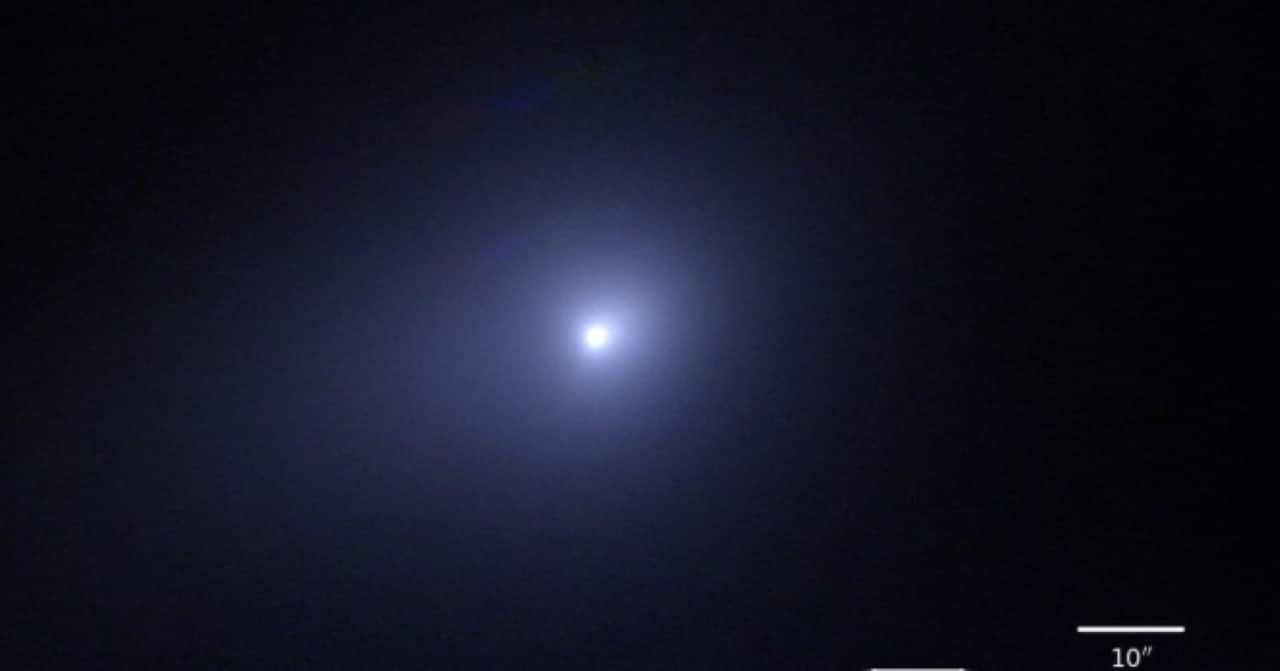
Astronomers have identified an exceptionally high concentration of deuterium in molecules released by the interstellar object 3I/ATLAS. The data comes from spectroscopic observations carried out by Telescópio Espacial James Webb last year. Duas international teams analyzed the object’s methane and water emissions, recording deuterium-to-hydrogen ratios well above values observed in Sistema Solar comets. Astronomer Avi Loeb highlighted the findings in recent publications.
These results raise questions about the origin and formation of 3I/ATLAS, which passed through the inner solar system on a brief visit. Deuterium is a stable isotope of hydrogen with an additional neutron in the nucleus. Quando combined with tritium, it participates in nuclear fusion reactions, the basis for research into clean energy. However, study authors attribute the abundance to natural processes in cold environments.
Isotopic composition reveals distinct formation environment
The researchers measured a D/H ratio of approximately 0.95% in the water released by the object, a value more than ten times higher than that found in known comets. Outra analysis detected a D/H ratio of around 3.31% in methane, a level considered rare in interstellar objects. Essas signatures indicate formation at temperatures below 30 Kelvin in a metal-poor region early in the history of Via Láctea.
- The international team included scientists from Goddard Space Flight Center and Jet Propulsion Laboratory from Nasa.
- Near-infrared spectroscopic data confirmed the presence of deuterated organic molecules.
- Models of galactic chemical evolution suggest accretion 10 to 12 billion years ago.
The studies have not yet undergone peer review, but have been submitted to journals such as Nature Astronomy and Nature. The ratios of carbon-12 to carbon-13 were also shown to be high compared to nearby interstellar clouds and protoplanetary disks.

Hypotheses about the origin of the object gain new elements
The abundance of deuterium may result from formation in an old and cold protoplanetary disk, different from the one that gave rise to Sol and the planets. The authors conclude that 3I/ATLAS formed under extreme conditions in the galaxy’s distant past. Essa natural interpretation explains the data without the need for artificial processes.
Avi Loeb, known for exploring technological possibilities in interstellar objects, commented on the findings. Ele questioned whether the high concentration could indicate a technological signature, given deuterium’s role as a fusion fuel. Researchers, however, prioritize explanations based on natural astrophysical processes.
Details of spectroscopic measurements
The observations captured gas emissions around the object as it passed. The detection of deuterated molecules in methane represents an extremely rare case in interstellar visitors. Analyzes combine data from multiple instruments to refine isotopic ratios.
The co-authors of the two articles largely overlap, reinforcing the consistency of the preliminary results. Water measurements show enrichment orders of magnitude greater than known comets. Já methane presents even more discrepant values in relation to planets on Sistema Solar.
Astronomical context expands debate on interstellar objects
3I/ATLAS represents the third interstellar object confirmed to visit the inner solar system. Sua trajectory and composition offer unique opportunities to study materials from other stellar systems. The new measurements add layers of information about chemical diversity in ancient regions of the galaxy.
Teams from different institutions collaborated to process the James Webb data. The results highlight striking differences between the 3I/ATLAS and Sistema Solar bodies. The extreme isotopic signatures point to low metallicity environments and very low temperatures.
Deuterium abundance and implications for planetary formation
Scientists emphasize that cold protoplanetary disk formation explains the retention of deuterium in molecules such as water and methane. Esse process occurs over billions of years under specific conditions. The interpretation aligns the data with models of galactic evolution.
The observations contribute to understanding how materials accumulate in distant star systems. The object released gases that allowed detailed analyzes of its chemical composition. Pesquisadores continue to monitor 3I/ATLAS to gather more information during its passage.
Studies reinforce the need for more observations
The teams plan additional refinements to the data interpretation models. The detection of deuterated organic molecules paves the way for future investigations into interstellar chemistry. The case of 3I/ATLAS illustrates the importance of advanced space telescopes in exploring distant objects.
Preliminary findings encourage debate about the diversity of interstellar objects. Astrônomos of various nationalities participated in the analyses. The results will be evaluated by the scientific community after peer review.
