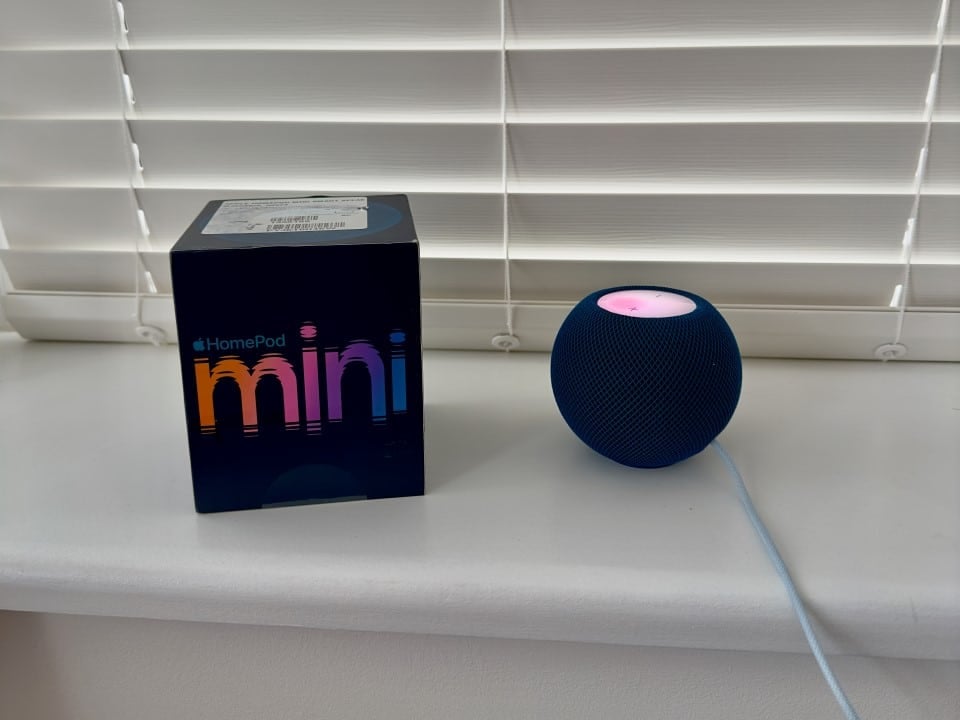
Apple decided to postpone the launch of the new versions of the Apple 4K TV and HomePod mini, which were ready to hit the market last year. The technology giant’s strategy aims to align hardware availability with the completion of the new features of the Siri, which will now feature the Apple Intelligence. Especialistas from the sector indicate that the devices are in an advanced stage of production, just awaiting the necessary software support to operate the artificial intelligence functionalities natively.
The waiting scenario reflects a change in the company’s positioning, which now prioritizes the full integration of its ecosystem with intelligent processing tools. Segundo behind-the-scenes information from the industry, the successor models have already passed technical compliance tests and are stocked in strategic distribution centers. The decision not to launch the devices immediately suggests that the user experience with the new virtual assistant is considered the main competitive differentiator for this generation of domestic products.
The scarcity of units of current models in physical stores and online retail in several regions of the world reinforces the thesis that a catalog renewal is imminent. However, the official timeline remains uncertain as Apple is still calibrating the performance of Siri on newer operating systems. Consumers looking to purchase current devices encounter stock difficulties, which generally precedes major brand announcements, although software delays are an atypical factor in the company’s chronology.
Technical evolution and new processing chips
The next generation of the Apple TV should present a significant leap in performance with the inclusion of the A17 Pro chip, the brand’s oldest component capable of supporting the demands of the Apple Intelligence. Esta update will allow the entertainment console to process complex tasks locally, reducing dependence on external servers for voice commands and media organization. Além In addition, the device must incorporate the N1 chip, a proprietary solution developed to guarantee compatibility with the most modern connection technologies on the global market.
The new network hardware promises to transform the stability of home connections, offering support for the Wi-Fi 7 and Bluetooth 6 standards. The inclusion of the Thread protocol is also planned, consolidating the device as one of the main connectivity hubs for the Matter standard, which unifies devices from different manufacturers under the same control interface.
A17 Pro processor with architecture focused on artificial intelligence.
Advanced connectivity with support for high-speed Wi-Fi 7.
Native integration with the Matter standard and Thread network protocol.
Local processing capability for advanced Siri wizard commands.
Hardware challenges in the new HomePod mini
The second-generation HomePod mini also faces a software development impasse, although its processor specifications still generate technical debate among analysts. Espera The device is expected to use the S9 chip, the same one present in recent versions of the Apple Watch, or possibly a more powerful variant dedicated to audio. The big question lies in the ability of this specific component to handle the processing demands of the new Siri based on large-scale language models.
Despite the physical limitations of a compact device, the Apple seeks to improve the sound quality and accuracy of detecting voice commands in noisy environments. The new model must feature a state-of-the-art ultra-wideband (UWB) sensor, facilitating the transfer of audio between the iPhone and the speaker with greater spatial precision. Esteticamente, the line should be expanded with new color options, including a vibrant red version to attract the public looking for personalization in home decoration.
The longevity of the current HomePod mini model is a point of attention, given that the original product was introduced to the global market in October 2020. The interval of almost six years without a hardware update is considered extensive for the consumer technology segment, where competition has advanced rapidly. Apple seems willing to break this cycle only when it can deliver an evolution that justifies changing the device, focusing on the practical usefulness of artificial intelligence in everyday domestic life.
Release window and system updates
Projections for the official announcement of new products point to two distinct time windows, strictly depending on the progress of iOS 26.5. If the first developer beta becomes available between late March and early April, Apple could make a quiet announcement via press release within a few weeks. Caso Otherwise, the company should choose to hold off on releases until the annual developer conference in June, where the iOS 27 operating system will be presented with all its artificial intelligence capabilities.
If the full integration of the Siri requires more optimization time, the commercial launch could be pushed to the end of September, coinciding with the traditional cycle of new iPhones. Essa strategy would enable Apple to introduce a unified AI ecosystem, spanning from mobile devices to home entertainment centers. Coordination between hardware release and software maturation is seen as essential to avoid criticism about incomplete functionality or stability issues at launch.
Possibility of announcement via official statement in the first half of the year.
Full integration scheduled for the launch of the iOS 27 system in June.
Potential commercial postponement to September in conjunction with new iPhones.
Direct dependence on the stability of Apple Intelligence to release stocks.
Impact of Apple Intelligence on everyday life
The introduction of the Apple Intelligence promises to change the way users interact with television and audio systems in their homes. With the new Siri, it will be possible to perform deeper contextual searches, such as finding specific scenes in films through natural descriptions of events or dialogue. The assistant will also have a more accurate understanding of the user’s usage history, suggesting content and automations based on the daily routine without the need for repetitive manual commands.
This transition to a more intuitive interface requires hardware to support processing models that previously ran exclusively in the cloud. By bringing part of this intelligence to the Apple TV’s A17 Pro chip, the company guarantees greater privacy and speed of response, central pillars of its marketing strategy. The goal is to create an environment where technology anticipates user needs, making the smart home less dependent on screens and more focused on contextual and precise voice commands.
Entertainment market and competition
The Apple 4K TV upgrade is eagerly awaited by technology enthusiasts, especially those who use the device as a replacement for casual gaming consoles. The power gain of the A17 Pro chip will allow more complex games, originally developed for next-generation computers and consoles, to run smoothly in the living room. Essa movement puts the Apple in a prominent position compared to traditional set-top boxes, which generally have much lower technical specifications and are focused only on video streaming.
Build quality and sound fidelity continue to be the pillars of the HomePod line, which seeks to compete in the premium home audio segment. Enquanto competing brands focus on low-cost virtual assistants, Apple tries to maintain its added value through data security and vertical integration between hardware and software. The challenge will be to convince the user base that the improvements in the Siri are significant enough to motivate the replacement of devices that still deliver satisfactory audio performance.
Global availability of the new devices will be immediate once the green light is given by the software engineering team at headquarters in Cupertino. Diferente from previous years, where distribution logistics was the main obstacle, the current scenario is defined by the maturity of the artificial intelligence code. Consumers should monitor stock levels at official stores, as sudden restocking of old units could be the last sign before the official reveal of the new family of smart home products.
With the imminent arrival of Wi-Fi 7 on new devices, Apple also encourages the modernization of users’ network infrastructure, setting the stage for the future of ultra-high definition streaming. The company understands that the Apple TV is not just a media player, but the central core of an increasingly complex and interconnected home network. The investment in proprietary connectivity chips reinforces this long-term vision, where each hardware component is designed to maximize energy efficiency and data transmission speed.
The HomePod mini, in turn, will continue to be the most accessible gateway to the brand’s home ecosystem, maintaining the spherical shape that has become iconic. The addition of new temperature and humidity sensors, already present in the previous version, should be improved with automatic sound calibration algorithms based on the environment. Assim, the device will dynamically adjust to the acoustics of each room, ensuring a consistent listening experience regardless of its position.
The decisions made by Apple in the coming months will define the success of its home devices division for the next decade. By betting all its chips on generative artificial intelligence applied to the Siri, the company seeks to recover ground lost to competing virtual assistants that have gained popularity in recent years. The integration of the A17 Pro chip and the N1 chip are the physical tools necessary for this software revolution to reach the end consumer with the fluidity and technical elegance characteristic of the brand.
The financial market’s expectations are also high, as hardware renewal usually boosts service revenues, such as Apple TV+ and Apple Music. More powerful Dispositivos encourage users to subscribe to higher value plans and consume content of higher technical quality, fueling the company’s growth cycle. The delay, while frustrating for some consumers, is seen by analysts as a prudent measure to ensure the launch does not suffer from software glitches that could compromise the new intelligence platform’s reputation.
