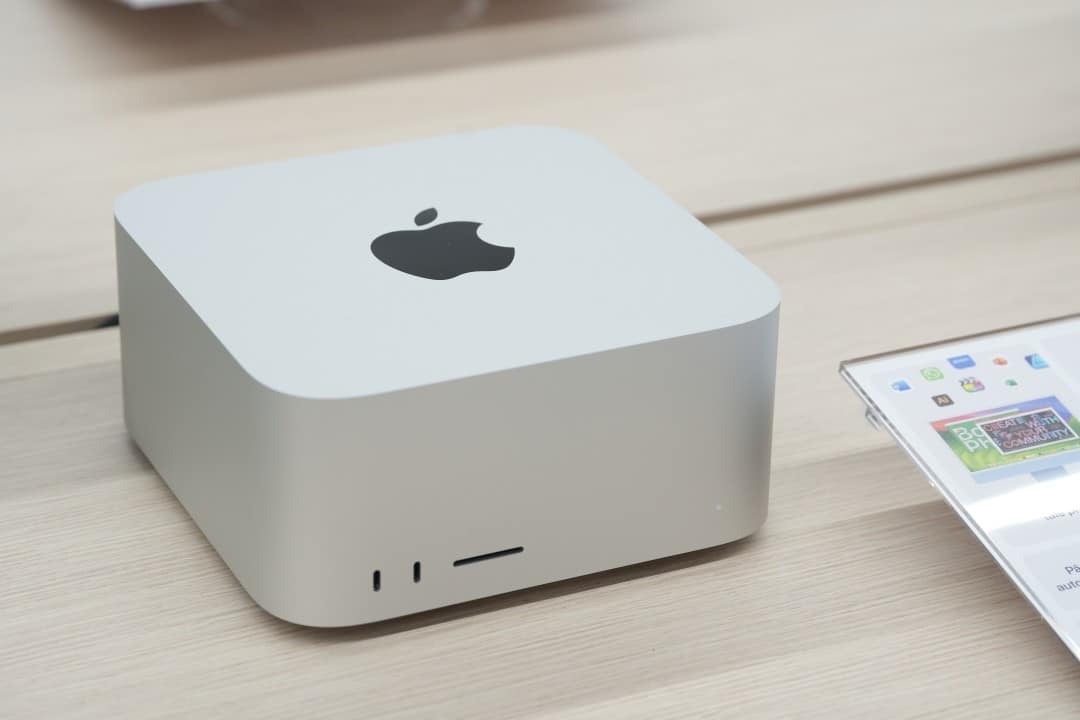
The North American electronics manufacturer quietly removed its most robust and traditional desktop computer from its online store this Thursday. The page that previously displayed the specifications and purchase options of the tower-shaped equipment now automatically redirects visitors to the general showcase of the brand’s computer family. The measure confirms the absence of plans for the development of new generations of hardware with this specific chassis. With this strategic move, the company definitively establishes a new hierarchy in its portfolio of machines aimed at the corporate and audiovisual creation market.
Architectural transition and new focus on integrated processors
The last hardware update received by the professional tower occurred in mid-2023, when the manufacturer introduced the M2 Ultra processor in the classic chassis. Desde During that period, the entry value of the equipment remained fixed at around seven thousand dollars on the international market, without any change in internal configuration options or performance improvements. Essa stagnation contrasted sharply with the pace of innovation applied to other devices from the same brand, highlighting a gradual change in the development priorities of the engineering team responsible for desktop computers.

The compact model that now takes the lead in the professional segment had already received substantial updates the previous year, incorporating the M3 Ultra chip architecture. Essa disparity in processor generations between the traditional tower and the small form factor device has made the choice for the larger model increasingly less justifiable from a technical and financial point of view for demanding consumers. The unified architecture of the new processors demonstrated that huge cases with multiple physical expansion slots lost their primary usefulness, since the integration of components on the chip itself delivers much higher data transfer speeds.
Technical specifications of the equipment that takes the lead
The device that moves to the top of the desktop computer category features processing capabilities that surpass previous generations of expandable towers. The hardware can be configured with a central processing unit of up to thirty-two physical cores.
In the graphics aspect, the machine supports extreme configurations that reach eighty cores dedicated exclusively to image rendering and complex visual calculations. Essa capacity directly meets the demands of animation studios and film producers that work with very high resolutions.
Random access memory, now treated as unified memory within the manufacturer’s architecture, can reach the two hundred and fifty-six gigabytes mark. Essa massive amount allows the handling of multiple raw video streams simultaneously without bottlenecks in the operating system.
For internal storage of large-volume files, factory options allow installation of up to sixteen terabytes on ultra-high-speed solid-state drives. Essa specification eliminates, in many cases, the immediate need for external servers for ongoing projects.
Complete restructuring of the desktop computer catalog
The brand’s current offer of fixed computers has been reduced to exactly three distinct lines, simplifying the choice process for the end consumer. The integrated model with a twenty-four inch screen caters to the general public with the M4 processor.
For users who already have monitors and peripherals, the entry option in compact box format offers versions with M4 and M4 Pro chips. Esse device acts as a bridge between home needs and small office demands.
The high-performance model completes the triad, being targeted exclusively at workstations that require continuous processing under thermal stress. Eliminating the traditional tower streamlines the production line and focuses technical support efforts on more modern architectures.
Parallel changes in the supply of monitors and portable devices
The restructuring of the portfolio was not limited to processing cabinets, it also extended to ultra-high fidelity visual display peripherals. The professional monitor originally released in conjunction with the 2019 tower had already been withdrawn from circulation earlier this month, indicating an imminent revamp across the entire studio-focused hardware category.
In the portable computer segment, the recent introduction of the Neo model added a new layer of options for consumers, joining the Air and Pro lines. Essa diversification on laptops contrasts with simplification on desktops, showing that mobility has become the absolute priority for most modern professionals.
Software innovations that compensate for the lack of physical expansion
The absence of internal expansion ports in the new main computer is mitigated by significant advances in the software layer and external communication protocols. Version 26.2 of the Tahoe operating system introduced native support for remote direct memory access technology via Thunderbolt 5 cables, operating with virtually zero latency. Essa technical innovation allows studios to connect multiple units of the compact computer in a network, creating a processing cluster that combines the firepower of several machines to solve complex artificial intelligence calculations or three-dimensional rendering. Dessa way, the expandability that previously occurred inside a large metal cabinet now happens externally, in a modular and scalable way, allowing companies to acquire new processing modules as the demand of their projects increases, without the need to discard previously acquired hardware.
The end of an era in hardware design
The discontinuation of the expandable tower closes a chapter of approximately two decades in the manufacturer’s industrial design history, marked by iconic aluminum cabinets. The current strategy consolidates the vision that energy efficiency and component miniaturization are the fundamental pillars for the future of high-end computing.
Main features of the new default configuration
The definitive transition to processors based on the ARM architecture allowed the manufacturer to completely rethink the way hardware resources are distributed and managed by the operating system. The focus on components soldered directly to the logic board eliminates communication bottlenecks that existed in the old connection interfaces for traditional video cards and memory modules. Professionals migrating from the old expandable platform to the new compact format find a closed, yet highly optimized ecosystem for the most used software tools in the global creative industry.
– Advanced thermal integration allows silent operation even under maximum workload.
– Electric energy consumption is drastically lower than that required by old processing towers.
– The portability of the cabinet facilitates the safe transport of equipment between different recording studios.
– Front communication ports ensure quick access for data transfer from professional memory cards.
