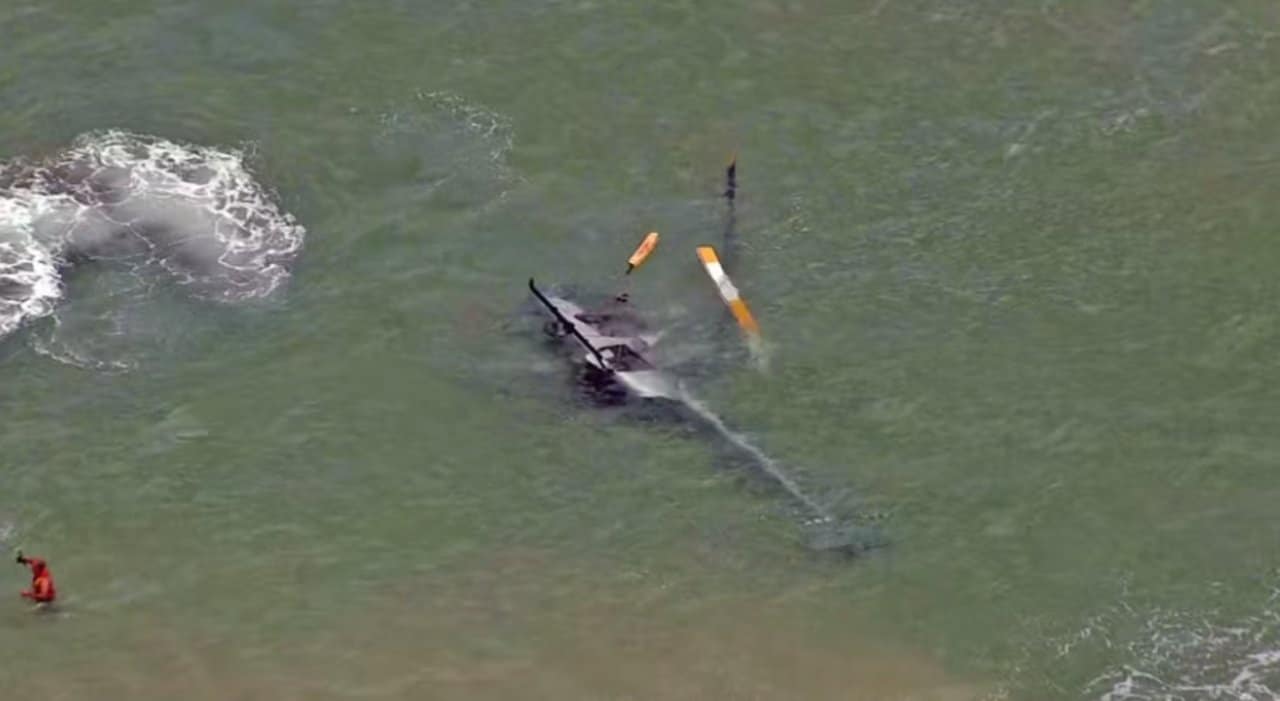
A helicopter that was carrying out a panoramic flight fell into the sea at Praia of Barra of Tijuca, southwest zone of Rio of Janeiro, on the morning of a Friday, April 3, 2026. The aircraft submerged between stations 3 and 4 of the Rio coastline, at a point close to the sand strip. Apesar of the seriousness of the incident, videos that quickly circulated on social media showed crew members consciously leaving the submerged device, indicating that there were no serious injuries at the time of the fall. Corpo of Bombeiros was immediately called to respond to the incident.
The accident, which happened around 11:20 am, generated great movement on the beach, attracting the attention of bathers and residents. Images captured by witnesses show the helicopter practically swallowed by water, with only a small part of its structure visible. The aircraft was completely destroyed after sinking about two meters, a scenario that highlighted the violence of the impact with the water surface.
Although the exact dynamics of the accident have not been officially disclosed, the prompt response of the crew to free themselves from the aircraft and the absence of victims in serious condition were the most positive aspects of the imminent tragedy. The competent authorities, including Corpo of Bombeiros Militar and Marinha of Brasil, began operations to ensure the security of the area and continue investigations.
Details of the incident and first aid
Notification of the crash reached Corpo from Bombeiros at 11:20am, with crews quickly moving to the scene. The aircraft’s proximity to the shore facilitated initial access, both by rescuers and by civilian vessels that assisted in the rescue. Felizmente, the crew demonstrated the ability to react immediately, managing to free themselves from the aircraft before it sank completely.
Witnesses reported seeing people being pulled from the water without showing visible signs of serious injuries, although fright and shock were evident. The quick medical care provided at the scene by firefighters and rescue teams was crucial to stabilize those involved and assess the need for hospital referral. The immediate priority was to ensure that there was no one else on board and that the area was safe for the movement of vessels and divers.
Research and air safety in the region
After the rescue phase, attention turns to investigating the causes of the accident. Órgãos as well as Centro of Investigação and Prevenção of Acidentes Aeronáuticos (CENIPA), of Força Aérea Brasileira, must take over the conduct of the investigation. The analysis will include flight data, aircraft maintenance history, weather conditions at the time of the crash and testimonies from crew members and witnesses.
Scenic flights are a popular tourist attraction in big cities like Rio, but they require stringent safety standards. Preventive maintenance, crew qualification and compliance with Agência Nacional and Aviação Civil (ANAC) standards are fundamental aspects to guarantee the integrity of passengers and the operation. Cada Detail of the aircraft, from engines to navigation systems, will be examined to identify possible mechanical or human failures.
Aviation safety is a constant pillar for Brazilian authorities, which maintain a robust inspection and regulation system. Incidentes like this reinforce the need for continuous surveillance and improvement of existing protocols. The main objective of the investigation is not only to punish those responsible, but to understand the causes to prevent future accidents, contributing to increasing public confidence in air services.
Impact on the local and tourist scene
The helicopter crash at Praia of Barra of Tijuca, one of the busiest points in the city, had an immediate impact on local routine. The area was isolated to facilitate rescue and investigation work, temporarily affecting the movement of people and the practice of water activities in the region between stations 3 and 4. Embora although the closure was specific, it generated curiosity and concern among beachgoers.
For the tourism sector, which offers scenic flights as one of the attractions of Rio, the incident may raise questions about the safety of operations. However, the city’s reputation as a tourist destination is often resilient, and one-off incidents rarely affect the overall flow of visitors in the long term. Companies in the sector, in turn, are encouraged to reinforce their security and communication practices to reassure the public and maintain confidence in their services.
Barra da Tijuca, known for its extensive beaches and its modern profile, is an important hub for tourism and the Rio economy. Incidentes like this, although regrettable, serve as reminders of the importance of efficient emergency infrastructure and well-designed contingency plans. The quick response by the competent bodies minimizes damage and demonstrates the ability to manage crises in such a busy scenario.
Aircraft recovery procedures
Recovering the submerged aircraft represents a considerable logistical challenge. Equipes specialized Marinha Brasil and maritime rescue companies are called in to handle the operation. The process involves divers assessing the condition of the helicopter on the seabed, planning the best way to lift it and ensuring there are no fuel or other pollutants leaking into the water.
It is essential that the removal is carried out carefully to preserve as much as possible the wreckage, which will be key elements in the investigation. Guindastes Floating vessels or vessels equipped with lifting systems are used to lift the helicopter structure from the seabed. The complexity of the operation is increased by the need to work in a marine environment, which requires specific equipment and highly trained professionals to work in adverse conditions, such as currents and limited visibility.
History of similar incidents in Brazil
Brasil, with its vast territorial extension and intense aerial activity, has a history of aviation incidents and accidents that are meticulously investigated by the authorities. Embora helicopter accidents in urban areas are less frequent than those in other categories, each occurrence is treated extremely seriously. Investigations seek standards, identify systemic failures and promote the review of safety standards and procedures, always aiming to improve general aviation in the country. Brazilian legislation is very strict, and the work of bodies such as ANAC and CENIPA is continuous to maintain high safety standards. The culture of prevention is constantly reinforced among operators and pilots, with periodic training and inspections.
Repercussion and initial statements
The incident at Barra da Tijuca generated wide repercussions on social media and in the news, with videos and photos of the helicopter crashing and the crew exiting the aircraft being shared. The initial commotion was quickly replaced by relief upon learning that there were no serious injuries. Depoimentos of bathers highlighted the scare, but also the efficiency of the aid.
The community awaits the results of the investigation to understand the causes of the accident and ensure that preventive measures are implemented, strengthening the safety of scenic flights and other air operations in the capital of Rio de Janeiro. The scenario, although dramatic, reinforces the importance of preparation and coordination between the various security and rescue bodies.
