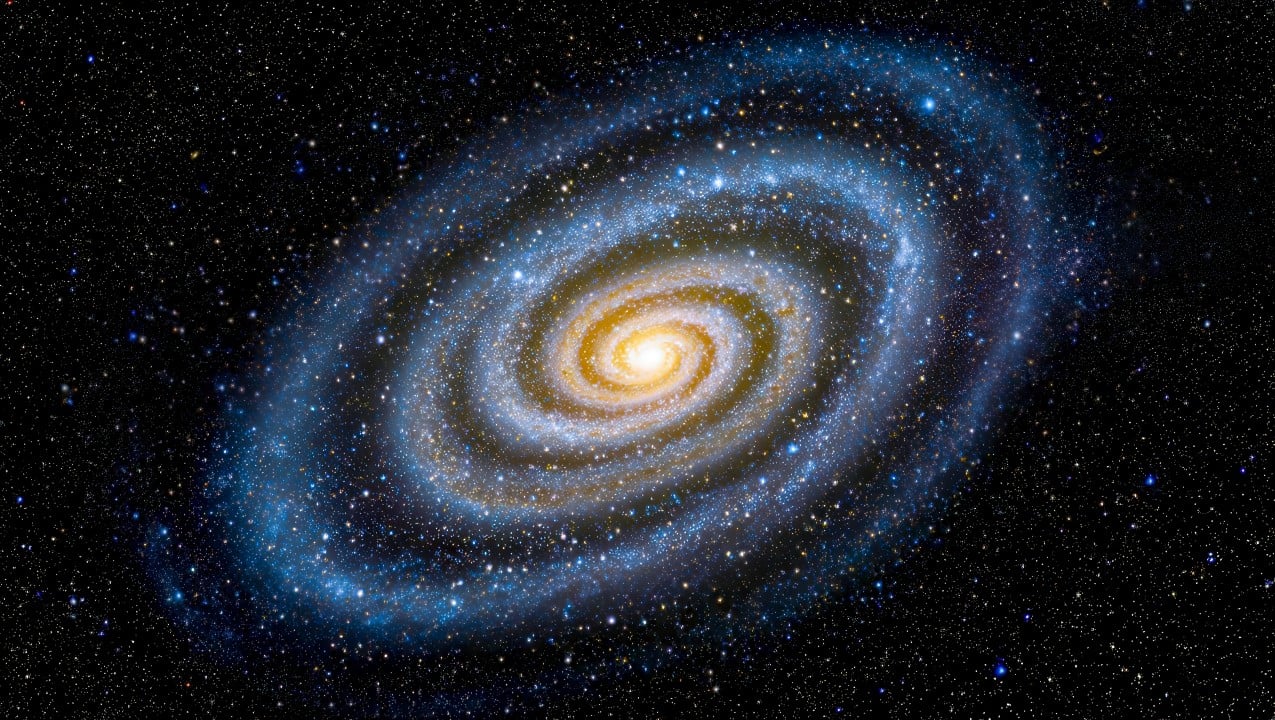
Astronomers from several international institutions recently announced the detection of a spatial structure of gigantic proportions located in a region relatively close to Sistema Solar. The discovery was made through high-precision mapping and spectroscopic observations that identified an unusual density of matter at the limits of our immediate galactic neighborhood. Esta massive formation, which extends for hundreds of light years, is being analyzed by global teams seeking to understand its composition and the gravitational influence it exerts on adjacent celestial bodies. Preliminary data indicate that the phenomenon has distinct characteristics from conventional nebulae or star clusters already cataloged by modern science.
Monitoring this new structure was possible thanks to the advancement of state-of-the-art telescopes and collaboration between observatories that operate at different light frequencies. When comparing the information obtained, experts noticed that the mass of interplanetary gas and dust does not follow the distribution patterns expected for this area of space. The strategic location of this discovery allows researchers to study galactic evolution with a level of detail unprecedented in decades of space exploration.
Physical characteristics and dimensions of the new space formation
The newly discovered structure presents dimensions that challenge current models of molecular cloud formation in the Via Láctea. Segundo initial measurements, the extent of the gaseous mass covers an area that will require a revision of the astrophysical maps used for navigation and study of stellar orbits. The researchers highlight that the density of the material found suggests an ancient origin, possibly linked to star formation events that occurred billions of years ago in the galactic arm where we find ourselves.
This space complex is not just a speck of dust, but rather an interconnected network of filaments that appear to channel streams of matter toward the center of mass. The complexity of these bonds suggests that not yet fully understood physical processes are at work, maintaining the structure’s cohesion despite the galaxy’s tidal forces. Astrophysics teams now plan to use infrared sensors to penetrate the densest layers of the structure and observe what hides inside.
Advanced Detection Methods and Observation Technology
The identification of such a massive and nearby structure occurred through the analysis of parallax data and proper motion of stars in the background. By observing how the light from distant stars was distorted or blocked, scientists were able to draw a three-dimensional profile of the invisible mass that stands between Terra and the galactic center. Esse The spatial triangulation method is considered one of the most accurate in contemporary astronomy for measuring objects that do not emit their own light intensely.
- Use of radio interferometry to map the edges of the structure.
- Analysis of data collected by space probes in Earth orbit.
- Processing artificial intelligence algorithms for image reconstruction.
- Comparison with historical records from previous mapping missions.
The technology involved made it possible to rule out reading errors that could be caused by atmospheric interference or electronic noise in the sensors. The joint effort of scientists from different continents ensures that the discovery goes through a rigorous peer review process before being formally integrated into the definitive stellar catalogues.
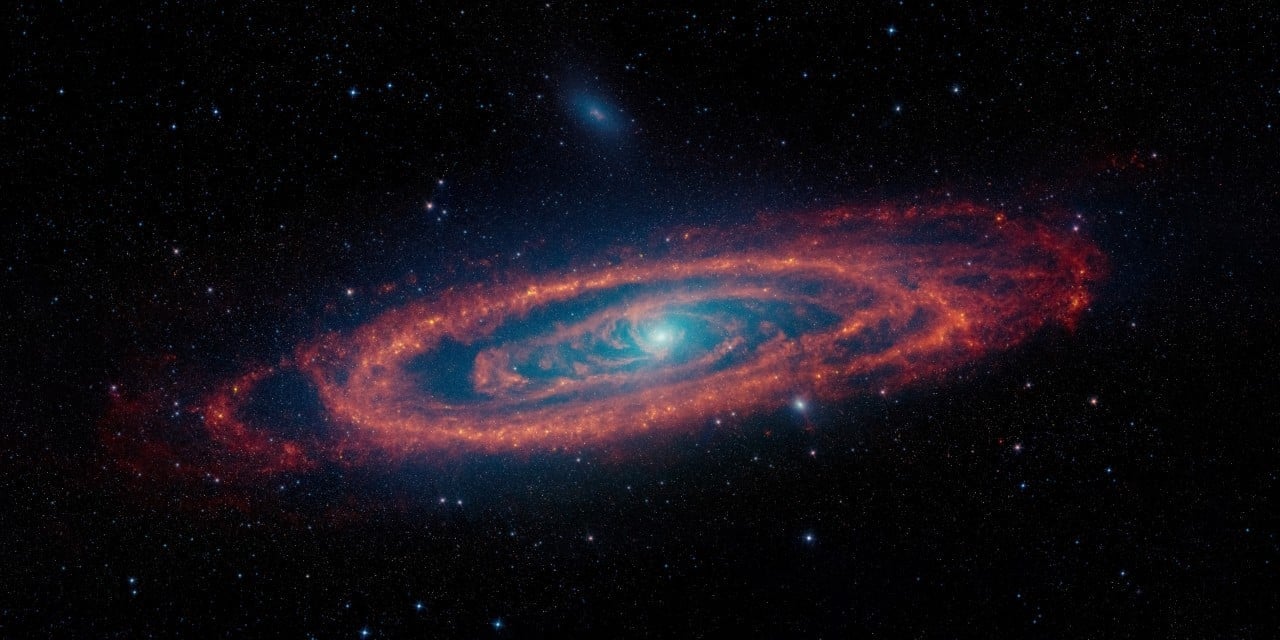
Possible origins of space mass detected by astronomers
There are several theories being debated in the scientific community about how a structure of such magnitude remained hidden for so long. One of the most accepted hypotheses is that the orientation of the structure in relation to the plane of Terra made it difficult to perceive its real depth and volume. Muitos believed that they were small, isolated accumulations of matter, when in fact they are part of a single, integrated system of colossal proportions.
Another strand of research investigates whether the formation could be the remnant of an ancient supernova or the result of the interaction between intergalactic gas streams. If the external origin is proven, the discovery could provide valuable clues about how our galaxy consumes matter from the intermediate environment to support the creation of new stars. The study of the chemical properties of the gas present in the structure will be essential to determine whether the elements found are compatible with those of Sistema Solar.
The investigation also focuses on the possibility that the structure is a latent “stellar nursery”, where gravity begins to collapse hydrogen clouds. Caso If this happens, in a few million years, the neighborhood of Sol could gain new stellar neighbors, permanently altering the visual configuration of the Earth’s night sky. Astronomers are monitoring temperature fluctuations at specific points in the mass to identify signs of developing protostars.
Impacts of the discovery for the study of the solar neighborhood
The proximity of this massive structure means that the effects of its gravity can be felt on astronomical timescales across our planetary system. Embora there is no immediate risk to Terra or the other planets in Sol, the presence of so much mass alters the trajectories of long-period comets and asteroids. Entender This dynamic is vital for planetary protection and for planning future exploration missions that intend to leave the limits of the heliosphere.
Experts point out that the precise mapping of this region fills an important gap in knowledge about the arm of Órion. Até then, it was believed that the space around Sol was relatively empty of large complex structures of dark or baryonic matter. Breaking this paradigm opens the way to new questions about the density of the interstellar medium and the efficiency with which light travels through these dense regions.
Challenges in classifying recent space phenomenon
The astronomical community faces the challenge of technically naming and classifying this new space object. Devido Due to its hybrid nature, which mixes characteristics of molecular clouds and galactic filaments, traditional nomenclatures seem insufficient to describe its magnitude. Workshops are being organized to establish measurement criteria that can be applied in a standardized way by all observatories involved in monitoring.
The lack of a defined central core makes the task of delimiting where the structure begins and ends even more complex for space cartographers. The edges of the formation are diffuse and appear to mix with the interstellar vacuum gradually, requiring extremely sensitive sensors to detect rare particles. The expectation is that, with another year of continuous observation, the geographic limits of this spatial “wall” will finally be established with a minimum margin of error.
The scientific community is now awaiting the release of new batches of data from space missions that are in the final processing phase. Essas information should reveal whether the structure has any rotational movement of its own or whether it is on an approach to other known clusters. Constant monitoring will ensure that any changes in space mass dynamics are detected in real time by astronomical warning systems.
Perspectives for future exploration and research missions
The discovery of such a large and nearby structure motivates the aerospace sector to consider sending automatic probes for on-site analysis. Embora distances are still immense for current technology, collecting direct data on the composition of dust and gas would be a historic milestone for humanity. Pesquisadores argue that the study of this matter can reveal secrets about the formation of Sol itself and the planets that surround it.
While physical missions are not feasible, supercomputer simulation has become the main tool for predicting structure behavior in the coming millennia. Esses Mathematical models help understand how mass behaves under radiation pressure from neighboring stars and how it interacts with the galactic magnetic field. The ultimate goal is to create a complete atlas that includes all major space formations within a thousand light-year radius of Terra.
