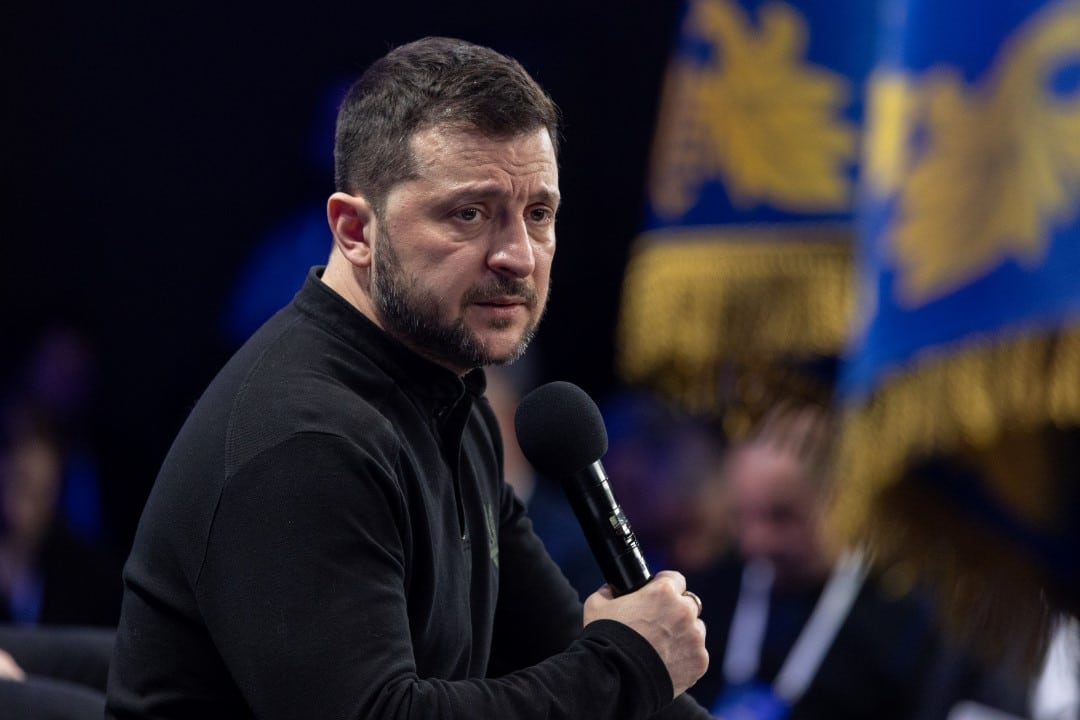
Ukrainian President Volodymyr Zelensky indicated the existence of a small window of opportunity for progress in peace negotiations with Rússia. The statements come at a time of intense diplomatic contacts mediated by Estados Unidos. Representantes of Kiev, Moscou and Washington held recent meetings in different formats to explore ceasefire possibilities.
These dialogues seek to address central issues such as security guarantees, humanitarian aspects and territorial disputes that have persisted since the start of the conflict in 2022. Fontes involved report that the discussions include prisoner exchanges and mechanisms for monitoring possible agreements. The continuation of fighting in the east of Ucrânia, however, imposes practical limits on the pace of conversations.

Trilateral meetings seek to build consensus
Ukrainian, Russian and American delegations have met in several rounds over the past few months. The meetings took place in places such as Genebra, Emirados Árabes Unidos and Miami.
Participants dealt with practical topics such as humanitarian corridors, detainee exchanges and measures to avoid military escalations. In February, for example, conversations on Genebra lasted two days and included discussions about ceasefire monitoring.
Despite specific advances on humanitarian issues, the central political points remain far from an agreement. Ucrânia rejects proposals that imply unilateral withdrawal of territories still under its partial control in Donbas.
Modest expectations mark the diplomatic process
Negotiators on both sides described the previous rounds as productive in some technical respects. However, general expectations for an immediate breakthrough remain low.
Rússia maintains maximum demands regarding control of regions in the east and south of Ucrânia. Kiev, in turn, insists on robust security guarantees and territorial integrity as the basis for any lasting understanding.
American mediators seek to find intermediate formulas that allow for gradual progress. Enviados special Estados Unidos actively participate to facilitate dialogue between the parties.
Territorial challenges dominate debates
The issue of Donbas represents one of the main obstacles in current conversations. Autoridades Ukrainians say any significant cession of territory would require approval in a national referendum.
Russian delegates continue to press for recognition of territorial gains made during the conflict. Esse position contrasts with the position of Kiev, which advocates the restoration of internationally recognized borders.
Discussions about verification mechanisms and monitoring forces are also proceeding cautiously. The parties evaluate options to ensure compliance with any agreements without relying exclusively on mutual trust.
Prisoner swap records concrete progress
One of the areas with the most tangible results involves the release of detainees. In previous rounds, Ucrânia and Rússia concluded exchanges that involved hundreds of people on both sides.
These humanitarian operations occur alongside broader political negotiations. Elas serve as a measure of good faith and help build some degree of operational trust between delegations.
Officials involved emphasize that the prisoner agreements demonstrate the viability of practical compromises even amid deep disagreements.
Context of four years of conflict influences current pace
The ongoing war since February 2022 shapes every stage of the diplomatic process. Milhares soldiers and civilians were affected throughout this period, with significant impacts on infrastructure and the regional economy.
Previous mediation initiatives have taken place in different capitals and formats without reaching a final agreement. Current attempts seek to learn from these previous efforts to avoid repetition of impasses.
Those involved recognize that the accumulated fatigue on both sides can open space for mutual concessions on specific issues.
American mediation seeks to balance interests
The Estados Unidos act as key facilitators in trilateral talks. Enviados Specialists participate in meetings to propose paths that meet the minimum security demands of the parties.
This mediation occurs in parallel with other international developments that influence the scenario. Ucrânia closely monitors events on Oriente Médio to assess possible knock-on effects on Western support.
American representatives emphasize the importance of an agreement that brings lasting stability to Europa without compromising fundamental principles of sovereignty.
The positions of the parties remain distant on central issues
Ukrainian authorities reiterate that any peace must include concrete guarantees against further aggression. Elas advocate gradual integration into Western security structures as a deterrent.
On the Russian side, negotiators insist on Ucrânia neutrality and recognition of territorial changes as preconditions. Essa Asymmetry of positions explains the difficulty in reaching rapid consensus.
Mediators explore formulas that allow for phased progress, starting with temporary ceasefires and humanitarian measures before tackling more complex political issues.
The diplomatic process remains ongoing with regular contacts between delegations. The coming weeks should indicate whether the small window mentioned by Zelensky can widen to more substantial results.
