Initial sales of the Nintendo Switch 2 record a global drop and raise alarm in the games market
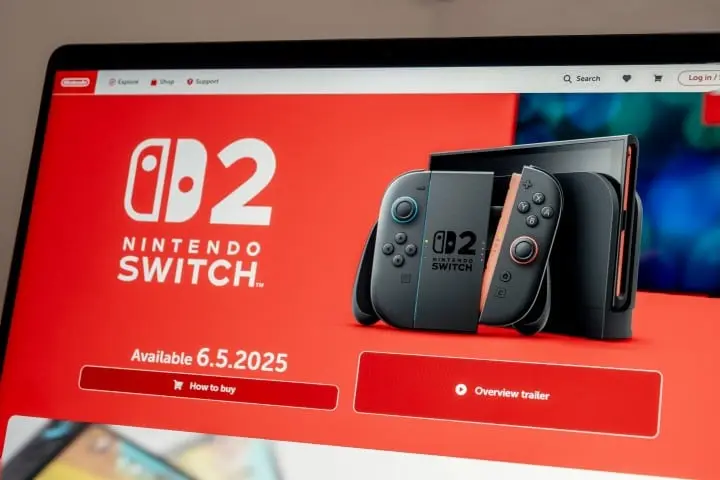
The launch of the Japanese digital entertainment giant’s new hardware reached the mark of ten million units sold globally in its first months on the market. The sales volume represents an impressive commercial achievement for any newly launched electronic device, demonstrating the strength of the brand and the public’s continued interest in hybrid platforms. However, financial reports and retail analysis indicate that the pace of initial adoption of new equipment is considerably slower when compared to the historical performance recorded by its direct predecessor during the same launch period.
The slowdown in sales was already a scenario projected by experts in the technology sector, who pointed to the saturation of the segment and the current global economic scenario as limiting factors for immediate explosive growth. Persistent inflation in several territories and the increase in the cost of living have reduced the purchasing power allocated to entertainment, meaning that the acquisition of a new video game console is no longer an immediate priority for a significant portion of families. Esse macroeconomic environment creates a natural barrier to the rapid penetration of new generation hardware, requiring more aggressive commercial strategies on the part of manufacturers.
The resounding success of the previous generation set an extremely high level of demand for the company, which now needs to surpass its own brand. With over one hundred and forty million units sold worldwide throughout its lifecycle, the original platform has built a colossal installed base, becoming one of the most popular entertainment systems in history. Essa Vast community of players represents simultaneously the biggest asset and the biggest obstacle for the new commercial venture, as convincing this audience to make a new financial investment requires very clear technological and software justifications.
The manufacturer’s central challenge at this time is to maintain the continuous engagement of its consolidated user base while gradually introducing the advantages of the new device. The transition between generations of consoles is traditionally a period of instability, where the offer of new features needs to overcome the inertia of consumers who are already satisfied with their current equipment. The company is betting on an organic migration, driven by unprecedented gameplay proposals and improved graphical capabilities, to ensure that the new platform achieves the same cultural and commercial relevance as its predecessor.
Commercial performance in the main international hubs
In Estados Unidos, which represents one of the most profitable and defining territories for the video game industry, retail data revealed an approximately thirty-five percent decline in sales during the holiday season, in direct comparison to the original model’s launch window. Market analysis company Circana reported that, although the new console led hardware sales in the period evaluated, the total volume of units sold was below the most optimistic projections established by the retail sector.
The absence of a launch title with universal and revolutionary appeal is pointed out as the main factor for this more restrained performance in the North American market. Durante the previous generation’s debut, the ready availability of a critically acclaimed open-world adventure served as an irresistible sales engine, driving adoption of the hardware among casual gamers and enthusiasts alike. The lack of a software product of equivalent weight in the new machine’s initial catalog reduced the sense of urgency for immediate purchase.
The European scenario showed similar retraction trends, although with different percentage variations depending on the country analyzed. No Reino Unido, records indicated sixteen percent lower sales volume in the first two months of in-store availability. Na França, the drop was even more pronounced, with a reduction of around thirty percent in annual revenue compared to the model’s debut year of 2017. Analistas Europeans highlight that strong competition from other platforms and changes in consumer habits will require highly localized marketing campaigns to reverse this downward curve.
Reception of hardware in Japanese territory
In the Japanese domestic market, traditionally the most loyal and safe stronghold for the manufacturer, reception of the new equipment also proved to be milder than initial estimates suggested. Revenue in the year of launch was around eleven percent below the records set by the previous generation. Durante In the first nine weeks of availability on the shelves, the new console recorded the sale of one million, three hundred and twenty thousand units, an impressive number, but which is slightly behind the mark of one million, three hundred and ninety thousand units reached by the 2017 model in the same period of time.
Although the percentage difference may seem small, it is highly relevant in a market characterized by high loyalty to local brands and an intense preference for portable devices. Maintaining this sales volume at Japão was strongly supported by the cultural appeal of established monster-catching and giant-creature hunting franchises, which have a dedicated fan base in the country. Contudo, even with the support of these major brands, the initial momentum was not enough to break the historical records previously established, demonstrating a more cautious stance on the part of the Asian consumer.
Economic factors and consumer behavior
The initial pricing of new hardware played a key role in moderating the pace of global sales. The incorporation of more advanced technological components, added to the effects of global inflation on the supply chain and manufacturing costs, resulted in a higher retail value than that practiced at the launch of the previous model. Esse The increase in the final price alienated a portion of more cost-sensitive consumers, who chose to wait for possible price reductions or the offer of seasonal promotional packages before making a purchase.
The catalog of games available on launch day, although robust and diverse with space exploration titles and narrative adventures, lacked a cultural phenomenon capable of mobilizing masses instantly. The absence of a product that immediately defined the need to own the new system made many players evaluate the purchase as an option for the future, and not as an immediate obligation to participate in current conversations and trends in the gaming community.
The backwards compatibility functionality, which allows users to run previous generation games on the new equipment, acted as a double-edged sword for the business strategy. On the one hand, ensuring the preservation of digital libraries built trust and offered a smooth, consumer-friendly transition. On the other hand, this same ease has drastically reduced the urgency of updating hardware, as players can continue to enjoy their extensive catalogs without the immediate need to invest in a new machine.
The ubiquity of the original console in homes around the world creates a complex convincing barrier. With tens of millions of homes already equipped with a functional entertainment system and a wide range of games, the value proposition of the new device needs to be exceptionally clear and innovative to justify the replacement. The average consumer demands practical demonstrations that new technology offers experiences that are impossible to replicate on old hardware.
Software Strategies to Drive Adoption
The long-term trajectory of the new platform will intricately depend on the cadence and quality of exclusive software releases scheduled in the coming months. The manufacturer has already outlined a promising publishing roadmap, focused on accelerating adoption of the system through the return of historic franchises and new iterations of its most valuable intellectual properties, including never-before-seen three-dimensional adventures and creature-capturing open-world explorations. Além of internal effort, ongoing support from third-party development studios is treated as an essential pillar for success. The confirmation that optimized versions of massive urban action franchises, first-person shooters and epic RPGs will be available on the new hardware signals strong industry confidence in the platform. Essa catalog diversification is vital to attracting a broader audience seeking complex narrative experiences and high-level online competitions in a format that allows for fluid transition between home and portable use.
Financial movements and corporate positioning
The financial market reacted with volatility to the first sales reports, reflecting investors’ uncertainty regarding the speed of adoption of the new technology. The company’s shares at Bolsa of Valores of Tóquio showed significant fluctuations shortly after the release of the official numbers. Embora the corporation’s financial health remains extremely solid, shareholders are demonstrating a cautiously watching stance, awaiting more robust signs that the hardware transition will not compromise long-term profit margins.
In response to market fluctuations, the company’s management has issued official statements reiterating that initial commercial performance is strictly aligned with internal projections established prior to launch. The corporation emphasizes that its business strategy is not based on momentary sales spikes, but rather on building a long and sustainable life cycle for the product. The current focus is on gradually expanding the installed base through a constant launch calendar, replicating the business model that ensured the longevity and profitability of the previous generation over several years.
Generational transition in the digital entertainment industry
The current scenario contrasts sharply with the market environment found in 2017. Naquela time, the company was emerging from a period of commercial difficulties with its previous desktop hardware, which generated pent-up demand for innovation and a strong public desire for a reinvention of the brand. The hybrid concept presented was received as a necessary revolution. Hoje, the manufacturer faces the unique challenge of competing against its own legacy of success, needing to prove to consumers that the technological evolution offered by the new machine justifies the investment in a market where the previous model still maintains extreme relevance and popularity.
