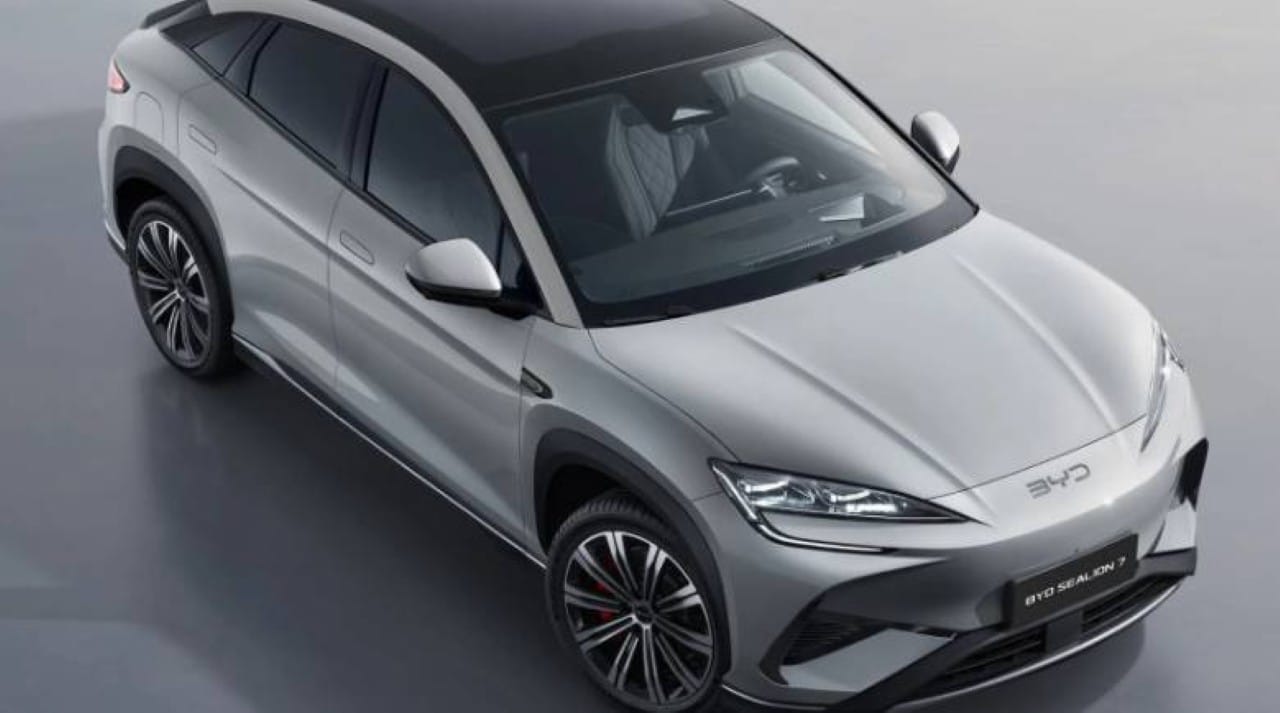
The global automotive market is witnessing a paradigm shift with the arrival of new Asian electric SUVs. Recentemente, engineers specialized in high performance decided to carry out a thorough technical disassembly of the BYD utility vehicle Sea Lion 7. The main objective of the inspection was to verify the quality of the mechanical components and attest to the durability of the suspension and braking assembly. The evaluation took place in a renowned workshop on Japão, focused on competition vehicles, to guarantee total impartiality in the results presented to the public.
The initiative comes at a strategic moment, where consumers and critics seek to understand the real level of sophistication of Eastern automakers compared to traditional European and North American brands. The data collected during the procedure serves to demystify technical information and offer a clear overview of the active safety and structural construction of the car. The detail of the internal parts allows an exact understanding of the investment made in research and development.
Technical analysis refutes rumors about the use of outdated parts in the utility vehicle
The decision to subject the vehicle to a rigorous inspection was born after rumors circulated in international automotive forums. Algumas publications suggested that the Chinese manufacturer used mechanical architectures based on designs from past decades to lower production costs. Diante of these allegations, the technical team took responsibility for thoroughly investigating the veracity of the information.
To ensure the accuracy of the analysis, the model was sent to the facilities of Sanko Works, a specialized unit located in the province of Chiba. The professionals involved in the project have a long history of working in world championships, which gives credibility to the final report. Rally competition experience allows evaluators to quickly identify structural flaws or performance-damaging savings.
During the first stages of disassembly, mechanics focused on the lower part of the chassis, removing aerodynamic protections and thermal insulation. The process revealed a level of internal finish that surprised the team, contrary to initial expectations generated by reviews on the internet. Cada The removed part was cataloged and subjected to mechanical stress tests on measurement benches.
Suspension architecture uses forged aluminum to reduce weight
Detailed verification of the front suspension system highlighted a design focused on optimizing unsprung weight, a vital characteristic for large electric vehicles. Experts noted the exclusive use of control arms made from forged aluminum, replacing the traditional stamped steel found in entry-level models. Essa material choice not only alleviates the overall mass of the chassis, but also provides a more agile and precise directional response. The applied engineering demonstrates a direct concern with vehicle dynamics, allowing the tire to maintain constant contact with the asphalt even on highly irregular surfaces.
In addition to being light, the geometry of the set was designed to support the instantaneous torque of the electric motors and the considerable weight of the traction battery pack. Technicians noted the presence of high-density bushings at the fixing points, specifically designed to filter vibrations and prevent mechanical noise from invading the passenger cabin. The production cost of this configuration is known to be high, indicating that the automaker chose not to save on components that are essential for safety and comfort. The level of sophistication found is similar to the standards adopted by premium automakers in the European market.
High-performance braking system ensures safety on descents
Active automobile safety received special attention during the evaluation of stopping components. The technical team dismantled the wheels to analyze the size of the discs and the power of the hydraulic system.
It was noted that the vehicle is equipped with perforated brake discs on all four wheels, a technical solution usually reserved for high-performance sports cars. The perforations play a crucial role in quickly dissipating the heat generated by the constant friction of the pads.
This cooling capacity is essential for heavy electric utility vehicles, as it prevents thermal fatigue of the system during sudden braking or long mountain sections. Efficient cooling ensures that the driver does not lose stopping ability in emergency situations.
The set works together with four-piston calipers, which distribute pressure symmetrically over the contact surface. The evaluators highlighted that the integration between mechanical braking and the electric motor regenerative system presents a refined and progressive electronic calibration.
Stress tests validate shock absorbers’ resistance to severe use
The process of validating the durability of the components was conducted under the supervision of Takahiro Kitami, a professional widely recognized for his work in competitions organized by Federação Internacional of Automobilismo. The team subjected the shock absorbers to rigorous load and internal fluid flow tests, simulating extreme driving conditions that the vehicle could face throughout its useful life. The results obtained from the measuring equipment indicated a precise assembly, with torque standards that respect the most demanding tolerances in the global automotive industry. The technical report pointed out that the calibration of the internal valves offers a remarkable balance between absorbing impacts in the urban environment and the stability necessary for travel on high-speed highways. The evaluators’ previous experience with fuel cell vehicles no. Campeonato Mundial of Rali served as a comparative basis to attest that there are no signs of planned obsolescence or structural fragility in the mechanical design analyzed.
Inspected components reveal alignment with global standards
The international perception of Asian manufacturing is undergoing a profound review as independent reports are released. Transparency in the demonstration of internal parts helps to build a new image of reliability among the most skeptical consumers.
The final report issued by the Japanese workshop compiled the main differences found in the structure of the sports utility vehicle. The technical data reinforces the model’s positioning in the upper segment of the automotive market.
- Use of forged light alloys to increase resistance against severe impacts.
- Perforated disc system that extends the useful life of brake pads.
- Lower acoustic insulation optimized to eliminate tire rolling noise.
- Advanced software integration for electronic stability control management.
Dynamic behavior is confirmed in practical driving tests
After completing the bench analysis and carefully reassembling all parts, the vehicle was taken to the test tracks for practical measurement. The dynamic behavior confirmed theoretical expectations, presenting minimal body roll in tight curves and a remarkable ability to filter asphalt imperfections without transferring jolts to the steering wheel. Direct communication between the steering system and the front suspension provided safety to the test drivers, consolidating the effectiveness of the engineering project applied by the automaker in developing the chassis.
Technical transparency redefines positioning in the utility segment
The detailed display of the car’s internal mechanics fulfills the function of clarifying frequently asked questions from the consumer public. By presenting observable and measurable facts, such as the thickness of metals and the volumetric capacity of brake calipers, the technical debate gains objective contours.
The disassembly carried out on Japão attests that the model has robust mechanical attributes to compete on equal terms with traditional vehicles. The engineering applied to the chassis reflects the current stage of development of the electrified vehicle industry, guided by the constant search for energy efficiency and vehicle safety.
