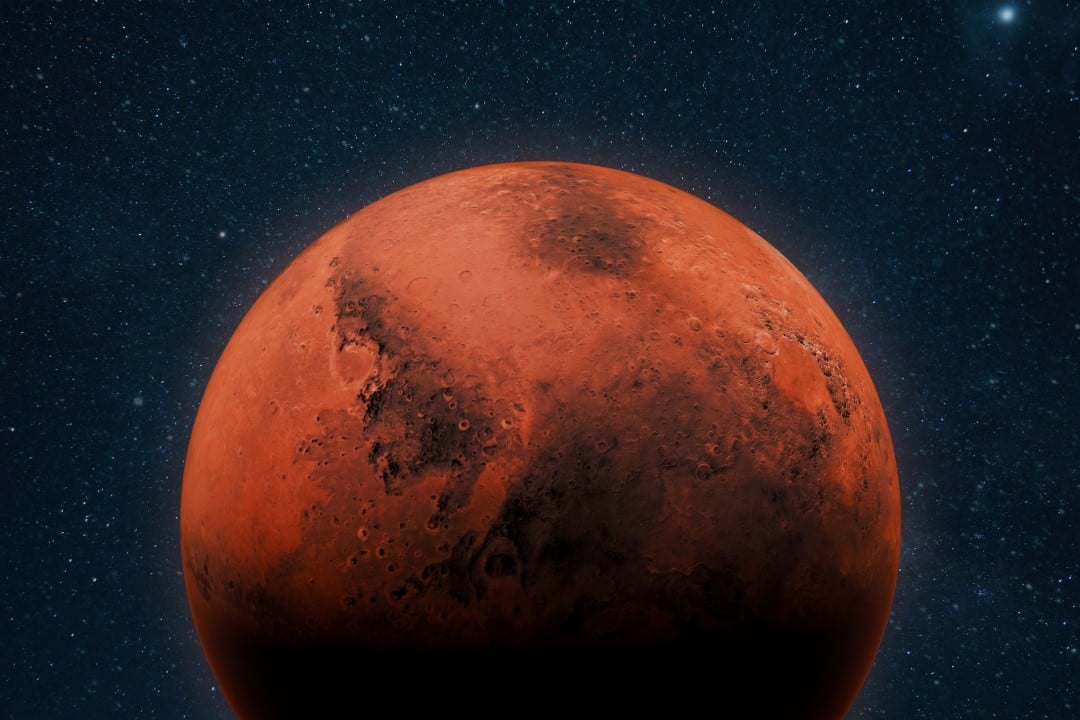
A study conducted by Brazilian physicist Oliveira Souza, professor at Universidade Estadual at Norte Fluminense Darcy Ribeiro (UENF), presented a proposal for a revolutionary space route that promises to significantly reduce the time needed for missions to Marte. The research suggests that round-trip trips to the red planet could be accomplished in a period of just seven months. Essa new approach challenges conventional trajectories and could redefine planning for future interplanetary exploration. Professor Souza and his team detailed the methodology that optimizes propulsion and planetary alignment, crucial elements for reducing transit time. The discovery has the potential to boost the feasibility of manned missions and cargo transport for Marte.
Reducing travel time is a determining factor for deep space exploration, mitigating health risks for astronauts exposed to cosmic radiation and prolonged periods in microgravity environments. Além Furthermore, the reduction in time implies less consumption of resources on board and lower operational costs, making missions more accessible and frequent. Professor Souza’s proposal is based on principles of advanced orbital mechanics, taking advantage of launch windows and planetary configurations that minimize the energy required for the trajectory.
New space trajectory and challenges overcome
The methodology developed by Brazilian physicist Marcelo of Oliveira Souza focuses on precise optimization of launch windows and propulsive impulses. Tradicionalmente, missions to Marte take approximately six to nine months in the outbound phase alone, resulting in total journeys that span years due to waiting periods for favorable return alignment. The new study proposes a gravitational “bridge”, using orbital dynamics for a more direct and energy-efficient route.
The UENF team’s calculations consider factors such as the mass of the spacecraft, the capacity of current propulsion systems and the specific astrodynamic conditions between Terra and Marte. One of the main challenges in long space travel is maintaining life on board, which requires abundant supplies of water, food and oxygen. By shortening the mission duration to just seven months, the demand for these resources is drastically reduced, lightening the payload and allowing space for additional scientific equipment or greater safety margin. Technical feasibility depends on the precise execution of the proposed maneuvers and the continued development of more efficient engines.

Implications for manned missions
The ability to send astronauts to Marte in less time represents a strategic advance for space agencies around the world. Prolonged exposure to galactic and solar radiation during space travel is one of the biggest health concerns for crews. Reducing seven months to a full round-trip mission would significantly minimize this exposure, lowering the risks of diseases such as cancer and neurological damage. Furthermore, confinement for long periods in a limited space can affect the psychological well-being of astronauts, a problem that would be alleviated by a faster journey.
- Reduction of health risks:Menor Time in microgravity and radiation exposure.
- Resource Optimization:Diminuição of the need for supplies and life support systems.
- Flexibility in missions:Possibilidade to plan rescue or resupply missions more quickly.
- Launch window increase:Potencial for more vehicle shipping opportunities.
- Cost-benefit:Redução in fuel and equipment maintenance costs for long periods.
These benefits could accelerate the timeline for establishing human bases in Marte and continued exploration of the planet, opening new doors for scientific discovery and humanity’s advancement in space.
The role of Brazilian research in space exploration
The contribution of professor Marcelo of Oliveira Souza highlights the importance of Brazilian science in the global scenario of space research. Embora or Brasil does not have a manned exploration program, theoretical and innovative studies such as this are fundamental for the development of technologies and strategies that benefit the entire international scientific community. UENF, the institution where the study was developed, reinforces its role as a center of excellence in research, attracting talent and fostering knowledge in cutting-edge areas.
International collaboration will be crucial to testing and validating this proposed new route. Agências as NASA, ESA (Agency Espacial Europeia) and other institutions already invest heavily in advanced propulsion technologies and mission planning. The Brazilian physicist’s proposal can be integrated into these efforts, offering a promising alternative to make the journey to Marte a closer and safer reality. The study is being presented at scientific conferences and awaits peer validation for its eventual practical application in space exploration plans.
