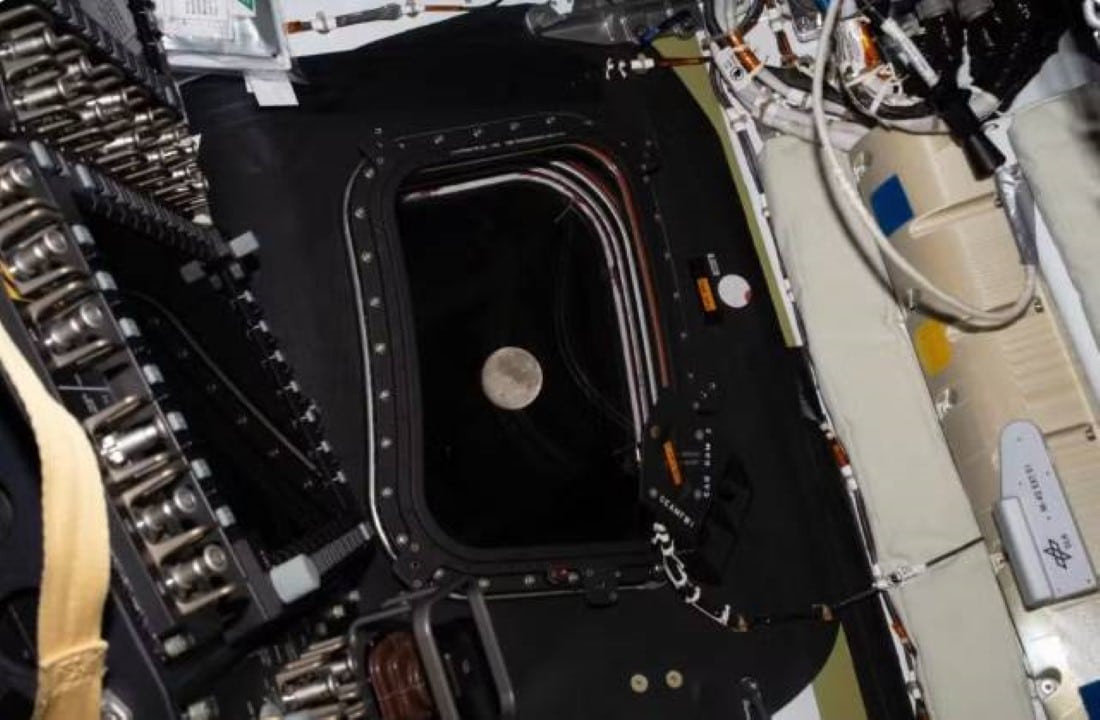
The crew of four astronauts aboard spacecraft Orion reaches the most dangerous stage of its journey around Lua this Friday. The space vehicle needs to reduce its speed from an impressive 38 thousand kilometers per hour to just 32 kilometers per hour in the space of a few minutes. Esse extreme process occurs at the exact moment the structure crosses the dense layer of our planet’s atmosphere. The maneuver requires mathematical precision to prevent the ship from being destroyed or thrown back into outer space. The professionals on board are prepared to withstand severe physical conditions during the descent towards the ocean.
The success of this phase validates years of engineering focused on ensuring human survival in deep space travel. The American space agency monitors every second of the approach, knowing that atmospheric friction will act as the main braking system. The final impact is scheduled to take place in the waters of Pacífico, where military teams are already awaiting contact.
The thermal challenge and friction as a natural brake
When the capsule reaches the 122 kilometer altitude mark, it begins the true test of the resistance of its materials. Diferente commercial aircraft, the vehicle does not have an aerodynamic shape designed to glide smoothly through the air. Engineers describe the equipment as a massive block that uses its own air drag to force violent deceleration. Esse direct impact against gaseous molecules generates formidable friction, raising temperatures in the lower part of the ship to more than 2,760 degrees Celsius. Para survive this temporary hell, the base of the structure has a heat shield made of high-tech ablative material. Essa protective layer is designed to melt and peel in a completely controlled manner, dissipating extreme heat away from the habitable compartment. Sem this sacrificial barrier, the interior of the ship would be incinerated in a matter of seconds. The integrity of this component is the primary factor separating a successful mission from a catastrophic disaster.
While the exterior burns, the interior suffers from the brutal change in inertia imposed by atmospheric braking. Space travelers experience forces reaching nearly four times Terra’s normal gravitational pull during the peak of the maneuver. Para avoid collisions with space debris, the system performs automated rolling maneuvers that move the vehicle away from the recently discarded service module. Millimetric precision in the angle of attack determines not only survivability, but also the exact location where the structure will touch the water. Qualquer Deviation in slope can change the arrival point by hundreds of kilometers.
Communication jamming and the plasma barrier
The heat generated by the compression of the air is so intense that it turns the gases around the ship into a bubble of superheated plasma. Essa ionized layer acts as an impenetrable shield for radio waves, completely cutting off contact between the crew and the control center. Esse Communication blackout lasts approximately six harrowing minutes for teams on the ground.
During this period of absolute silence, the onboard computer takes full control of critical navigation operations. The spacecraft’s artificial intelligence makes small trajectory adjustments using directional thrusters to maintain the descent angle within the safety margin. The internal sensors continue to record all of the astronauts’ vital data and the vehicle’s structural behavior for later analysis. Assim Once the ship loses enough speed and the temperature drops, the plasma bubble dissipates naturally. The reestablishment of the radio signal is the first major relief for flight controllers, confirming that the structure survived the most critical phase.
Human preparation for gravitational impact
Hours before reaching the upper layers of the atmosphere, the four crew members begin a rigorous physical and technical preparation protocol. Eles wear special compression suits designed to maintain stable blood flow during the extreme gravitational forces of descent. Esses Equipment is vital to prevent professionals from losing consciousness while the vehicle brakes sharply. Câmeras external personnel perform a complete visual scan for any microcracks or damage caused by micrometeorites during the lunar voyage. Cada detail is checked repeatedly in coordination with the experts based at Texas.
The definitive step before atmospheric diving is separation from the service module, which occurs approximately twenty minutes before initial contact with air. Essa cylindrical piece, which provided energy, water and propulsion during the entire journey around Lua, is ejected to burn completely in the atmosphere in a parallel trajectory. Apenas The cone-shaped command module continues with its occupants protected by the thermal shield. The crew must fully trust the system’s automation, as the physical forces involved preclude any efficient manual piloting. The flight profile adopts a subtle jumping technique, allowing the ship to gradually lose kinetic energy before sinking into the densest layers of oxygen. Essa energy management strategy is the result of decades of studies that began in the era of the Apollo program. The relative comfort of travelers directly depends on this controlled dissipation of speed.
Chronology of descent and deployment of parachutes
After overcoming the plasma hell and reducing the speed to hundreds of kilometers per hour, the recovery system comes into action. The vehicle’s front cover is ejected by explosive charges, making room for the complex choreography of the braking tissues. Esse mechanism needs to work with mechanical perfection, as the ship still falls too quickly for a safe impact on the water. The activation takes place in stages programmed by high-precision altimeters.
- At an altitude of 6.7 kilometers, the first braking parachutes are deployed to stabilize the cone’s orientation.
- Two stabilization canopies take over the load shortly thereafter, dropping the fall speed to around 200 miles per hour.
- At the 1.8 kilometer mark above sea level, the three gigantic main parachutes are finally released.
- The total opening of the fabrics ensures that the structure reaches the ocean surface at a controlled and safe speed.
This entire sequence of events, from the first touch of the atmosphere to the dive into the salty waters, takes just over ten minutes. The transition from a silent vacuum environment to the deafening noise of the wind cutting through the parachutes marks the end of the space odyssey. The final impact generates a considerable jolt, but completely tolerable by human standards.
Maritime rescue operation off the American coast
The arrival point is strategically calculated for the waters of Oceano Pacífico, a safe distance from the coast of San Diego. Marinha of Estados Unidos mobilizes an enormous logistical apparatus, led by the amphibious transport ship USS John P. Murtha, to ensure immediate rescue. Assim Once the structure touches the water, helicopters take off from the deck of the military vessel to visually locate the travelers. Botes Rapids with specialized divers surround the floating vehicle to install additional buoyancy collars. The absolute priority is to remove the four professionals from the cramped interior within a maximum period of two hours.
Medical teams are waiting on board the main ship to carry out the first detailed clinical assessments. Doctors need to understand how travelers’ bodies reacted to the abrupt transition from prolonged microgravity to the crushing weight of reentry. Enquanto humans receive care, naval technicians hoist the empty capsule into the ship’s floodable deck. The equipment will later be transported by land to the Centro Espacial Johnson facility, where it will undergo months of forensic analysis. The absolute success of this return stage is the green light that the space agency needs to move forward with the lunar colonization program. The data extracted from the heat sensors and flight computers will serve as a basis for the design of the next missions that will land on the surface of the natural satellite. The safe completion of this journey cements a new era of human exploration beyond the low orbit of Terra.
