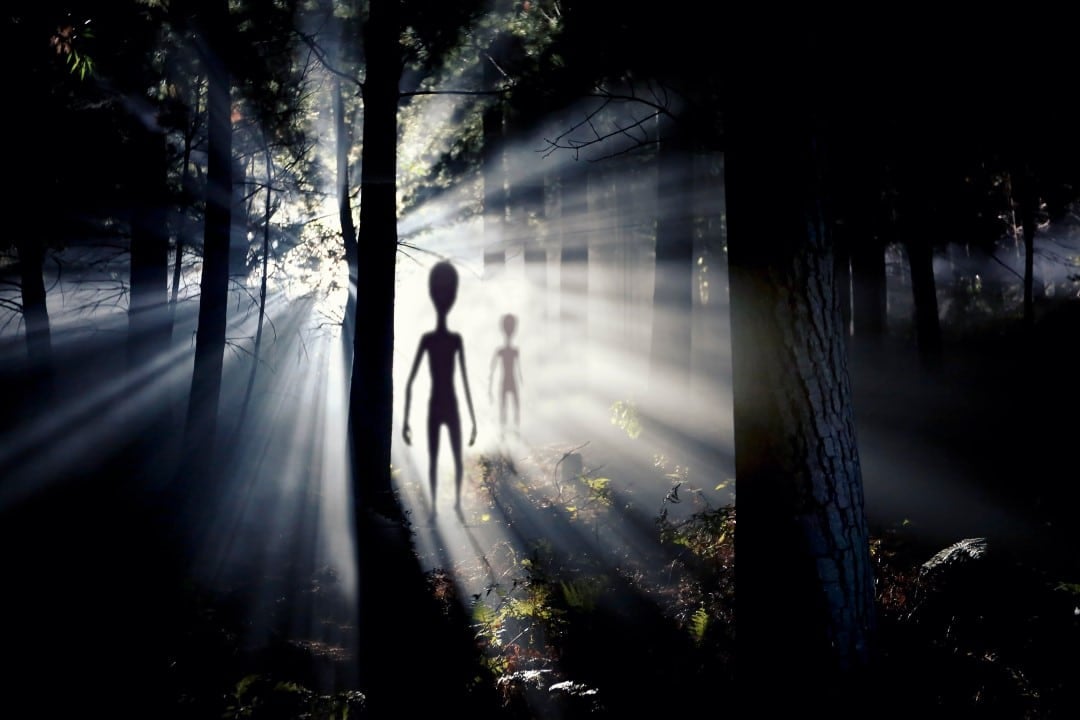
Astrophysicist Avi Loeb participated in a question and answer session with a group of students in a classroom at Suécia on April 13, 2026. Professor Henrik Nordvall mediated the meeting. Loeb addressed the methodological challenges of researching unidentified phenomena. Ele presented Projeto Galileu as an initiative focused on the study of cosmic anomalies. The conversation included discussions about interstellar objects and the need for hard evidence.
Loeb described his personal trajectory. Ele grew up on a farm and maintained an interest in nature and the cosmic environment from childhood. The researcher stated that his work prioritizes understanding without prejudice. Ele Don’t care about likes on social media. The focus remains on collecting data about the universe.
The session revealed how scientists often classify unusual objects into known categories. Isso occurs even when the behavior does not fit perfectly. Loeb cited examples of labeling that avoid admitting uncertainty. Ele advocated a more open stance on collecting additional information.
Scientific approach to anomalous behavior
Scientists face pressure to preserve reputation. Muitos prefer explanations that align with established knowledge. In the case of objects in the sky, the tendency is to attribute known characteristics even in the face of discrepancies. Loeb mentioned that this happens in different areas of science, including cosmology.
In current cosmology, about 95% of the contents of the universe remain unknown. The terms dark matter and dark energy are used to describe invisible components. Esses Names give a sense of understanding but do not reveal the real nature. Pode are modifications to the Einstein theory of gravity. Instead of exploring alternatives, many scientists stick to traditional labels.
The same pattern appeared with the first known interstellar object, Oumuamua. Detectado in 2017, the object showed non-gravitational acceleration without emission of gas or dust. Especialistas They called it a dark comet. Loeb argued that this classification ignores the anomaly rather than investigating it. Projeto Galileu seeks to avoid this type of intellectual shortcut.
Research prioritizes scientific honesty. Quando unexpected behavior appears, the correct path is to gather more data. Nomear Something unknown as known does not advance knowledge. Loeb said that, with unlimited resources, he would invest fully in the study of anomalies. Essa is the essence of Projeto Galileu.
- Observe behaviors that do not meet expectations
- Avoid explanations that simply repeat pre-existing categories
- Collect additional evidence to test hypotheses
- Maintain curiosity without assuming humanity’s central position in the cosmos
- Question labels that mask gaps in current understanding

Evidence that would indicate extraterrestrial technology
Obtaining a high-resolution image or a physical sample would resolve many doubts. Qualquer person could distinguish a natural rock from a spacecraft with enough data. Sem them, uncertainties persist and natural explanations prevail. Loeb cited the case of object 2020 SO. Identificado Initially thought to be unusual, analysis revealed that it was a NASA rocket booster launched in 1966. The material was stainless steel.
If the same object had an unknown origin, the classification could have been different. Isso illustrates how lack of context leads to conservative interpretations. Assinaturas technological technologies would include artificial lights unrelated to solar reflection. Acelerações Much higher than expected for natural objects would also be indicative. Movimentos that allowed braking or maintaining position in the solar system would suggest intentional control.
Materials such as metallic alloys differentiated from common rocks would provide another clue. The distinction between stainless steel and rock composition is clear in laboratory analyses. Loeb emphasized that only high quality data eliminates ambiguities.
Unusual characteristics of interstellar objects
Loeb developed in July 2025 a classification scale for interstellar objects. Ela ranges from 0, for completely natural objects, to 10, for technology with potential threat. Tanto Oumuamua and 3I/ATLAS received classification 4. Ambos presented anomalies, but nothing conclusive about technological origin.
Oumuamua rotated every eight hours and varied the reflection of sunlight by a factor of ten. Isso indicated an extreme shape, with one axis much larger than the other. Acceleration without a cometary tail suggested the possibility of a solar sail. The object was thin and flat in a way that nature could hardly produce.
3I/ATLAS, detected in 2025, was much larger. Sua Mass reaches about one billion metric tons. Isso represents at least one hundred thousand times the estimated final mass of Oumuamua. The probability of passing so close to the plane of the planets was one in 500. The object showed an antitail rather than a conventional tail. Tinha Deuterium abundance a thousand times higher than the cosmic average. Marcadores Organics included methane. A system of three equidistant jets at 120 degrees emanated from the nucleus. The composition revealed nickel with little iron, different from common astrophysical standards.
Loeb listed 22 anomalies in total for 3I/ATLAS. Algumas They were geometric, others chemical. The object passed by Júpiter in March 2026 and is on its way out of the solar system. Essas characteristics justify in-depth study even without a definitive conclusion.
Alternative ways of seeking life or technology
The traditional search for extraterrestrial intelligence has focused on radio signals for 65 years. Loeb Consider this approach limited. Civilizações advanced signatures may not use primitive methods developed a century ago in Terra. Ele proposes exploring other signatures.
One possibility involves artificial lights on the night side of exoplanets. Durante the orbit, one hemisphere is illuminated by the star and the other is dark. Luz Additional on the night side would indicate technological activity. Calor Excessive on the cold side would also serve as a clue.
Another line examines industrial pollution in atmospheres. Moléculas produced by industrial, non-natural processes could be detected. Loeb published the first article on quantifying this pollution ten years ago. Megaestruturas around stars represent another theoretical possibility.
The astrobiological community prioritizes molecular biosignatures such as oxygen, methane or water. Porém, geological processes can generate the same molecules. Tecnoassinaturas would offer more direct evidence of intelligence. Loeb Advocates for greater funding for these searches. Projeto Galileu adopts an open stance towards unfamiliar forms of technology.
Tools and advancements needed for the future
Continuous monitoring of the sky is essential. Observatório Rubin, no Chile, uses a 3.2 gigapixel camera and is expected to discover dozens of interstellar objects over the next decade. Cobertura from the northern hemisphere, with projects such as the Argus set, would complete the global panorama.
High-resolution images require larger telescopes. An optical interferometer at Lua at least 100 meters in diameter would allow for details without flyby missions. Interceptores space could cross the trajectories of interesting objects. Essas Missions would collect detailed data and, if necessary, mitigate risk.
For astrobiology, Loeb proposes analyzing materials from interstellar objects arriving in the solar system. Esses Bodies travel billions of years from their star of origin. Fragmentos Could contain ingredients of life as we know it. Essa approach differs from remote observations of distant atmospheres. Ele regrets that few astrobiologists explore this opportunity.
Expedition results and ongoing plans
In June 2023, Loeb led expedition to Oceano Pacífico. The goal was to recover materials from the interstellar meteor IM1, which exploded in 2014. Esferas melts smaller than a millimeter showed distinct chemical composition in about 10% of cases. Elementos such as beryllium, lanthanum and uranium appeared in concentrations up to a thousand times greater than materials from the solar system. Análises of isotopes continue.
A Netflix documentary about the expedition is expected to be released in 2026. Loeb cited another interstellar meteor candidate from 2022. An expedition to Peru’s coast would cost about six million dollars. The project is looking for financiers who can monitor the operation on board.
Sources of financing and independence
Projeto Galileu receives support from foundations and individual donors. Fundação Templeton recently contributed. An observatory was installed on top of Sphere, in Las Vegas, a structure about 100 meters high. Loeb values the absence of direct federal funding. Isso Allows freedom without external restrictions.
He distinguishes military interests, focused on human technologies, from his search for non-terrestrial origins. Oferece Collaboration with data on anomalous objects. In return, you expect access to useful information about phenomena not explained by terrestrial engineering.
Importance of instrumental data on reports
Science depends on evidence collected by instruments or materials that can be analyzed in the laboratory. Relatos Humans are fallible, as court cases reversed by DNA show. Testemunhas They can be sincere and still make mistakes due to perceptual distortions or agendas. Loeb cited the historical example of Galileu and the moons of Júpiter.
Testimonies about anomalous phenomena are intriguing, but insufficient on their own. A single clear data would be enough to make progress. Loeb prefers examineable material evidence to dozens of videos or reports. Sobre Possible gradual disclosure by governments, he defends transparency. Esconder Information about possible cosmic neighbors does not help humanity prepare.
Responding to criticism and recommended mindset
Part of the astronomical community resists discussions about anomalies. Loeb compares cosmologists to chess players, open to testable ideas, and some near-object astronomers to more defensive fighters. Ele Prefers to focus energy on productive work.
The researcher mentioned online misinformation, including artificial intelligence-generated fake videos featuring his image and voice. Ele created his own YouTube channel to combat this. Loeb advised students to preserve childlike curiosity. Adultos They often pretend to know definitive answers and avoid checking. Manter An open mind allows discoveries that transform worldviews.
The session closed with Loeb expressing expectation of new evidence within a year. The conversation reinforced the need for scientific rigor and quality data in exploring the universe.
