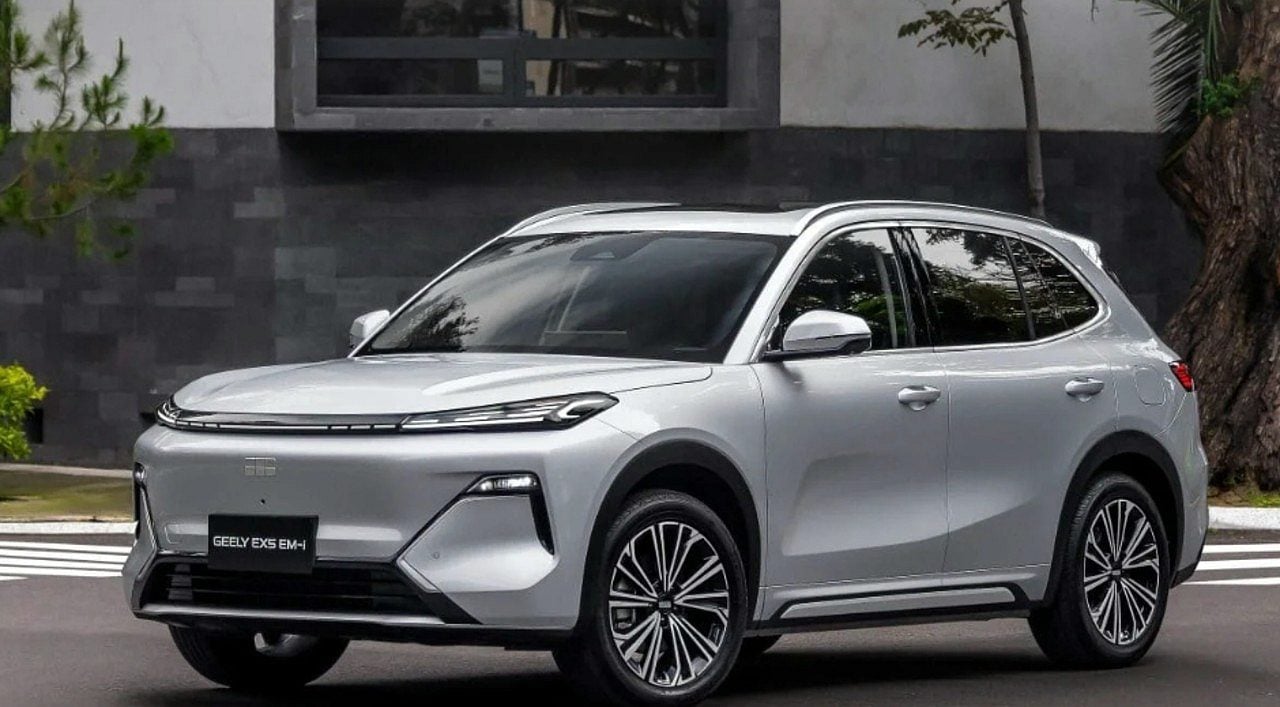
Automotive manufacturer Geely has unveiled a new electrified powertrain technology that promises to redefine fuel economy standards in the global market. The system, called i-HEV, eliminates the need for recharging at sockets and works completely autonomously during the journey. The innovation was officially presented during an event at China this week.
The big difference of the mechanical set is the deep integration with artificial intelligence tools to optimize energy expenditure in real time. Essa Technological approach allowed the brand to achieve significant sales figures, attracting the attention of the traditional industry. The strategic move aims to place the Asian automaker on a direct collision course with the Japanese giants that have dominated this niche for decades. The expectation is that the first vehicles equipped with the new feature will arrive at Chinese dealerships throughout 2026.

The role of artificial intelligence in energy management
To achieve the proposed levels of efficiency, the automaker’s engineers developed an advanced computational platform called AI Cloud Power. Esse electronic brain acts in a predictive manner, constantly analyzing a series of environmental and topographical variables while the vehicle is in motion. Sensores spread throughout the body capture crucial data, such as the external temperature, air humidity levels and the exact altitude of the road in relation to sea level. With this information processed in fractions of a second, the system autonomously decides the exact moment at which the combustion engine should be started or stopped. The main objective of this digital orchestration is to ensure that the thermal thruster operates exclusively in its most efficient rotation range, avoiding fuel waste in heavy traffic situations. In urban environments, for example, artificial intelligence can keep the car running on electricity alone up to eighty percent of the time. Toda This electronic architecture, called i-CMA, also centralizes the assisted steering functions and chassis management in a single control unit. The onboard processing power is so robust that it can predict more than fifty types of mechanical or electrical failures before they even affect drivability.
The protection of sensitive components also received special attention in engineering design. The battery pack that powers the electric motor is IP68 certified, ensuring maximum resistance against the ingress of water and dust. Essa Shielding ensures the system’s durability even under adverse weather conditions or on flooded roads.
Historic brand validated by Guinness World Records
The practical potential of the new hybrid system was put to the test in a rigorous road test using the Emgrand sedan. Durante evaluation in real highway conditions, the vehicle recorded an impressive consumption of 2.22 liters of fuel for every hundred kilometers travelled. Essa brand equates to an average of approximately 45 kilometers per liter, an unprecedented number for passenger cars of this size. The exceptional performance was not limited to the company’s internal reports, but was subjected to a rigorous independent audit. The Guinness World Records organization monitored the tests and officially approved the result as a new world record for economy. The achievement sets a new level of demand for competing automakers seeking to lead the energy transition.
Technical specifications and thermal efficiency of the propellant
The heart of the i-HEV system is an internal combustion engine that breaks paradigms in contemporary automotive engineering. The thermal unit achieved an efficiency rate of 48.41%, which represents the absolute peak for engines destined for mass production today. In practice, this means that almost half of the energy generated by burning the fuel is effectively transformed into movement, drastically reducing heat and friction losses. Trabalhando Together with this high-performance engine, there is an electric motor capable of delivering 230 kilowatts of instantaneous power. Essa combination guarantees not only economy, but also agile responses to accelerator commands. The strength of the electrical package allows the vehicle to start from a standstill and reach thirty kilometers per hour in just 1.84 seconds, prioritizing agility when exiting traffic lights and intersections. The maximum speed operating exclusively in pure electric mode reaches 66 kilometers per hour, covering the vast majority of travel needs within urban limits. The integrated design of the electrical unit, described as a system that groups eleven functions in a single module, reduces the vehicle’s overall weight and optimizes space in the engine compartment.
The automaker developed three different power combinations to suit different vehicle categories. Essas variations combine combustion engines of different liters, such as the 1.5 aspirated, 1.5 turbo and 2.0 turbo options, always coupled to the same high-capacity electrical unit. Essa Modularity facilitates the adaptation of technology to existing platforms.
Market strategy and offensive against traditional brands
The launch of this technology marks a significant change in the commercial strategy of the Chinese automotive industry. Até Recently, the focus of Asian companies was almost exclusively on plug-in hybrid vehicles and 100% electric models. Agora, Geely targets the lucrative self-charging full hybrid segment, a territory historically dominated by Japanese automakers since the late 1990s. The movement seeks to attract consumers who want high energy efficiency, but who do not yet have easy access to charging infrastructure in their homes or workplaces. Analistas from the sector point out that this offensive could reconfigure market shares in the coming years.
To consolidate this expansion, the company has already defined which models will be the first to receive the advanced engine. The initial application will cover different segments, from executive sedans to family SUVs, with consumption data already projected for the WLTC test cycle:
- Executive sedan Preface, with an estimated consumption of 3.98 liters per hundred kilometers.
- Medium-large sports utility vehicle Monjaro, registering 4.75 liters per hundred kilometers.
- Compact sedan Emgrand, holder of the world record for efficiency in road tests.
- Compact SUV Starray, focused on young audiences and smaller families.
- Thermal engine options ranging from 1.5 naturally aspirated to 2.0 turbocharged.
Perspectives for global expansion and arrival at dealerships
Mass production of i-HEV system components has already begun at the company’s factories in Ásia, setting the stage for large-scale sales. The hybrid versions of the announced vehicles are expected to arrive on the Chinese domestic market throughout 2026, consolidating the renewal of the brand’s portfolio. However, the automaker is still cautious about disclosing an exact schedule for exporting this technology to other regions of the planet. In the Brazilian scenario, where the brand already sells electrified models such as the EX5, the introduction of the new hybrid system is seen as a strong possibility for the future, although there is no official confirmation from the board so far. The national market has shown growing acceptance for vehicles that do not depend on sockets, which makes the country a natural destination for innovations of this type. The ability to deliver savings of more than ten percent compared to conventional hybrids places the novelty in a prominent position in global showcases. The commercial success of this venture will depend on the company’s ability to scale production and maintain competitive costs compared to established rivals. The transition to cleaner fleets thus gains a new and powerful technological alternative.
