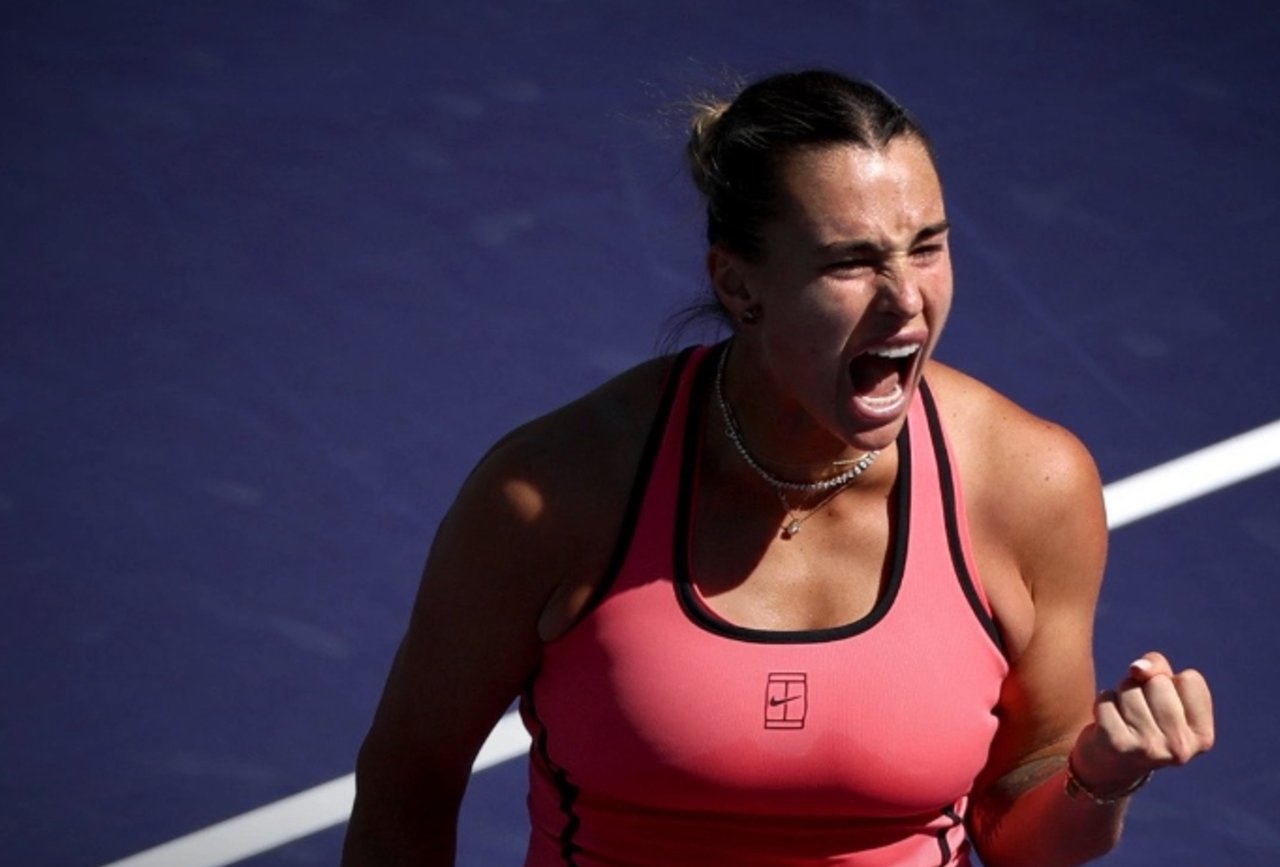
Aryna Sabalenka, current leader of the world tennis rankings, stated that she consumes alcoholic beverages as a form of celebration after winning major titles on the international circuit. In a recent interview with the American magazine Esquire, the 27-year-old Belarusian athlete argued that a balance between the rigorous discipline of sport and moments of relaxation is essential for her mental health. Sabalenka also commented on the habit of destroying their rackets during high tension matches, describing the act as a necessary tool to alleviate the psychological pressure of high performance.
The tennis player explained that she maintains a routine of total abstinence during pre-season periods and while tournaments are underway. However, she stressed that a complete ban on pleasures could lead to a long-term loss of emotional control. Segundo As an athlete, allowing yourself to celebrate significant victories with alcohol helps maintain motivation for the following challenges, avoiding exhaustion caused by the physical and mental demands of elite professional tennis.
The search for emotional balance in high performance
Sabalenka’s intensity on the court is reflected in his statements about the need to release pent-up feelings during competitions. Ela argues that the life of a top athlete should not be guided exclusively by restrictions, at the risk of generating psychological instability that is detrimental to performance. Para the Belarusian, moderate and punctual consumption in festive moments acts as an escape valve after weeks of absolute focus and exhausting training under the sun and competitive pressure.
Sabalenka’s record of achievements, which includes four Grand Slam titles, reinforces her thesis that a flexible mentality outside the lines of play contributes to longevity at the top of the WTA rankings. Ela is often seen at events and luxury restaurants after tournaments end, maintaining an active presence in social life that contrasts with the spartan regime of many of her professional colleagues. Essa Authentic posture transformed the player into one of the most charismatic figures followed by young people in the sport.
Technique for destroying equipment and apologies
In addition to the celebrations, the tennis player addressed a behavior that generates frequent discussions among analysts and fans: breaking rackets. Sabalenka described the process in an almost didactic way, emphasizing that the objective is not just material damage, but the immediate release of frustrations accumulated during decisive points. Ela detailed some aspects of this practice:
- Application of maximum force upon impact against the ground;
- Full transfer of muscular and emotional tension to the object;
- Immediate relaxation after realizing that the equipment has been unusable;
- Immediate exchange for a new racket to regain concentration in the game.
Even explaining the psychological motivation behind the gesture, the athlete made a point of publicly apologizing to her sporting equipment supplier. Ela recognizes that the destruction of rackets is a detriment to the technical work involved in manufacturing the equipment, but insists that, at critical moments in matches like those of Indian Wells, the act works as a necessary mental cleansing so that she can continue fighting for victory on the court.
Trajectory and impact on world tennis leadership
Sabalenka’s rise to the top of women’s tennis is marked by a remarkable evolution in the control of her powerful shots and her emotional resilience. Over the last few seasons, she has managed to transform the aggressiveness that previously led to unforced errors into a strategic weapon that intimidates opponents on all surfaces. The recent title on Indian Wells has cemented her position as the player to beat on the tour, demonstrating that her stress-relieving tactics appear to be having the desired effect.
The impact of his speeches about mental health and atypical behavior for the more traditional standards of tennis generates an important debate about the humanization of sporting idols. By admitting that he drinks and breaks rackets, Sabalenka removes the mystique of unshakable perfection, approaching an audience that values transparency. Especialistas point out that this approach can inspire new athletes to find their own methods of managing anxiety, as long as this does not compromise physical integrity or sporting ethics within the work environment.
Prospects for the sequel to the 2026 season
With the ranking consolidated and confidence high, the Belarusian now focuses on the transition to clay tournaments, where the physical strain tends to be even greater. The player’s technical team closely monitors her post-tournament recovery, ensuring that the celebrations mentioned by the athlete do not interfere with her physical preparation schedule. The main objective continues to be maintaining first place and the search for new trophies at level Major, where the pressure reaches its maximum levels.
The WTA calendar foresees intense competitions in the coming months, requiring Sabalenka to put its philosophy of balance into practice. If recent history is anything to go by, the tennis world can expect more displays of brute strength, some rackets broken in moments of rage and, possibly, new records of effusive celebrations if she lifts another trophy. The journey of the world number 1 continues to be one of the most followed and commented narratives by those who follow the evolution of contemporary sport.
