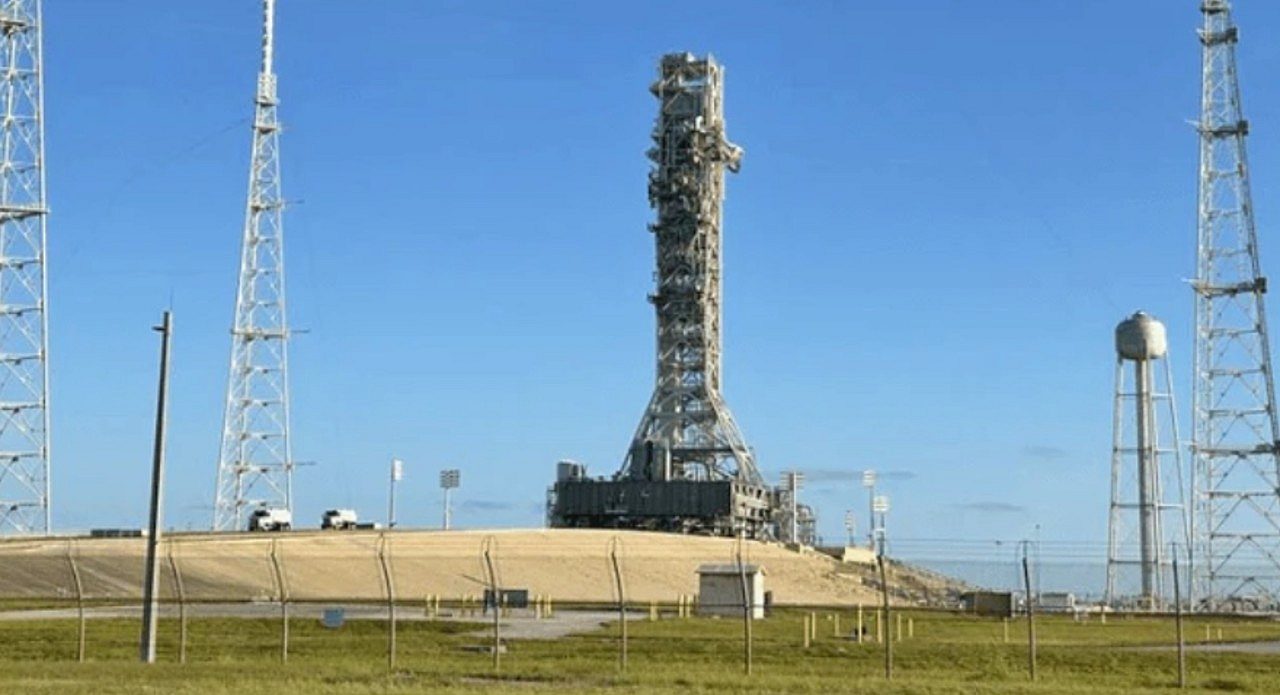
The colossal structure responsible for supporting the rockets of the American lunar program began its return journey for maintenance. The equipment left platform 39B and heads towards Edifício of Montagem of Veículos in Centro Espacial Kennedy, located in Flórida. The complex ground transportation operation comes exactly two weeks after the successful landing of the Orion capsule on Oceano Pacífico.
The movement marks the official transition between two crucial phases of contemporary space exploration. Engenheiros and technicians now turn their attention to preparations for the Artemis III, which is scheduled to be launched in 2027. The displacement requires millimeter precision due to the weight and height of the machinery involved. Specialized Equipes monitor every centimeter of progress along the path of special stones.
Engenharia transport requires controlled speed
The total route covers a distance of approximately 6.4 kilometers between the launch base and the assembly building. The tracked transporter, one of the largest land vehicles in the world, began its journey at approximately 8:11 a.m. in the Estados Unidos East Coast time zone. The cruising speed is intentionally low to ensure the integrity of all coupled systems. A scheduled break occurred for the operators to rest obligatory.
The route will resume this Friday with the same security requirements. The mobile launcher is around 112 meters tall and weighs an impressive 5 million kilograms, making any bump a potentially severe hazard. The vehicle loads and prepares the SLS rocket, which is equivalent to a thirty-story building, requiring a perfectly level base throughout the entire land journey.
Previous Crew’s Sucesso Boosts Schedule
The current movement takes on special significance after the success of Artemis II, recognized as the first manned lunar mission of the 21st century. Astronauts Reid Wiseman, Victor Glover, Christina Koch and Jeremy Hansen completed a historic journey through deep space. The group covered around 1.1 million kilometers during the flight. At a certain point in its trajectory, the spacecraft reached a distance of more than 400 thousand kilometers from the planet Terra.
The crew’s safe return on April 10 validated the capsule’s life support systems and aerodynamics. The success of this flyover stage paved the definitive path for the next phases of the program. The American space agency now focuses on missions that involve the effective descent onto the surface of the natural satellite. Componentes of the next rocket is already in the advanced production phase or in transit to the base at Flórida.
Maintenance Protocolos inside the main building
Assim Once the platform crosses the doors of the VAB, one of the most massive buildings on the planet, a new phase of intensive work will begin. Technicians will need to wear full protective clothing to access areas that were directly exposed to ignition. The gases released by solid propellants leave highly corrosive residues that require immediate removal. High pressure washing is the first step before any electronic repair.
The structure’s recovery schedule involves a series of rigorous technical procedures to ensure the safety of the next flight. The engineering teams will focus on the following work fronts:
- Inspeção detailed the entire 112 meter tower to identify structural microcracks.
- Limpeza deep chemistry to eliminate corrosive compounds generated at launch.
- Substituição and repair of protection panels, communication cables and pneumatic systems.
- Revisão complete of the internal elevators that transport astronauts to the capsule.
- Implementação of improvements based on data collected during previous takeoffs.
The adaptations made based on lessons learned from past missions have already demonstrated effectiveness in reducing damage to the tower. Mesmo with these previous improvements, the level of inspection requirements remains maximum. The extreme environment generated by the SLS engines tests the limits of terrestrial materials. Cada valve and connection undergoes stress testing before receiving flight certification.
Global Parcerias and the future of lunar presence
Mobile launcher readiness reflects the ongoing effort to establish a sustainable human presence outside of low-Earth orbit. The Artemis program does not operate in isolation, relying on a complex network of international collaboration and strong participation from the private sector. Agências space partners provide service modules, communications equipment and scientific instruments essential to the viability of the project.
The Artemis III represents a considerable technological leap forward compared to the recently completed flyby. The central objective is to put humans back on the lunar soil, exploring unprecedented regions such as the satellite’s south pole. The Centro Espacial Kennedy acts as the logistical heart of this entire monumental operation. Todas hardware integration activities converge on Flórida installations.
The current workflow directly connects the completion of a successful mission to the birth of the next space endeavor. The adjustments made to the VAB in the coming weeks will define the pace of assembly of the new elements of the launch vehicle. Precision maintenance of the mobile platform ensures that the exploration schedule remains viable and safe for future astronauts.
