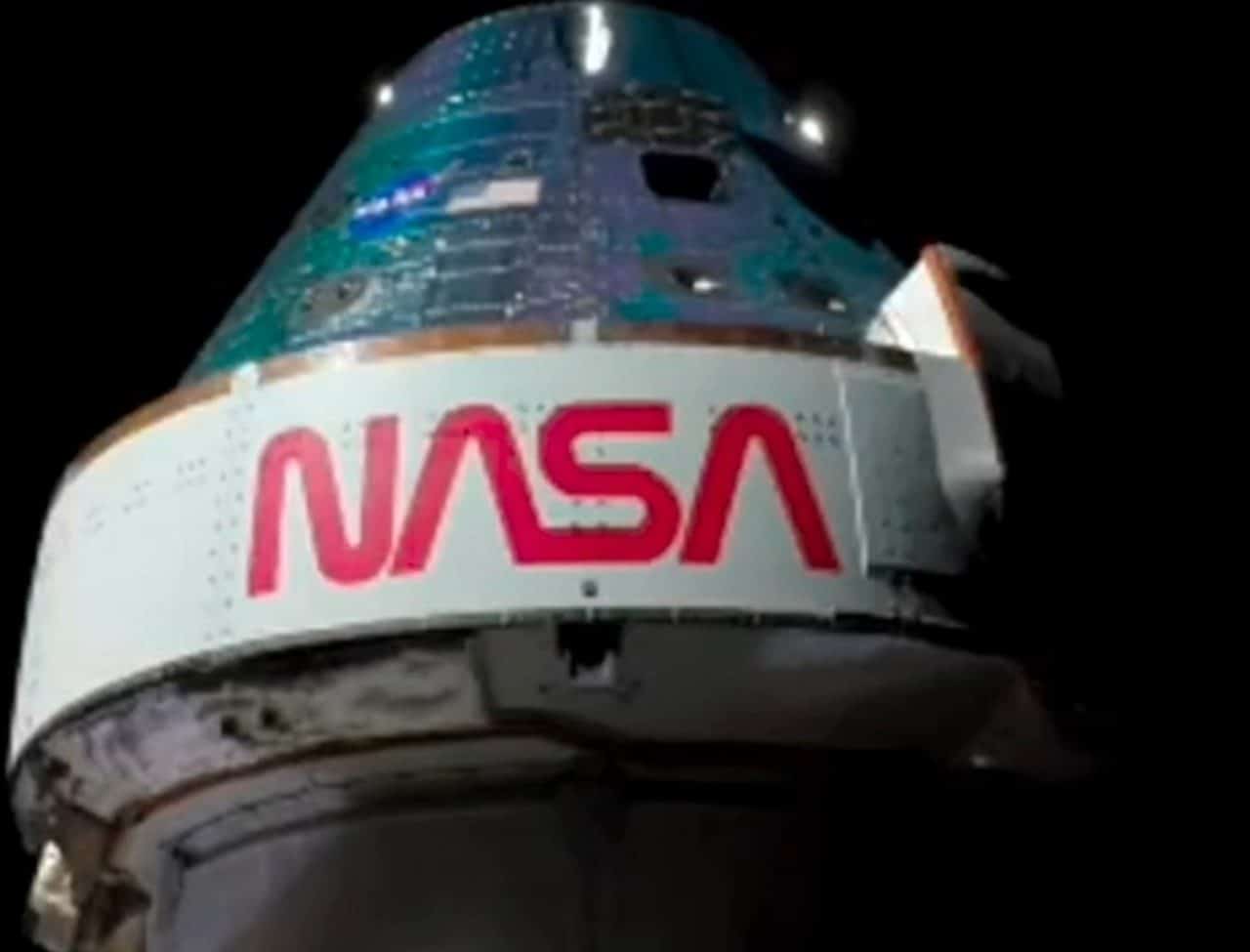
The commander of the Artemis II mission released a video recorded with a standard cell phone during the Lua flyby. Reid Wiseman used the device to record the moment Terra disappeared behind the lunar horizon. The image emerged as the crew passed the hidden side of the natural satellite.
The registration took place on April 6th. The Orion spacecraft completed the first manned mission around Lua in more than 50 years. Wiseman positioned the iPhone in the docking hatch window. Ele could barely see the scene directly, but the size of the device allowed it to capture the view clearly.
Vídeo shows Terra getting behind Lua
The recording lasts 53 seconds. Ela starts with the image slightly blurred and then reveals craters on the lunar surface. The 8x zoom approximates what the human eye perceives through the capsule window. The blue Terra gradually disappears over the horizon. Nenhum cropping or editing has been applied to the material.
Wiseman published the video on Instagram last Sunday. The post racked up more than 1.6 million likes in just a few hours. Ele compared the experience to watching the sunset on the beach, only from the farthest seat in the cosmos. The astronaut highlighted that it was a once-in-a-lifetime opportunity.
- The crew heard the shutter of Christina Koch’s Nikon camera, which recorded photos with a 400 millimeter lens
- Victor Glover watched through window number three
- Jeremy Hansen followed alongside him
- Reid Wiseman held the iPhone in the docking hatch
Detalhes from the recording draws attention for its simplicity
The iPhone proved to be practical for recording. The digital zoom delivered quality close to the astronauts’ natural vision. Christina Koch captured still images at the same time. The other team members followed the phenomenon through the available windows. The scene occurred during the closest point to Lua on Orion’s trajectory.
Especialistas noted that the video illustrates the advancement of technology accessible in space missions. An everyday device recorded details that, decades ago, would have depended on specialized equipment. The quality was surprising even with the limitations of a regular cell phone.
Tripulação from Artemis II
The mission brought together four astronauts. Reid Wiseman, 50, served as commander. Victor Glover held the pilot position. Christina Koch became the first woman on a lunar mission. Jeremy Hansen, Canadian, completed the international team.
Eles took off on the 1st of the month aboard Orion. The flight lasted ten days and ended successfully on the 10th. Artemis II tested systems for future descents on the lunar surface, scheduled for 2028. The objective includes preparing a base near the south pole and paving the way for explorations on Marte.
Missão reinforces return to Lua after decades
NASA plans to use the data collected to improve the Orion and the SLS rocket. Artemis II did not land, but orbited the natural satellite. The flyby allowed tests in a real radiation and communication environment. Equipes on the ground monitored all systems during the journey.
The video released by Wiseman humanizes the experience. Ele shows that, even in high technology, a simple gesture like recording with your cell phone can capture remarkable moments. The post quickly went viral among space enthusiasts.
What the record reveals about the vision of space
The “Terra sunset” image is rare. Vista from lunar orbit, the planet appears and disappears behind craters. Cratera Vavilov emerged prominently on the edge of the former Hertzsprung basin. The unedited video preserves the authenticity of the scene observed by the astronauts.
Wiseman mentioned that the iPhone offered the ideal framework. The screen made it possible to frame the phenomenon in a practical way. The zoom quality approached what the eyes registered through the hatch. The material circulates as an example of how everyday technology integrates large space enterprises.
