
The North American space agency plans to launch an unprecedented device to generate controlled fires on the lunar soil in 2026. The equipment will travel to the satellite with the aim of burning samples of solid fuel. The environment has a much lower gravitational force than the Earth’s. High precision Sensores will record the behavior of the flames during the process. The mission will deliver the first practical data on the dynamics of fire on another celestial body.
The initiative seeks to solve a central problem for habitat engineering outside of Terra. Thermal physics changes drastically when exposed to just one-sixth of our planet’s gravity. Understanding this phenomenon will guide the development of safety rules for astronauts in the Artemis program. Planning for future lunar facilities directly depends on the success of these measurements.
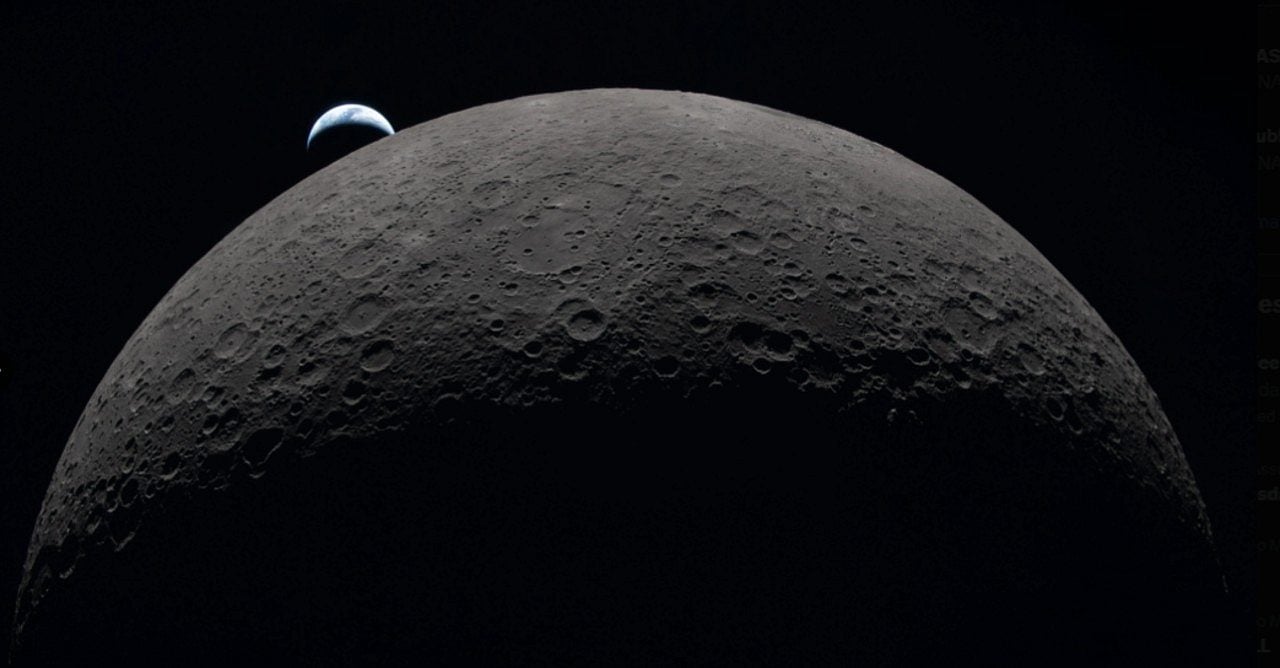
Como will operate the equipment on the lunar surface
The project received the technical nomenclature of Flammability of Materials on the Moon, known by the acronym FM2. The basis of the experiment is a completely isolated combustion chamber. The system will travel aboard an unmanned commercial lander. The operation is part of the Estados Unidos agency’s cargo services program. The government hires private companies to transport scientific instruments.
The device will perform the ignition sequence automatically after touching the ground. The hermetic closure of the structure prevents any contamination from the external environment. The test consists of sequentially burning four samples of different materials. Cada chunk has an exact density. The chemical composition also varies to expand the database.
Information capture will take place simultaneously through a set of internal instruments. The experiment structure houses the following measuring equipment:
- High-speed Câmeras aimed at visual recording of fire.
- Radiômetros adjusted to calculate the thermal intensity of the burn.
- Sensores focused on monitoring oxygen consumption.
Essa technological assembly ensures several minutes of uninterrupted flame analysis. Simulações made in Terra with parabolic flights offer just a few seconds of microgravity. The extended time of the lunar test represents an immense methodological advance. Researchers will be able to observe the complete cycle from spark to extinction.
The behavior of flames under the influence of 16% gravity
Gravitational force defines the way fire survives and spreads through an enclosed space. The hot air generated by combustion rises quickly in the Terra due to convection. The continuous movement forms an air current. Esse flow draws new oxygen to the base of the flame. The same mechanics can also move heat away and put out the fire suddenly.
The physical landscape undergoes a radical transformation in the lunar environment. The 16% local gravity causes the heated gases to rise at an extremely slow rate. The oxygen supply at the base of the fire remains stable for an extended period. Essa regularity completely changes the lifespan of the fire.
Materiais evaluated as safe on our planet can generate enormous risks under Lua conditions. A polymer that would quickly go out in Terra gains the ability to burn for long minutes in space. The absence of strong convection creates an area of persistent combustion. The radiated heat hits nearby walls with greater force.
Previous Experimentos in Earth orbit and the Saffire project
Aerospace engineers already have an extensive catalog on fire in microgravity areas. Estação Espacial Internacional has hosted more than 1,500 small-scale controlled ignitions over the past few decades. The recordings showed that the flames take on a spherical shape when there is no gravity to direct the gases. The burning occurs equally on all sides.
The mechanical ventilation system functions as the main engine of fires in orbit. The interruption in air circulation stops the spread of the flames almost immediately. Spontaneous re-ignition still poses a real danger even without oxygen supply. The embers retain enough heat to restart the fire if ventilation returns.
The Saffire project represented another fundamental stage in this scientific research. The initiative used disposable cargo ships to burn acrylic sheets and fabrics in larger sizes. The results proved that fire can progress against the air flow in certain materials. Folhas thins burned with greater aggressiveness than calculated by computers.
Mudança on security protocols for manned missions
The space industry bases its safety rules on assessments made under the severity of Terra. The current technical standard defines the approval criteria for components used in missions involving humans. The procedure exposes an upright sample to a six-inch flame. Checking takes place inside laboratories with a controlled environment.
The material fails the test if the fire exceeds the limit mark or if it releases burning pieces. Essa directive protected crews during many years of low orbit operations. The definitive return to Lua requires a complete update of these parameters. The change in physics demands completely new analysis criteria.
The data collected by the FM2 module will be used to adjust the space agency’s mathematical models. Scientists seek to create a link between terrestrial tests and the reality of fire in space. Understanding partial gravity solves a flaw in current engineering manuals. The new limits will guide the selection of thermal insulation and space suits.
Prevenção of accidents in future installations of the Artemis program
The construction of fixed bases requires absolute control over the dangers of the internal environment. A fire inside a pressurized module is one of the worst threats to an astronaut team. The artificial atmosphere of the facilities keeps oxygen levels strictly regulated. Qualquer change in the gas mixture impacts the degree of flammability of the space.
The teams’ time on the surface will increase in the next phases of the Artemis program. The long duration of trips increases the likelihood of accidents with short circuits in power panels. The exact choice of building materials acts as the main line of defense. Prevention in the structure eliminates the need for heavy firefighting systems.
Profissionais from the Glenn and Johnson centers lead the technical development of the instruments. Case Western Reserve University participates in the consortium with the analysis of raw data. The telemetry packages will arrive at Terra shortly after the completion of the burning of the four samples in the lunar soil. Cross-referencing this information will establish manufacturing rules for the entire space exploration supply chain.
