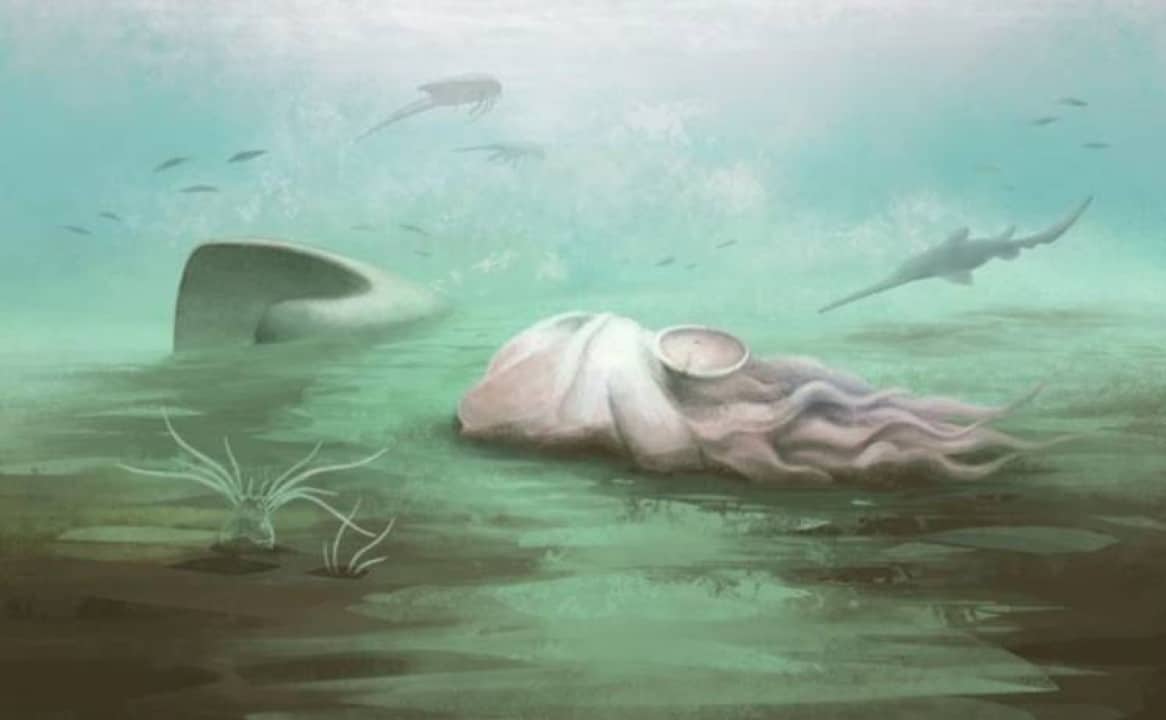
Pesquisadores identified fossil jaws of an extinct octopus that may have reached 19 meters in length. The animal lived about 100 million years ago, during the Cretáceo period. Analysis indicates that it occupied the top of the food chain in the oceans at the time.
The study, published this Thursday in the journal Science, was led by scientists from Universidade and Hokkaido, at Japão. Eles re-examined 15 known large fossil jaws and excavated 12 more from Cretáceo’s sedimentary rocks. The material came from Hokkaido and Vancouver’s island on Canadá.
Mandíbulas reveals the size and strength of the predator
The fossilized jaws show clear signs of wear. Marcas of friction suggests that the animal crushed shells, bones and hard parts of prey. Researchers estimate that the main body measured between 1.5 and 4.5 meters. The elongated tentacles reached a total length of up to 19 meters in the largest species.
Duas species were identified: Nanaimoteuthis jeletzkyi, medium-sized, and Nanaimoteuthis haggarti, the largest. Esta last rivaled in size some of Cretáceo’s largest marine reptiles, such as mosasaurs. The octopus belonged to the group of finned octopods, close to the current dumbo octopuses that live in deep waters.
- Mandíbulas with robust structure and hardened nozzle
- Sinais chewing wear on hard teeth
- Tamanho estimated from 3D models of the fossils
- Presença in rocks 100 to 72 million years ago
- Comparação with marine vertebrates from the same era
Associate professor Yasuhiro Iba, from Universidade of Hokkaido, coordinated the work. Ele highlighted that modern octopuses have a soft body, which makes fossilization rare. Apenas hard parts like the jaws resist time.
Análise used advanced technology to reconstruct the animal
The team combined high-resolution 3D images with artificial intelligence to model the jaws. The method allowed us to estimate body size more accurately. Antes, these fossils were attributed to other groups of cephalopods.
The octopus had fins on its head, a feature that helped with locomotion. Long and flexible Braços completed the hunter’s profile. Researchers believe it captured prey with its tentacles and used its powerful jaw to process food.
Fósseis of cephalopods are unusual because the body decomposes quickly after death. The discovery of well-preserved jaws within solid rocks was decisive. Algumas came from museum collections in Canadá and from new excavations in Japão.
Descoberta changes Cretáceo’s view of marine ecosystems
Até now, scientists considered that vertebrates such as sharks, fish and marine reptiles dominated the top of the food pyramid. The presence of giant octopuses suggests that invertebrates also occupied this position.
The animal probably hunted fish, molluscs and even small reptiles. Seu size allowed it to compete directly with larger predators. The research indicates that Cretáceo had a greater diversity of top predators than previously thought.
Iba commented that the find expands the understanding of the role of ancient cephalopods. Eles were not just prey, but active hunters on the high seas. The team plans further excavations in search of more evidence.
Detalhes’s research involves international collaboration
Cientistas of Japão and Canadá participated in the analysis. Museus and institutions contributed specimens. Dating of the rocks confirmed the interval between 100 and 72 million years old, in Cretáceo Superior.
The study reinforces that the fossil record of octopuses is limited. Cada new jaw analyzed adds valuable insights into evolution and ecology. Técnicas as 3D modeling and AI helped overcome limitations of fragmentary fossils.
Especialistas externals praised the approach. Eles see potential for revisions to other cephalopod fossils. The work paves the way to better understand how the oceans worked in the age of dinosaurs.
Implicações for paleontology and marine biology
The reconstruction of Nanaimoteuthis shows a versatile predator. Ele combined size, mobility and bite strength. Isso allowed exploring niches different from those of vertebrates.
Pesquisadores continue to study the material. Novas techniques can reveal more about diet and behavior. The discovery highlights the importance of re-examining ancient collections with modern tools.
Cretáceo’s giant octopus joins the list of the largest known invertebrates. Seu was larger than that of current giant squids. The find enriches the panorama of prehistoric marine life.
