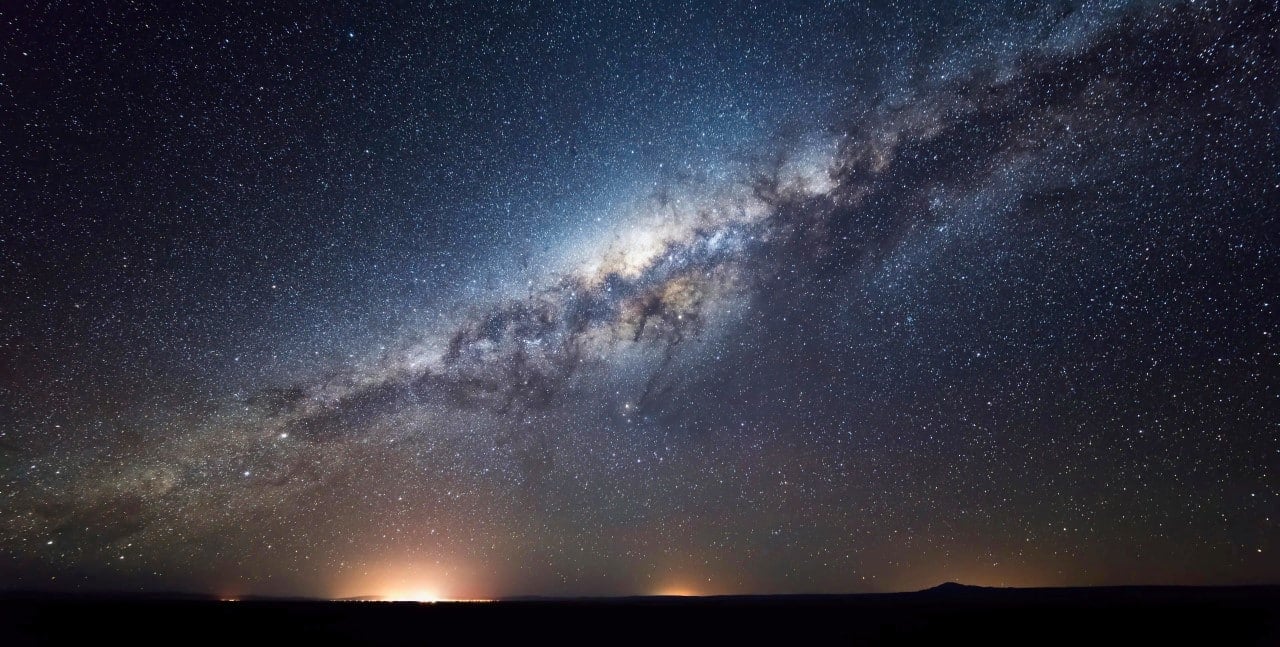
The desert of Atacama, in the north of Chile, offers some of the darkest and clearest skies on the planet. The combination of dry climate, high altitude and isolation from large urban centers allows the Via Láctea to appear to the naked eye with impressive clarity.
Astrônomos from various parts of the world visit the region every year. The site is home to dozens of observatories, including Paranal, managed by Organização Europeia for Astronomia at Hemisfério Sul (ESO). Lá works the Very Large Telescope and the Extremely Large Telescope, the largest optical telescope in the world, is under construction.
Unique Condições attract large-scale astronomical projects
Atacama gathers more than 300 clear nights per year at most observation points. Poucas clouds and lack of rain favor scientific work. Especialistas highlight that these factors make the region irreplaceable for studies on the formation of the universe, exoplanets and distant cosmic phenomena.
The Extremely Large Telescope, with a 39-meter main mirror made up of 798 segments, should enter full operation around 2028 or 2030. The instrument will be around 20 times more powerful than current telescopes in light collection. Ele will allow detailed analyzes of the atmospheres of planets similar to Terra in the so-called habitable zone.
- The desert covers more than 105 thousand square kilometers.
- The average altitude of the observatories exceeds 3 thousand meters.
- Extreme dryness reduces the interference of humidity in observation.
- Geographic isolation limits the arrival of artificial light to this day.
- Mais of 30 astronomical sites operate in the northern region of Chile.
Cientistas who work at Paranal describe the environment as a high-tech corridor in the heart of the desert. Underground Residências keeps human presence discreet. Janelas are covered and external movements only occur with flashlights to avoid any glare that affects the instruments.
Projeto energetic generated alert in the international scientific community
Last year, an energy company proposed building a renewable generation complex a few kilometers from the Paranal observatory. The plan included green hydrogen and ammonia facilities and associated infrastructure.
Astrônomos, physicists and even Nobel laureates have expressed public concern. Modelos indicated that the project could increase light pollution by at least 35% over Very Large Telescope and more than 50% in some nearby points. Microscopic Vibrações and dust were also of concern because they interfered with the accuracy of the telescopes.
The company canceled the initiative in January 2026 after strong opposition. The decision was received with relief by the international community. Ainda thus, the episode made it clear that the current rules for protecting the astronomical skies have gaps.
Preservation Leis undergoes review in Chile
Autoridades Chileans review environmental standards since the case. Ministério by Ciência analyzes criteria for protected astronomical observation zones. Especialistas argue that the new rules need to be strict enough to prevent future impacts.
Fundação Cielos of Chile, created in 2019, follows the process. The entity defends that the country maintains world leadership in protecting the quality of night skies. Representantes state that the balance between economic development and scientific research requires updated criteria.
Eduardo Unda-Sanzana, director of Centro of Astronomia of Universidade of Antofagasta, remembers that two decades ago Atacama was a true ocean of darkness. Urban growth, mining and industrial projects have changed the scenario in some areas. Ele is part of the advisory committee that delivered recent recommendations to the government.
Histórico shows vulnerability of astronomical sites
Previous Casos serve as a warning. In the 1950s, an international solar observatory operated by an American institution in the region had to stop activities because of pollution generated by the expansion of mining.
Hoje the desert is home to billion-dollar investments in astronomical infrastructure. The Extremely Large Telescope alone represents an estimated cost of around 1.5 billion dollars. The data collected at these sites contributes to advances ranging from understanding the origin of the universe to the search for signs of life on other planets.
- Mais of a thousand astronomers visit Chilean sites annually.
- The selection rate for observations in Paranal is between 20% and 30%.
- ESO’s Telescópios are considered the most powerful in operation.
- The ELT should allow detection of planets with potential for life.
- Preservação is essential to maintain international investment.
Desafio of reconciling development and science
Atacama faces increasing pressure from different quarters. Urban Expansão, industries and renewable energy projects compete for space in the desert. Especialistas reminds us that darkness is fragile and any artificial light source, even distant, can compromise sensitive observations.
Chiara Mazzucchelli, president of Sociedade Chilena of Astronomia, reinforces that Atacama’s conditions are unparalleled in the world. The combination of natural factors creates a unique window into the cosmos.
Itziar from Gregorio-Monsalvo, ESO representative at Chile, highlights that the organization’s telescopes are a global reference in capacity. Qualquer degradation would compromise not only Chile, but global astronomy.
Cientistas who live there compare night work to a routine of extreme precision. Qualquer extra light can compromise hours of data collection. The recent cancellation averted an immediate risk, but the need for stronger standards remains.
The current debate highlights the importance of updating legislation to protect areas of scientific value. The goal is to ensure that Atacama continues to offer
