Subaru telescope reveals chemical composition of interstellar comet 3I/ATLAS after passage close to the Sun
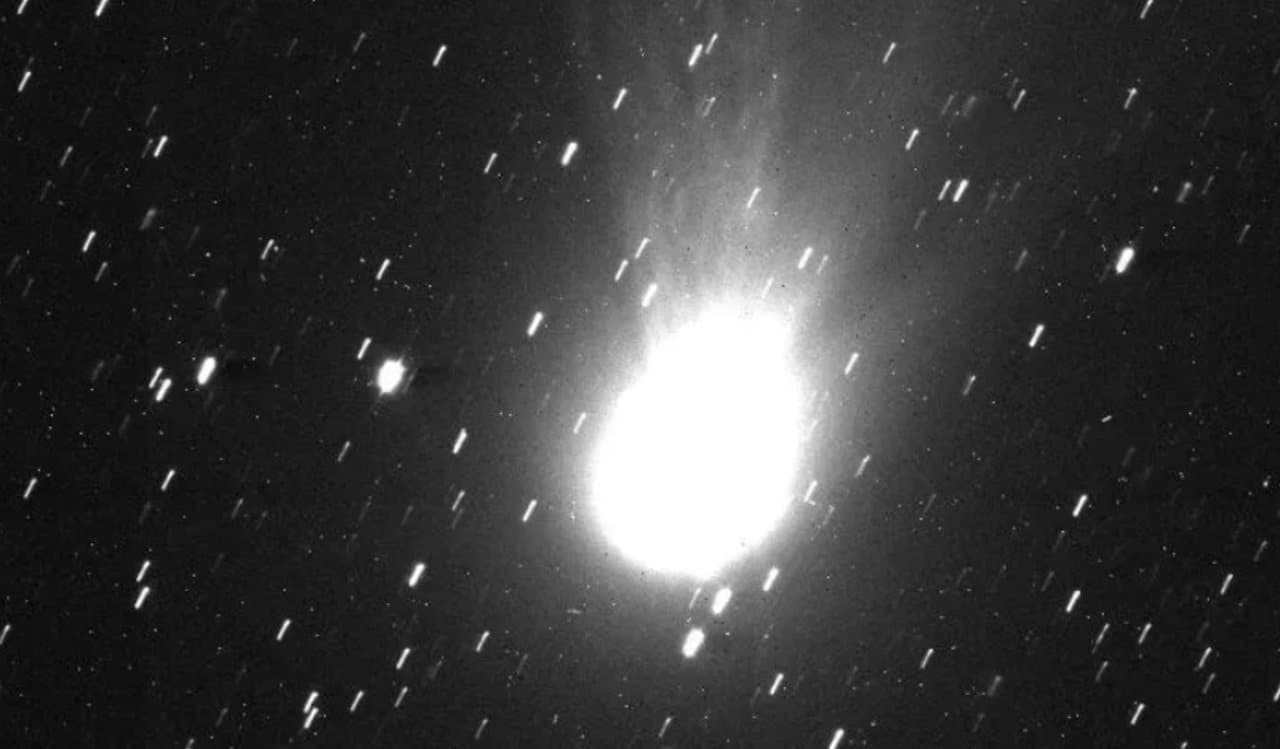
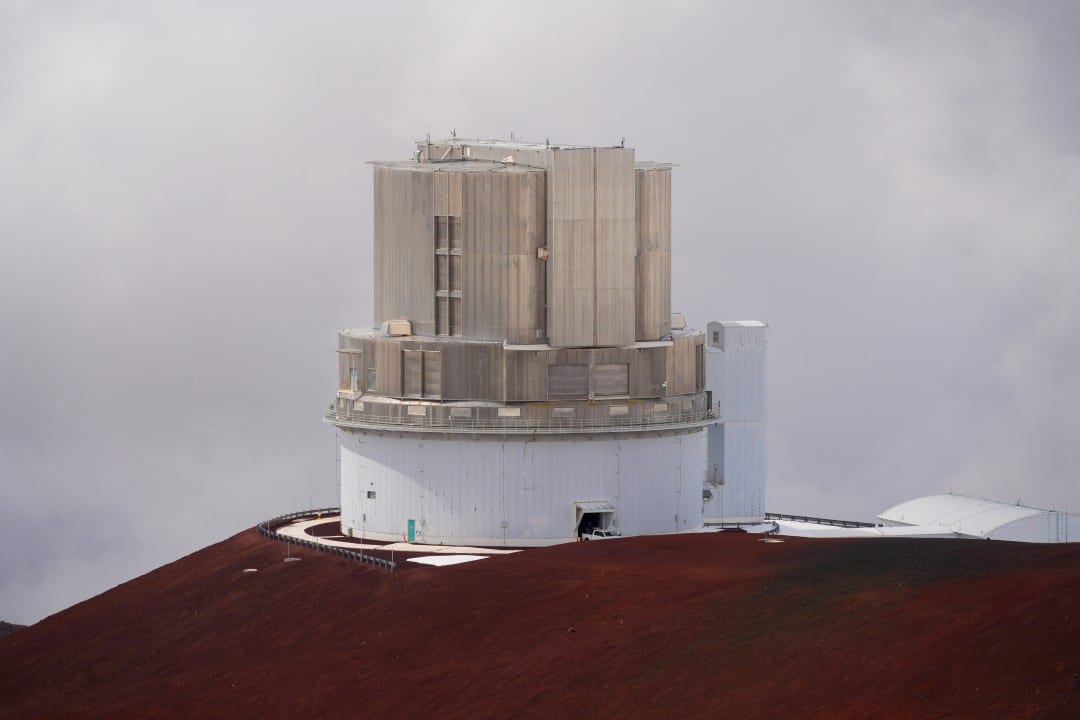
Astrônomos have identified new clues about the composition of the rare interstellar comet 3I/ATLAS, an object that originated outside our Sistema Solar. Recent observations have been crucial to understanding this cosmic phenomenon, providing unprecedented data. Telescópio Subaru, located in Maunakea, Havaí, played a key role in these high-scientific discoveries.
Pesquisas indicate a notable change in the comet’s chemical composition as it passed close to Sol. Esse phenomenon intrigues experts. Essas information is essential for distinguishing the properties of comets formed in different star systems. 3I/ATLAS is the third interstellar object ever identified.
Alteração in the composition of the comet after solar approach
The research team, led by Yoshiharu Shinnaka of Instituto of Ciências Espaciais Koyama of Universidade Kyoto Sangyo, observed the comet with Telescópio Subaru on January 7, 2026. Analysis of the light coming from the comet’s coma, the cloud of gas and dust that surrounds its nucleus, allowed them to estimate the ratio of carbon dioxide to water in the escaping material. Esta ratio was smaller than values inferred from previous observations with space telescopes.
Essa variation suggests that different layers of the comet began to release gas as solar heating changed conditions on the surface and inside the nucleus. The observed dynamics are crucial to understanding the evolution of these celestial bodies. The comet’s passage close to Sol acted as a catalyst for gas emissions.
Cometa 3I/ATLAS compared to ‘Oumuamua
Comet 3I/ATLAS represents the third known interstellar object to be detected by astronomers. The first, called ‘Oumuamua, was discovered in 2017 by the Pan-STARRS telescope, which is also located at Havaí on Halealakalā. ‘Oumuamua’s features were remarkably distinct.
‘Oumuamua appeared to be an elongated, rocky object, without the obvious cometary features that scientists would expect. In contrast, 3I/ATLAS clearly exhibits typical comet behavior, showing a bright coma composed of gas and dust. Essa’s fundamental difference between the two objects offers valuable insights into the diversity of materials that travel through interstellar space.
Detalhes on the carbon dioxide/water ratio
The investigations focused on an in-depth analysis of the light emitted by the comet’s coma, using specific wavelengths. The 3I/ATLAS image, captured by Telescópio Subaru on December 13, 2025, was created by combining three wavelengths: V-band (550 nanometers, blue), R-band (660 nanometers, green) and I-band (805 nanometers, red). Essa approach allowed detailed visualization.
Analysis of the ratio of carbon dioxide to water is a direct indicator of the comet’s internal composition. The research team observed a significant decrease in this proportion after 3I/ATLAS’s closest approach to Sol. Crucial points of the discovery include:
- Observação key:Realizada on January 7, 2026 (UT), after the comet reaches its closest point to Sol.
- Método analytics:Análise spectroscopic light from the coma, a diffuse cloud of gas and dust.
- Achado main:The inferred CO₂/H₂O ratio was lower than data from previous observations.
- Implicação:Sugere that solar heating released gases from different layers of the comet’s nucleus.
Importância from Research for Planetary Formation
Para astronomers, this observed change in composition is of crucial importance, as the coma acts as a window into the comet’s nucleus, the object’s frozen central body. Caso the chemical composition observed before and after the comet’s closest approach to Sol is different, this may indicate that the external and internal parts of the comet are not homogeneous. Essa condition provides researchers with a rare opportunity to understand how small bodies formed and evolved around stars other than our solar system.
Yoshiharu Shinnaka, leader of the research team, commented that by applying observational and analytical techniques developed through studies of Sistema Solar comets to interstellar objects, it is possible to directly compare comets originating from both inside and outside Sistema Solar, exploring differences in their composition and evolution. The results were published in The Astronomical Journal on April 22, 2026, in a paper titled “A post-perihelion constraint on the CO₂/H₂O ratio of interstellar comet 3I/ATLAS from forbidden [OI] lines.” The work was partially supported by grants from Sociedade Japonesa to Promoção from Ciência and Instituto from Ciências Espaciais from Koyama.
The role of Havaí and the Subaru telescope in astronomy
The discovery of 3I/ATLAS reinforces Havaí’s continued role in global cutting-edge astronomy. Telescópio Subaru, operated by Observatório Astronômico Nacional of Japão, is recognized as one of the world’s leading optical-infrared observatories. Ele performs observations from Maunakea, a site of profound cultural, historical and natural importance for Havaí, fundamental to the scientific community.
The Telescópio Subaru team expressed gratitude for the opportunity to observe the universe from Maunakea, highlighting collaboration and mutual respect. With the future full operation of the LSST, a powerful surveying telescope, astronomers have high expectations of discovering more interstellar visitors like 3I/ATLAS. Cada one of these discoveries offers a rare opportunity to compare the basic components of other planetary systems with those of our own, and observations made at Havaí continue to drive this scientific effort.
