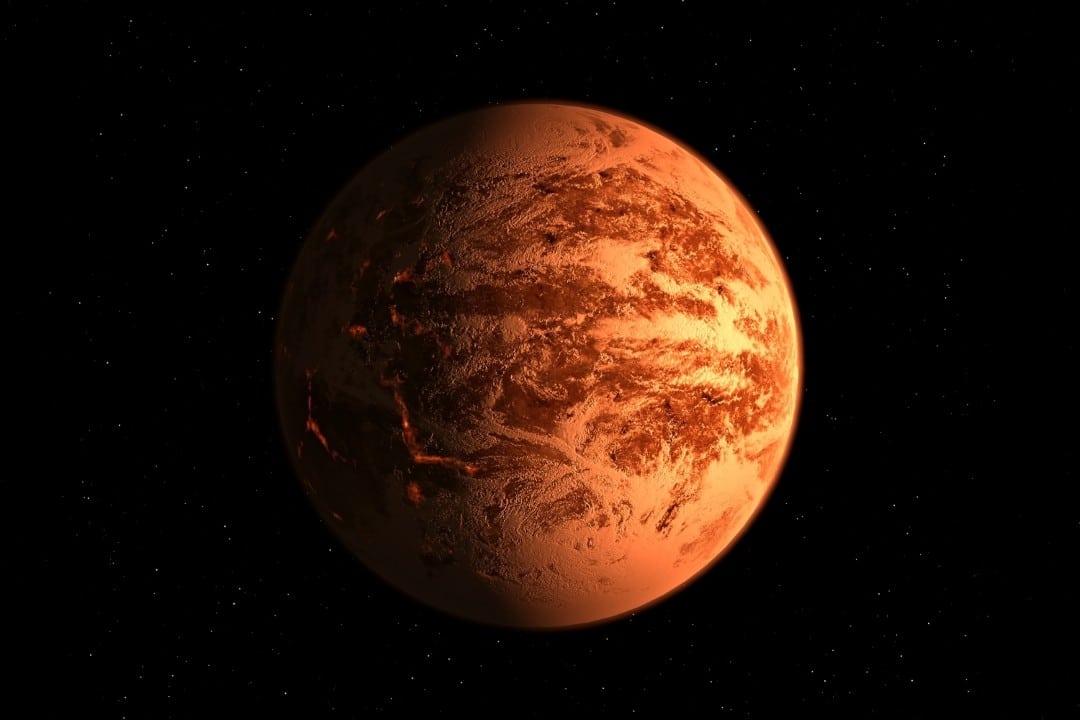
A team of astronomers has identified 11,554 exoplanet candidates by analyzing data from the first round of observations from NASA’s TESS satellite. Desses, 10,091 are new and have not been detected before. The work used machine learning to examine light curves from more than 83 million stars.
The TESS satellite captures variations in the brightness of stars when a planet passes in front of them. Previous Buscas prioritized brighter stars. The new project, called T16, extended the analysis to fainter stars, up to magnitude 16.
Busca reaches faint stars that went unnoticed
TESS records wide-field images. In dim stars, the drops in luminosity caused by planets are masked by noise. Conventional Métodos had difficulty identifying these signals.
The T16 team processed 83,717,159 light curves from Ciclo 1 from the main mission. Eles applied uniform corrections for biases and systematic errors. Depois, a semi-automatic search with machine learning found the traffic signs.
- The candidates have orbital periods between 0.5 and 27 days.
- 10,091 are completely new.
- 1,052 were already known from previous searches.
- 411 shows only one transit, with no defined period.
- Most orbit fainter stars than those analyzed previously.
Essa expansion allows access to a larger volume of data that the official TESS pipeline left out on stars below a certain brightness.
Confirmação from a hot Júpiter validates method
The researchers confirmed one of the candidates using radial velocity measurements on the Magellan telescope, on the Chile. The planet, called TIC 183374187 b, is a hot Júpiter that orbits a metal-poor star about 3,950 light-years from Terra.
The detection demonstrates that the pipeline can identify real planets not discovered before. The star belongs to Via Láctea’s thick disk. The signal passed vetting tests, including physical traffic models.
Essa validation gives confidence for the catalog as a whole. Muitos of the other candidates still requires follow-up observations for definitive confirmation. The process can take months or years.

Impacto in the census of known exoplanets
The number of confirmed exoplanets will surpass 6,000 by 2025. TESS has already contributed hundreds of them. The new catalog more than doubles the number of candidates from TESS itself.
Most of the new targets orbit faint stars. Isso creates a rich list for future studies with larger telescopes such as James Webb. Planetas with short orbits tends to be hot, which limits immediate chances of habitability, but expands the understanding of planetary formation.
The T16 project plans to extend the analysis to subsequent TESS cycles. Isso should add thousands of additional candidates, especially multi-sector events that improve period accuracy.
Detalhes technical analysis
The team removed uniform trends and corrected systematic errors across all light curves. Machine learning helped distinguish planetary transits from false positives. Vetting manual on phase and residual plots ensured quality.
Distribuições parameters show that many candidates fall into stars of different types. The catalog includes targets that were not promoted to official TOIs in previous searches, even without obvious failure flags.
The work was accepted for publication in The Astrophysical Journal Supplement Series. Ele is available in preprint since April 20, 2026 on arXiv.
