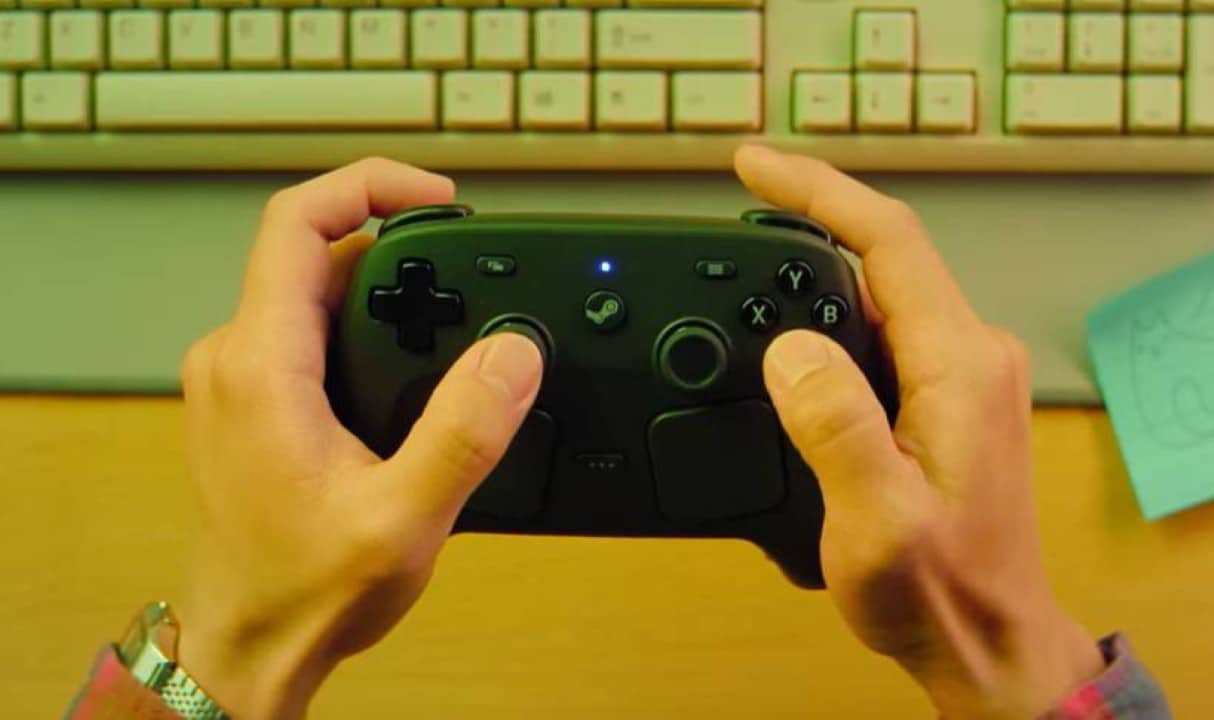
Valve has officially launched the new Steam Controller, a wireless accessory that brings the design of the Steam Deck to a portable, handheld form factor. The device costs US$99 and is now available for purchase, with the first units being delivered to consumers. The announcement comes before the arrival of the Steam Frame and Steam Machine, products still scheduled for 2025, but with no confirmed date or market value.
The controller integrates two analog joysticks, two capacitive touchpads on the base and two sets of paddle buttons on the back. The accessory includes a six-axis gyroscope for aiming and aiming in compatible titles. The battery offers extended autonomy and recharges via a wireless magnetic disk, which also functions as a dedicated receiver for ultra-fast connection with reduced latency.
Recursos technical and performance of the new accessory
The Steam Controller combines haptic vibration with sensitive touchpads, generating virtual click feedback with precision. The body stands out for its density and robustness, weighing more than standard PlayStation controls, but with a feeling described as comfortable even during long sessions. The vibration varies from intense to extremely subtle, replicating the feedbacks present in the Steam Deck OLED.
Initial Testes with the fast-paced indie shooter Sektori demonstrated response times equivalent to the directly connected Steam Deck. The controller works via the universal Bluetooth or via the dedicated wireless disk included in the package. Até four controllers can simultaneously connect to the same drive, facilitating couch multiplayer experiences.
The wireless solution stands out for its operational practicality. The drive connects to a USB-C to USB-A cable attached to the Steam Dock, eliminating unnecessary extra cables. The magnetic attachment allows quick detachment for recharging without complications or wasted time.
Compatibilidade and practical application in different scenarios
Steam Controller works with Steam Deck, PCs, Macs, and Linux computers running Steam platform games. Usuários can pair multiple controllers with multiple devices, although the dedicated wireless channel offers lower latency than the standard Bluetooth. Testadores report satisfactory experience using the control with Steam Deck docked and connected to the living room television.
The setup offers a genuine home console feel, unlike the previous isolated handheld experience. Trackpads do not compromise comfort during conventional use, even when not used frequently. The device also works as a universal controller for games outside the Steam ecosystem, as long as they support input via Bluetooth.
- Dois analog joysticks with standard resistance and fast response
- Dois generous capacitive touchpads on base with adjustable sensitivity
- Dois touch-sensitive rear paddle button sets
- Six-axis Giroscópio for precise motion control
- Vibração tactile with multiple levels of intensity and granularity
- Indoor Bateria with fast, wireless magnetic charging
- Dedicated wireless Conexão or universal Bluetooth 5.0
Cronograma launch and future products in development
Valve chose to release just the Steam Controller first while finalizing the more complex hardware. Lawrence Yang, software and user interface designer, and Jeff Mucha, electrical engineer, confirmed that Steam Frame and Steam Machine follow an internal schedule for availability in 2025. Nenhum price was disclosed for these larger products.
A global shortage of RAM memory was among the reasons cited for delays in production of the larger hardware. The company decided to prioritize the controller, an essential accessory to expand the Steam Deck experience to living room environments, leaving consoles and virtual reality headsets for later phases of the roadmap.
Posicionamento competitive compared to market alternatives
In direct comparisons with PlayStation 5’s DualSense controls and Xbox Series X|S, the Steam Controller stands out for its input customization and layout familiar to Steam Deck users. Testes indicate that the controller offers superior ergonomics for extended gaming sessions, despite the slightly higher weight than direct competitors.
The new accessory’s haptic vibration varies in granularity, providing more detailed feedback than alternatives available on the current market. The touchpads, often ignored by casual gamers, add an extra layer of control for those who regularly use desktop mode on Steam Deck or prefer gesture input in specific titles. The Steam Dock, sold separately for $79, complements the solution, although alternative lower-cost port extenders offer similar functionality.
