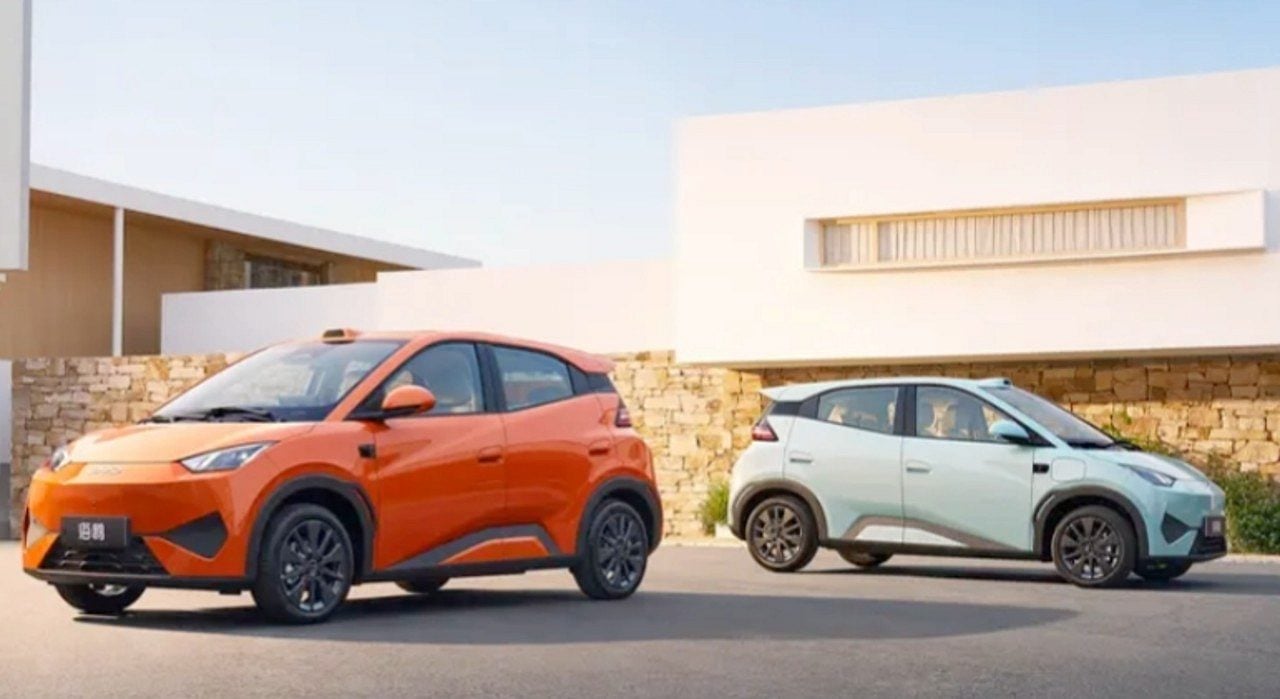
BYD introduced the 2026 Dolphin Mini lineup in the China with a significant technological update: the incorporation of LiDAR sensors and the DiPilot 300 autonomous driving system, previously exclusive to premium models. The electric compact received a robust safety and connectivity package, reinforcing its competitive position in a market increasingly contested for cutting-edge technology in entry-level vehicles.
The addition of LiDAR marks an important step in the democratization of autonomous safety features in compact cars. Esse sensor works like a laser radar, emitting infrared pulses that map the environment in three dimensions, allowing assisted navigation in urban centers, sign recognition, lane reading and obstacle detection with high precision.

DiPilot 300 system and safety features
The DiPilot 300 integrates multiple environmental perception technologies: high-resolution cameras, millimeter-wave radar, ultrasonic sensors and precision 3D mapping. Na China, this system is offered as an option for approximately R$15,300, considered affordable for the segment. The Dolphin Mini starts at 69,900 yuan (about R$50,500) and reaches 85,900 yuan (R$62,100) in the top-of-the-line version.
Além of the autonomous driving system, the model incorporates other vehicle protection features that raise the safety standard in the compact segment.
- Frenagem automatic emergency response (AEB) with obstacle detection.
- Monitoramento real-time driver fatigue.
- Câmera 360-degree vision for safe maneuvering.
- Central DiLink 150 multimedia with 12.8 inch screen.
- Carregamento 50W wireless for mobile devices.
- Bidirectional Climatização with independent heating and cooling.
Atualizações renewed visuals and design
The Dolphin Mini 2026 received an aesthetic redesign with a new front bumper, 16-inch wheels and headlights with updated graphics. The rear also gained a new logo with greater visual prominence. Body colors include “Manga Orange” and “Mint Green”, new options in the brand’s portfolio for this model. The interior follows trends of compactness and visual cleanliness, with a beige instrument panel and a more discreet logo on the steering wheel.
The electric motor remains unchanged, generating 75 horsepower and 13.8 kilograms of torque. The China offers two battery options in interchangeable configuration. Conforme Chinese test data, the version with a 30.08 kWh battery achieves a range of 305 kilometers, while the 38.88 kWh battery reaches 405 kilometers.
Posicionamento competitive in Chinese market
The changes implemented reflect BYD’s strategy of strengthening the model’s competitiveness in the entry-level segment. The Dolphin Mini reached peak sales in April 2025 with 34,005 units, but has not recovered that number since. In June it sold 30,708 units, and the subsequent months did not exceed this mark. The market leader Geely EX2 sold 465,775 units in 2025, while the Dolphin Mini totaled 319,956 units in the same period, a difference of approximately 150 thousand units.
The inclusion of LiDAR in the Dolphin Mini represents a deliberate differentiation strategy. Fora from China, ADAS systems with this technology rarely appear in vehicles in this price range, making BYD’s proposal competitively attractive. The company maintains a significant global presence in the electric vehicle market and continues to invest in safety and autonomous technology even in entry-level models, consolidating its reputation as an innovative manufacturer.
Contexto global and future prospects
No Brasil, Dolphin Mini has not yet received the same updates as the Chinese market, maintaining the previous configuration. The spread of technologies such as LiDAR in compact vehicles represents a significant transformation in the global automotive industry, signaling that features once exclusive to premium models are now reaching mass segments. Essa trend reflects the industry’s commitment to active security at all price points and demonstrates how fierce competition in China drives technological innovation on a global scale.
