
Forza Horizon 6 arrives tomorrow with a recreation of Japão that goes beyond visual fidelity. The Playground Games design and art team invested months in cultural research and strategic adaptations to transform real tourist attractions into playable scenarios, respecting the historical importance of temples, castles and traditional villages. The game will be released on May 19th for Xbox Series
The studio’s creative approach avoided an exact duplication of Japanese territory. Conforme explain Torben Ellert, design director, and Don Arceta, art director, the goal was to capture the authentic essence of the locations, allowing vehicles to naturally navigate historically sacred areas. Isso required delicate decisions about which structures to preserve untouchable and where to introduce plausible elements that facilitate gameplay without disrespecting heritage.
Cachoeira Nachi and respect for the sacred
Cachoeira Nachi, with its 133 meters of free fall, is the perfect starting point to understand the game’s design philosophy. Próximo Next to it sits Grande Santuário Kumano Nachi Taisha, a striking red structure built centuries before cars existed. The team faced the challenge of making the site accessible without destroying unnecessary elements or disrespecting its sacred character.
“We wanted to compose this in a way that you can fully appreciate the view from inside the car,” said Arceta. The design allowed players to park and photograph the waterfall and sanctuary from angles that replicate compositions seen in real tour guides. An additional bonus has been strategically placed behind the drop: an XP board that rewards curious explorers. Trata is a practical application of the “iron law of game design,” as Ellert sums it up, with a uniquely Horizon twist.
Templos Buddhists and castles as national treasures
Ruriko-ji and Hirosaki’s Castelo are treated as relics in the game. The first features its five-story pagoda surrounded by greenery, while the second offers a black and white silhouette surrounded by cherry trees. Ambos are Japão national treasures, and cultural consultant Kyoko Yamashita has been essential in guiding preservation decisions.
One particular choice highlights respect: the cherry blossom trees around Hirosaki are the only trees that players cannot destroy during exploration. Essa restriction reflects the cultural importance of the flower in Japão and the monument specifically. Ambos locations are part of the “Discover Japão” path, which includes missions called Viagem from Um Dia, mirroring routes that real tourists usually follow.
Elementos game design for these locations:
- Acesso adapted vehicle maintaining historical dignity
- Missões stories strategically positioned near villages
- Casas for sale available in certain regions, offering stopping points
- Recompensas gameplay linked to cultural exploration
Vilarejos coastal and mountainous
Ine, a fishing village on the north coast, is recognizable for its traditional wooden architecture and the Funaya, houseboats aligned to Baía of Ine. Arceta explained that the design captured the main street with distinctive visual elements like koinobori fish (fish-shaped decorations), ensuring that a street network allowed one to appreciate the scenery across the water. A house is for sale there, and a narrative quest is nearby, rewarding explorers.
Shirakawa-go, in turn, nests in the heart of Montanhas Ryohaku. The thatched-roof farmhouses were designed to withstand harsh winters, a detail the team wanted to emphasize. The game incorporates seasonality into weekly cycles: spring, summer, autumn and winter. Shirakawa is particularly impactful during snowfall, when huge drifts form on rooftops, replicating geographic reality. Corridas in Circuito of Shirakawa completely change appearance and mechanics according to the seasons, emphasizing how the weather affects the real region.
The team used videos of people walking through villages as visual reference. Quando necessary, they introduced plausible elements — like a nearby gas station — instead of 100% faithful cities. Essa choice maintains authenticity without sacrificing playability.
Montanhas epics and sense of scale
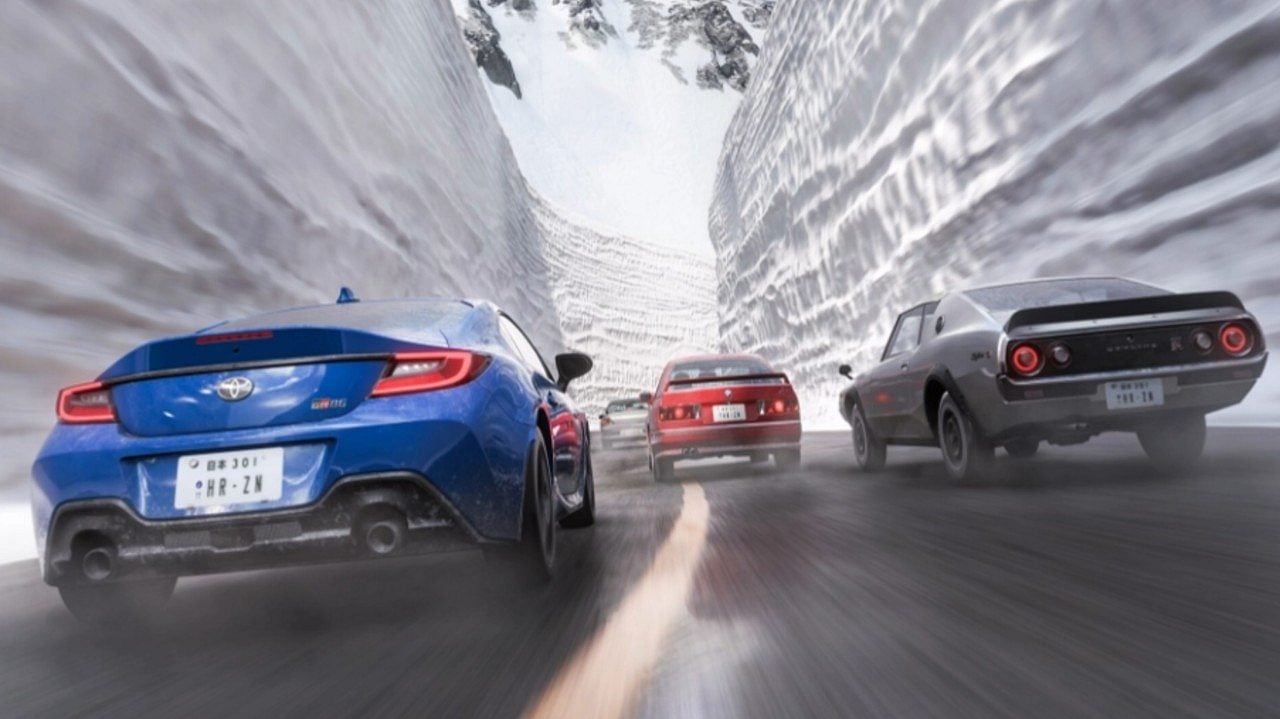
Monte Haruna offers twisty roads that require extreme control. Do top, views stretch miles beyond, showing beaches, forests and snow-capped peaks simultaneously. Tateyama Kurobe, the iconic Japanese alpine route, winds between walls of snow that make the player feel tiny, as if exploring a well-kept secret.
Ellert described the strategy as “condensing specific, memorable moments while eliminating irrelevant content in between.” The transition between biomes — a movement that observes changes in the landscape — amplifies this sense of scale. The linear distance isn’t huge, but the visual variety makes up for it, creating smaller epics contained within the game’s viable scope.
Tóquio: urban density and contrast
Tóquio is the urban heart of the map. Arceta called it “the most three-dimensional, complex, overlapping and, above all, authentic urban area” the team has ever built. Shibuya’s Cruzamento and Avenida Ginkgo are close in real life, so their closeness in the game feels natural.
The city captures several “little vibes,” as described by Arceta:
- Akihabara: vibrant commercial hub focused on technology and entertainment, full of energy
- Daikoku: more peaceful and contemplative atmosphere
- Avenida Ginkgo: green oasis amid urban intensity
- Arranha-dazzling skies and lights interspersed with serene green spaces
Essa dichotomy between urban monumentalism and small natural refuges lends credibility to Tóquio’s portrait within Horizon’s universe.
Missões and additional attractions
Circuito Temporal of Hokobu is a Contra or Tempo mission where players simply beat personal records or challenge friends. Ellert described it as an homage to Japanese car culture, based on the communal experience of people driving cars on decaying tracks spread across mountain valleys — something quintessentially Japanese that few Westerners know about.
Centro Espacial Urakawa marks the starting point of the campaign. Ellert expressed personal enthusiasm for the inclusion of this modern location, citing his fascination with civilian spaceflight. The location contrasts hypertechnology with ancient buildings, symbolizing Japão’s variety of contrasts. A drag racing meeting and several race tracks intersect on site.
The new Diário from Forza Horizon 6
A feature called Diário encourages players to explore and document points of interest. A fog of war on the map shows you where you’ve been and where you still need to visit. The photography system allows you to capture iconic monuments and natural wonders, transforming exploration into personal collecting and offering structured guidance through the map.
Forza Horizon 6 will be playable from May 19th on Xbox Series X|S, Xbox on PC and Xbox Cloud, and will be available from day one via Xbox Game Pass.
