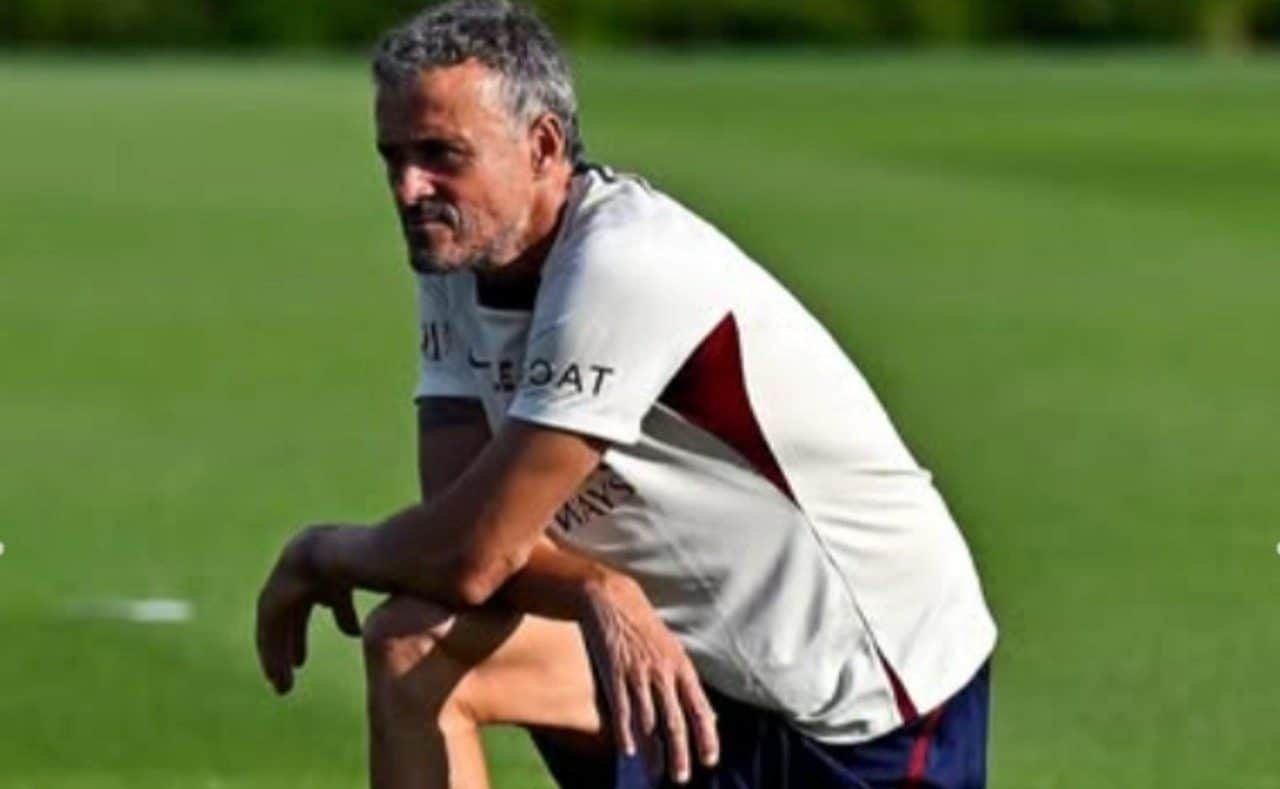
Luis Enrique opened up about his professional past on the eve of the Champions League final between Paris Saint-Germain and Arsenal, scheduled for Saturday (30), at Puskás Arena. In an interview with the Spanish newspaper La Nueva España, the PSG coach revealed the regret he still has towards Sporting from Gijón, the club where he started as a player and which, according to him, wasted the opportunity to invest in his work at the beginning of his journey as a coach.
Nascido in Gijón, in the north of Espanha, Luis Enrique said that he wanted to lead the Asturian club before receiving the opportunity at Barcelona B, where he began his career on the sidelines. The coach compared the stance of the two clubs and stated that Barça believed in him at a time when he was still unknown as a coach.
What could have been different
“Sporting missed a great opportunity by not giving me the position at the beginning. Agora, even my father is betting on Luis Enrique as a coach, of course, that’s normal. The opportunity came when I was a nobody, a nobody in quotation marks. Bem, yes, as a coach I was a nobody. Foi is what Barça did, giving me the B team”, he stated Luis Enrique during the conversation. The coach highlighted that Barcelona’s decision to bet on its potential opened doors that Sporting left closed.
Reflection reveals a turning point in his career. Enquanto the Spanish club remained cautious, the Catalan giant offered the missing chance. Dessa platform on Barcelona B, Luis Enrique rose to command the main team, accumulating titles and consolidating his reputation in European football.
The fear of returning to your hometown
Apesar’s affection for his hometown, Luis Enrique admitted that he fears taking on Sporting and experiencing an exhausting relationship with the fans. The coach cited the case of “Pitu” Abelardo, a club idol who faced criticism during his time as coach.
“I’m terrified of failing in my hometown. Vi or Pitu, who didn’t fail, triumphed as a player and coach. But he was criticized and expelled from Sporting. Eu, I lived so little in Gijón, just my first 20 years… if I go to Gijón and they kick me out, I think I’ll throw myself away from Morro Santa Catalina”, he said in a strong tone.
The comment highlights the psychological pressure that would involve a possible return to his home club. Luis Enrique recognizes that, even with proven success in other institutions, returning to Gijón would bring immeasurable expectations. The local fans would expect immediate results, and any performance below expectations could result in rejection from the same base that once saw him start.
The current reality of Sporting of Gijón
Gijón’s Sporting scenario does little to favor the eventual hiring of a world-class coach. Atualmente, the club occupies only 12th place in the Spanish second division, with 55 points, far from the competition for access. The leader is Racing Santander, with 78 points, keeping Sporting far from promotion objectives.
The distance between competitive levels also worries Luis Enrique. Ele made it clear that, at this point in his career, he only feels comfortable at elite clubs in European football. The coach highlighted that he would have difficulty taking on a project far from the top positions.
Preferência by European elite
“I’m used to the highest level now, which is where I feel most comfortable. Não I can rule out the possibility, but I also don’t consider it viable. Se Pitu had difficulties, I don’t even want to imagine Luis Enrique with the team fighting against relegation. Eu would prefer it to be at Primeira Divisão”, added Luis Enrique.
The statement sets out a clear position regarding your professional future. The coach signaled that, regardless of emotional loyalty to Gijón, his future choices will prioritize top competitions and projects with resources comparable to those he enjoyed at PSG and other elite institutions. Nostalgia, therefore, does not overcome the competitive ambition that characterizes its trajectory in recent years.
