New hybrid SUV Haval H7 arrives on the Brazilian market with LiDAR system and 364 hp engine

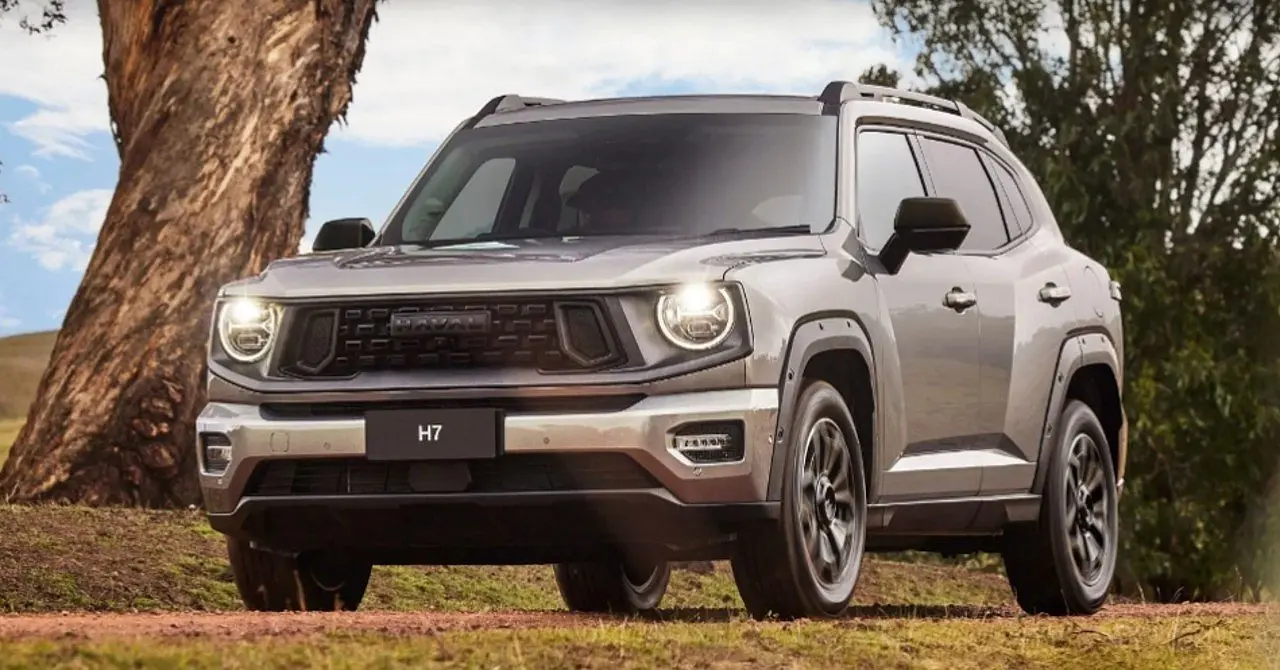
Chinese automaker GWM has confirmed the official launch of the Haval H7 on the Brazilian market for the year 2026. The new sports utility vehicle arrives with a plug-in hybrid engine and an equipment package focused on driving assistance. The model was designed to operate in a higher market range than the current Haval H6. The manufacturer set a target price of less than R$300,000 for the launch in the country.
The introduction of this utility represents a strategic move by the company to consolidate its presence in the national territory. The central objective is to attract consumers who seek energy transition combined with high performance and internal sophistication. The arrival of the product changes the competitive dynamics in the mid-range segment, forcing traditional brands to review their offerings. Modelos already established in Brazilian dealerships, such as the BYD Song Plus, the Toyota Corolla Cross and the Jeep Compass, now face a rival with superior technical specifications and an aggressive value proposition.
Arquitetura hybrid system mechanics and efficiency
The Haval H7’s powertrain uses the combination of a 1.5 turbo combustion engine with a high-capacity electrical system. Esta plug-in hybrid mechanical configuration allows the vehicle to achieve a combined power output that varies between 326 hp and 364 hp, depending on the specific calibration of the version. The performance numbers place the utility in a position of numerical advantage when compared to its direct competitors. Most rivals in the mid-range segment operate with considerably lower power bands.
The system’s energy management allows the driver to exclusively use the electric battery for daily urban journeys. The combustion engine automatically engages during longer road journeys or when the driver demands maximum acceleration. Esta dual operation ensures fuel savings in city traffic and eliminates range anxiety on intercity journeys. The format perfectly meets the profile of the Brazilian consumer who needs a single car for multiple functions.
GWM engineering also paid special attention to the suspension setup and torsional rigidity of the chassis. The structure was reinforced to handle the additional weight of the battery bank and the high instantaneous torque generated by the electric motors. The practical result is a firm and stable drive, a fundamental characteristic to guarantee safety in a sports utility vehicle with more than 300 hp. The four-wheel disc brakes feature an energy regeneration system during deceleration.
Proporções of the body and use of internal space
The physical dimensions of the Haval H7 highlight its proposal to operate in the upper range of the medium SUV category. The vehicle measures approximately 4.8 meters in total length. The elongated wheelbase provides a spacious cabin, allowing five adult passengers to travel in adequate leg and shoulder comfort. The large size also gives it an imposing visual presence on the streets, a factor often valued by buyers of this type of car.
Load capacity is another highlight in the structural design of the Chinese model. The trunk offers a useful volume of 586 liters for luggage accommodation. Este compartment surpasses the capacity of several direct competitors, which often sacrifice rear space to house hybrid system components. The versatility of the interior space makes the vehicle a viable option for large families and extended trips.
The exterior design adopts straight lines and striking creases on the bodywork, conveying a feeling of robustness and modernity. The wide front grille works in conjunction with the tapered headlights that use high-intensity LED technology. The aerodynamics of the body were optimized in a wind tunnel to reduce drag at high speeds. Este Care with air flow directly contributes to reducing noise in the cabin and improving energy consumption rates.
Integração of digital displays and autonomous driving sensors
The internal environment of the Haval H7 is characterized by the almost total absence of physical buttons, replaced by large digital surfaces. The instrument panel behind the steering wheel consists of a 10.2-inch screen that displays vital data on speed, energy flow and remaining range. In the center of the dashboard, a 14.7-inch floating multimedia center houses climate control, GPS navigation and on-board entertainment controls.
The SUV’s main technological difference is the adoption of the LiDAR sensor integrated into the body. Este equipment emits laser pulses to map the environment around the car in three dimensions with extreme precision. The technology allows the vehicle to identify obstacles, pedestrians and other cars even in conditions of low visibility or heavy rain. The component raises the level of reliability of semi-autonomous driving assistance systems.
The active and passive safety package was structured to meet the most rigorous international crash tests. The manufacturer has included features that are generally restricted to vehicles from European luxury brands.
- Sistema autonomous emergency braking with pedestrian and cyclist detection capabilities.
- Controle intelligent adaptive cruise capable of following the flow of traffic.
- Conjunto of high-resolution cameras with 360-degree vision for maneuvering in confined spaces.
- Assistente active lane keeping with automatic trajectory correction on the steering wheel.
The presence of this equipment transforms the driving experience, reducing driver fatigue in traffic jams and long journeys. GWM’s bet is that the abundance of embedded technology justifies the consumer’s investment and creates a perception of value superior to that of rivals.
Reconfiguração of the market and pressure on competition
The price positioning of the Haval H7 generates an immediate impact on the price list practiced by car manufacturers installed in the Brasil. By offering a large plug-in hybrid SUV for less than R$300,000, GWM puts direct pressure on the Toyota Corolla Cross and Jeep Compass. Estes two models have led sales in the segment for years, based on the strong reliability of their brands and the capillarity of their dealership networks. However, both offer less powerful mechanical sets and more conservative technological packages.
In the specific niche of electrified vehicles, the fiercest battle will occur against the BYD Song Plus and the Jaecoo 7. The BYD model won over the Brazilian public with an aggressive pricing policy and focus on fuel efficiency. The Haval H7 fights back by offering significantly higher power numbers and the unique LiDAR system. The Volkswagen Taos also feels the effects of this launch, as it operates in the same price range offering only traditional combustion engines.
The expansion of GWM’s portfolio demonstrates the brand’s intention to cover all profitable price ranges in the national market. The strategy of keeping the Haval H6 as a gateway and positioning the H7 one step above creates a ladder of loyalty for the company’s customers. Consumers who purchase the smaller model today will have a natural upgrade option within the brand itself in the future.
The Brazilian automotive scenario is undergoing an accelerated transformation with the arrival of high-value-added Asian products. The introduction of the Haval H7 in 2026 sets a new level of demand for the medium SUV category. Traditional manufacturers will need to accelerate their electrification plans and enrich their vehicles’ equipment lists to maintain their attractiveness. The end consumer is the main beneficiary of this dispute, gaining access to more advanced technologies at more competitive prices.