Italian carmaker Ferrari reveals new Luce model in Rome and adjusts electric vehicle targets by 2030
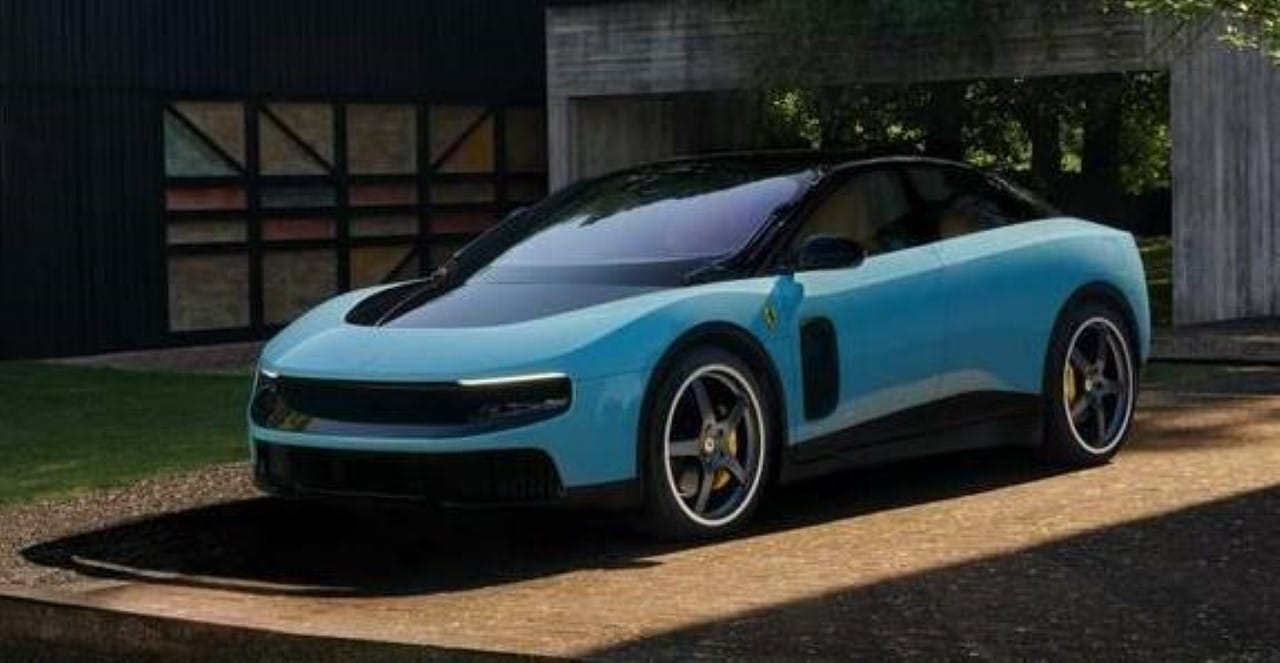
Italian manufacturer Ferrari presented its first fully battery-powered car on May 25th, officially named Luce. The launch event took place in the city of Roma and marked the automaker’s definitive entry into the high-performance clean propulsion segment. The vehicle’s unveiling takes place during a period of intense transformation for the global automotive industry, which seeks to balance sustainability requirements with maintaining profit margins. The new model arrives on the market to compete directly with luxury options already established by other European brands.
The introduction of the new car comes at a time of notable caution in the premium automotive market. Diversas Luxury manufacturers have begun to slow investments in zero-emission technologies due to fluctuations in demand from high-income consumers. The company’s president, John Elkann, declared during the presentation ceremony that the project transforms the company’s vision into tangible reality. The executive also stated that the launch opens a new chapter capable of strengthening the Ferrari tradition on the international scene, proving that technological innovation can coexist with the historical legacy built on the race tracks.
Engenharia applied and performance specifications
The development of the Luce required significant adaptations to the brand’s traditional sports car architecture. The vehicle reaches a top speed of over 310 kilometers per hour. Acceleration from zero to 100 km/h is completed in just 2.5 seconds. Esses numbers maintain the extreme performance standard demanded by the manufacturer’s loyal customers. Engenheiros focused intensely on ensuring that the absence of the combustion engine did not eliminate the automaker’s signature agile driving feel. The body’s aerodynamic design was sculpted in wind tunnels to reduce drag and maximize energy efficiency at high speeds.
The car’s mechanical set depends on a high-density battery with a capacity of 122 kWh, strategically positioned on the floor to optimize the center of gravity. The total weight of the vehicle reaches 2.26 tons. Essa structural feature makes the launch the heaviest model ever produced in the entire history of Ferrari. The autonomy declared by the company exceeds the mark of 530 kilometers on a single full charge. The extended range allows medium-distance travel without the need for constant stops to refuel on highways.
The thermal management of the electrical system represented one of the biggest technical challenges during the testing phase on closed tracks. Efficient cooling of the power cells ensures that the car maintains maximum performance even under extreme demand on hot days. Sistemas advanced kinetic energy recovery systems have been integrated into the brakes to maximize efficiency during urban driving. Traction management software instantly distributes force between the axles, ensuring absolute stability in tight curves and low-grip surfaces.
Configuração interior and passenger space
The body design breaks with the traditional two-seater format prevalent in the company’s historical catalogue. The Luce has enlarged dimensions that allow it to accommodate up to five passengers comfortably. The project represents only the second four-door model developed throughout the Italian manufacturer’s history. The decision reflects a clear attempt to attract a more pragmatic consumer profile, who values the daily use of the vehicle with the family, without giving up the status associated with the brand’s emblem.
The interior of the cabin uses high-quality sustainable materials and high-resolution digital panels for full control of the car’s functions. The distribution of internal space was largely benefited by the absence of the mechanical transmission tunnel, common in combustion vehicles. The cabin’s acoustic insulation received special attention from the engineering team to compensate for the lack of traditional mechanical noise. The sound of the V8 and V12 engines has been replaced by an artificial sound signature developed exclusively for the electric model, which reacts dynamically to the pressure exerted on the accelerator pedal.
Ajustes on sales projections and market scenario
The arrival of the automobile at dealerships coincides with a profound revision in growth expectations for the luxury electric sector. Global demand for battery-powered vehicles has shown signs of weakening over the past few months. Esse macroeconomic scenario forced Ferrari to recalculate its long-term estimates for the clean energy division. The automaker opted for a more conservative approach compared to plans released in previous years, prioritizing the corporation’s financial health in the face of uncertainties in the consumer market.
The company’s new guidelines establish updated parameters for the fleet’s energy transition:
- The revised target foresees that 20% of the brand’s total sales will be electrified models by the year 2030.
- The manufacturer’s previous objective was to reach 40% electrical participation in the same stipulated period.
- The current situation in the industry reflects a generalized reduction in financial contributions to electrification by premium automakers.
- The short-term focus returns to optimizing high-performance hybrid engines already in the portfolio.
Concorrentes directs in the high-end segment, such as Porsche and Lamborghini, also face similar dilemmas in adapting their product catalogs. Maintaining profitability requires an extremely delicate balance between technological innovation and preserving the mechanical identity that attracts traditional buyers. Ferrari seeks to utilize Luce as a real-time commercial laboratory to understand real public acceptance before massively expanding the all-electric product line.
Strategic Posicionamento and supporting infrastructure
The launch event at Roma acts as a public declaration of the Italian automaker’s technical capabilities. The Luce represents Ferrari’s official response to the challenge of maintaining exclusive status while complying with increasingly stringent environmental regulations on the Europa and Estados Unidos. Diferentemente from other brands that have decided to abandon or indefinitely postpone their zero-emission projects, the company has chosen to maintain the trajectory of continuous development, even operating with reduced commercial targets for the next decade.
The brand’s global dealer network will undergo rigorous structural adaptations to offer adequate technical support for the new propulsion system. Ultra-fast charging Estações will be installed at strategic service points to ensure total convenience for owners. Training of mechanics specializing in high voltage systems has already begun in the main European and North American branches. Logistical preparation aims to ensure that the network is ready for the first deliveries scheduled for the coming months.
The luxury automotive market in 2026 requires manufacturers to deliver products that combine environmental sustainability with the extreme performance expected from a super sports car. Ferrari is betting that the integration of advanced software and hardware technologies in the Luce will be enough to convince even the most skeptical enthusiasts of the brand. The commercial performance of the new model will set the pace for the company’s next launches and influence engineering decisions across the high-end industry in the coming years. The energy transition in the luxury sector is consolidated as a process of continuous adaptation and calibration of expectations.
