Observations from the James Webb Telescope reveal red dots and redefine the origin of black holes
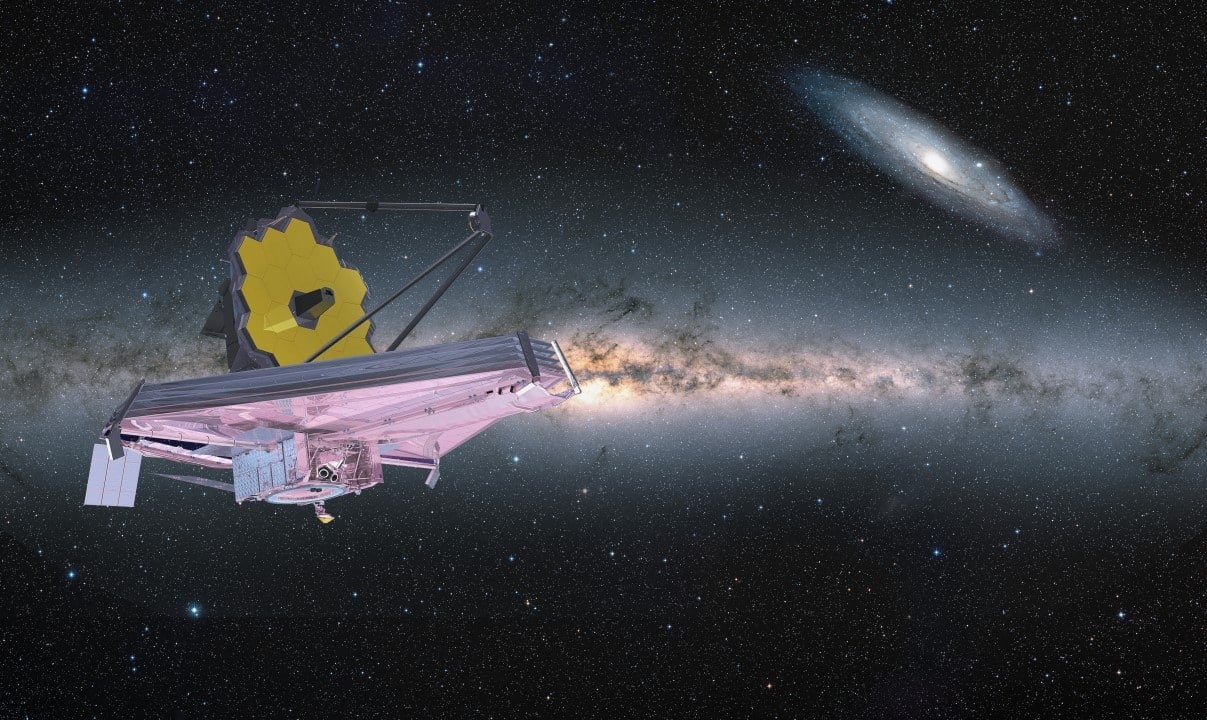
Telescópio Espacial James Webb records a series of small, bright red dots in much of its deep space observations. The equipment began its scientific operations around four years ago. Desde researchers then catalog hundreds of these compact objects, technically classified by the acronym LRDs. Múltiplos projects dedicated to astrophysics seek to understand the exact nature of the emissions captured by infrared lenses.
The first images generated a wide debate about the chemical and physical composition of the luminous points. Algumas theories suggested the presence of massive galaxies formed soon after Big Bang. Outros scientists pointed to the existence of black holes hidden by dense layers of cosmic dust. Subsequent Análises, however, refuted much of these initial ideas. The more precise data obtained by the telescope opened up space for unprecedented interpretations of the behavior of matter in the cosmos.
Concentração of luminous objects in the first billion cosmic years
Red dots appear recurrently when the telescope directs its mirrors to specific regions of the universe for long periods of exposure. Professor Jenny Greene, Universidade researcher from Princeton, evaluates the data collected by space agencies. The expert believes that intense light can emanate from a black hole in an accelerated growth stage. Não there is an absolute consensus on the exact reason for this distinct visual appearance in the processed images.
Outras Possibilities raised by experts include the presence of an extremely massive star that has reached the final stage of its lifespan. Astronomical observations show that previous hypotheses lose strength as new data packets arrive at research centers. The current understanding of the scientific community remains subject to change with future information collection. LRDs appear in abundance in the early universe. Eles focus significantly on the first billion years after the birth of the cosmos, an event that occurred 13.8 billion years ago.
The temporal distribution of these objects offers fundamental clues about the physical phenomena that occurred when space was still young and dense. In contrast to their abundance in the remote past, these formations become extremely rare in more recent and closer regions of our solar system. The James Webb’s superior sensitivity to infrared light allows detection of these anomalies with a clarity unattainable by previous generation equipment such as the Hubble telescope.
Hipóteses discarded and new analyzes on the composition of hydrogen gas
Pesquisadores currently propose that the observed redness results from the presence of hydrogen gas around expanding black holes. Essa interpretation replaces the initial idea that the color derived from large concentrations of stardust. The theoretical review took place after carrying out rigorous spectral analyses. The measuring instruments did not detect clear signs of dust in the mathematical quantities expected to justify the visual phenomenon. Redshift explains a significant portion of the appearance captured by space equipment sensors.
The ongoing expansion of the universe lengthens the wavelengths of light emitted by objects located at extreme distances. Researcher Jorito Matty, linked to Instituto Austríaco from Ciência and Tecnologia, coined the informal term little red dot to facilitate communication between academics. The official technical nomenclature involves the broad emission of alpha hydrogen. The simplified version, however, gained immediate popularity among the international scientific community. Matty coordinates teams focused on the detailed analysis of these celestial objects.
The scientist reinforces that the remote location of most of these celestial bodies imposes technical barriers to carrying out detailed short-term studies. Cada dataset transmitted to Terra requires months of processing on supercomputers. The researchers constantly calibrate the algorithms to isolate background noise and highlight the real emissions coming from the ionized gas.
Identificação of rare anomalies in regions closer to Terra
Continuous mapping of the night sky has resulted in the recent identification of three cases of LRDs located in areas closer to our planet. Esses specimens have peculiar characteristics that differentiate them from formations found in the far reaches of the universe. Relative proximity makes it easier to schedule future observations with different lens and filter configurations.
- Objects stand out for their intense red color even when analyzed in their original frame of reference.
- The rarity of these three celestial bodies is 100,000 times lower compared to those in the primordial universe.
- Detection occurs exclusively due to the infrared sensor’s ability to capture low-energy photons.
Analysis of these three neighboring objects can clarify outstanding doubts about the exact mechanisms of gravitational formation and collapse. Astronomers use these rare samples as natural laboratories to test mathematical equations developed over the last four years. Crossing data between distant points and nearby points creates a robust comparative model.
Impacto’s breakthroughs in understanding Via Láctea and celestial bodies
The compact objects cataloged by James Webb represent a possible infancy phase of supermassive black holes. Estruturas with colossal dimensions exists at the center of several galaxies, including Via Láctea. Understanding the exact origin of these gravitational giants would fill historical gaps in models of the formation of the universe. Astronomers seek to understand how these celestial bodies accumulated so much mass in a period of time considered short on the cosmic scale. The equipment’s main mirror captures weak infrared light that escaped observation instruments operated in previous decades.
Novas observation rounds occur weekly and have the potential to overturn or confirm current hypotheses in astrophysics departments. Cada telemetry package adds unprecedented details about the gas’s thermal behavior and emissions at different wavelengths. The researchers emphasize that the scientific method requires constant testing and revision of established ideas. Theoretical adjustments occur frequently as the volume of empirical evidence increases in public databases.
Planejamento from international campaigns for mapping active cores
The systematic detection of red dots in multiple independent observation campaigns consolidates the relevance of the topic for models of cosmic evolution. Eles appear as significant structural components of galaxies formed in the young universe. LRDs represent a notable fraction of all luminous objects identified in the first billion-year window. Equipes from different continents organize consortia to optimize space telescope usage time. Strategic planning avoids duplication of efforts and speeds up the processing of raw images.
The main focus of the upcoming missions is to separate the light contributions emitted by common stars, ionized gas clouds and possible active galaxy nuclei. Avanços in decoding these signals could definitively change academic views on the accelerated growth of supermassive black holes in the early cosmos. The catalog of red objects grows with each operating cycle of the space observatory.