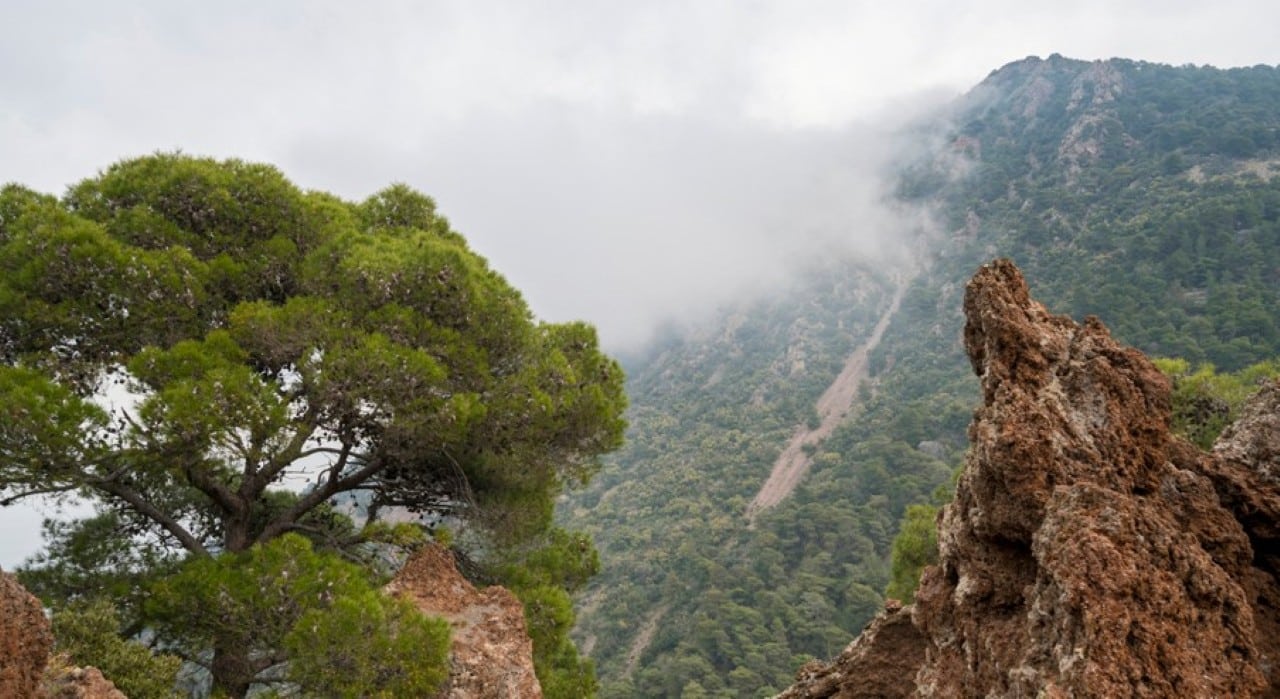
Pesquisadores Swiss reconstructed the geological history of the volcano Methana, in Grécia. The volcano has not recorded eruptions for more than 100,000 years, but it remains active. Grandes volumes of magma accumulate in its depths.
The conclusion comes from a work published in the magazine Science Advances. The Instituto Federal of Tecnologia of Zurique team analyzed zircon crystals extracted from volcanic rocks. The results indicate that long intervals without surface activity do not mean extinction.
Methana is less than 60 kilometers from Atenas. Essa proximity makes understanding its behavior relevant for monitoring risks in the region.
Análise of crystals reconstructs 700 thousand years of history
The team examined more than 1,250 zircon crystals. Esses minerals function as natural records of magma activity. Eles preserve data on temperature, composition and moment of formation.
The crystals revealed distinct eruptive cycles in Methana. A first period of activity ended around 280 thousand years ago. Depois came a phase of apparent inactivity that lasted more than 100 thousand years.
The activity only reappeared around 168 thousand years ago. Mesmo During the long pause, the volcanic system did not stop. Magma continued to form and accumulate in underground reservoirs.
- The crystals indicate continued magma production during the surface quiet period
- The analysis covers around 700,000 years of the volcano’s evolution
- Materiais of subducting tectonic plate influenced magma composition
- The water present in the magma increased its viscosity and made it difficult to rise.
- Researchers identified crystallization peaks during the quiescence phase
Essa approach allowed us to map internal behavior with greater precision than in previous studies.
Water-rich Magma favors underground storage
The study highlights the role of water in the process. The magma generated at Methana contains a high water content, originating from marine sediments and tectonic subduction. Essa characteristic makes the material more viscous as it rises.
Instead of reaching the surface and causing eruptions, magma tends to crystallize and become trapped at depth. Over time, this forms large underground reservoirs.
The authors explain that the phenomenon explains why the volcano remained quiet on the surface for so long. The activity did not cease. Ela only concentrated below the Earth’s crust.
Essa dynamics may be repeated at other volcanoes located in subduction zones. Regiões like Japão, Indonésia, Filipinas and parts of Américas present similar conditions.
Períodos’s silence does not indicate extinction
The research challenges the traditional interpretation of dormant volcanoes. A long interval without eruptions does not necessarily mean that the system has died out. In some cases, it indicates just the opposite: silent growth of the magma reservoir.
Scientists have reconstructed the story based on precise dating of the crystals. The method made it possible to identify when the magma was formed, even without surface records.
Especialistas do ETH Zurich lideraram o trabalho. The international team integrated geochemical, isotopic and geochronological data.
Methana serves as a model for understanding other volcanoes considered inactive. The discovery reinforces the importance of not underestimating systems that show signs underground.
Monitoramento must include deep signals
The researchers advocate reevaluating volcanoes with long periods of dormancy. Sinais such as ground deformations, gas emissions, gravitational changes and seismic activity deserve constant attention.
Mesmo without recent eruptions, the accumulation of magma can create risks. Terremotos associated with magma movement pose a real threat in populated areas.
The location of Methana, close to the Greek capital, illustrates this concern well. Autoridades geological monitoring can use the case to adjust surveillance protocols.
The study does not indicate an imminent risk of a rash in Methana. Ele only shows that underground activity persists and that long silences do not eliminate the need for observation.
Implicações for Volcanic Hazard Assessment
The analysis paves the way for new approaches in volcanology. Instead of classifying volcanoes solely by surface activity, scientists propose integrating data on deep reservoirs.
Modern Equipamentos can detect subtle changes inside the Terra. Essa capability allows monitoring magma growth even during phases of apparent inactivity.
The work contributes to the global debate on eruption prediction. Entender The behavior of systems like Methana helps to improve hazard assessment models in various parts of the world.
The publication on Science Advances details the methodology and results. The authors include data from 31 different eruptions throughout the volcano’s history.
