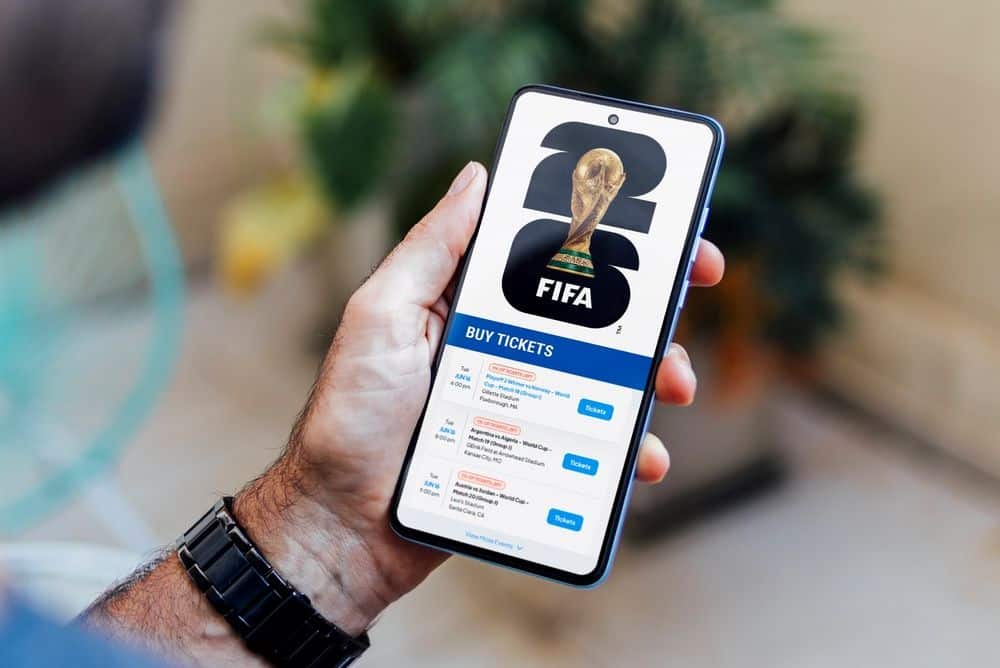
FIFA has canceled Copa tickets for Mundo 2026 that were issued free of charge to buyers. The cancellation occurred after confirmation of a technical failure on the official operations website. Cerca of 60 fans managed to complete the purchase of tickets with zero value. The organization sent an electronic statement last week to apologize and inform users about the block.
The error in the processing system was registered on May 21st. Football’s highest governing body recognized the operational failure immediately. Seats selected by this group remain locked and reserved in the internal database. Buyers need to pay the full amount to guarantee their presence in the stadiums during the competition.
Prazo established to regularize acquired entries
Fans were given a strict limit to resolve the financial issue. FIFA has determined a period of seven days for the correct payment to be completed on the official platform. Aqueles that do not comply with the determination within the restriction will lose the right to places. The measure aims to correct the mistake before opening sales to the general public.
The incident mainly affected specific matches in the initial phase of the tournament. Jogos decisive or the grand final had no impact. The organization centralized marketing, completely restricting the flow of external transactions. In the current model, the participation of local organizing committees in sales management is ruled out.
- Tickets issued free of charge corresponded to group stage matches.
- The majority of canceled tickets involved departures in the cities of Toronto and Filadélfia.
- The processing error only occurred during the final checkout stage.
- The official platform sent an electronic message with correction instructions.
- Users have a grace period of seven days to pay the original amount.
The decision to manage tickets directly represents a significant change in the management of major events. FIFA emphasizes that the exclusion of intermediaries optimizes revenue. Este format also aims to combat the action of scalpers. The revenue raised will provide capital for development projects among the 211 member associations.
Investigações about parallel market and resale rates
The cancellation of free tickets came while intense monitoring of currency exchange is underway. Agências Governments closely monitor the business models applied to the tournament. The attorneys general of Nova York and Nova Jersey have initiated investigations into the commercialization programs. The main objective is to identify possible violations of consumer protection laws.
The scope of the investigation includes the transparency of the fees charged and the clarity of the information passed on to buyers. FIFA has introduced its own official resale platform to control the secondary market. Neste system, a 15% fee is collected from both the seller and the buyer. Double charging raises questions among consumer rights experts.
Esta return policy draws criticism from Estados Unidos authorities. Pelas current rules, independent cancellation of tickets by fans is prohibited in most cases. The rigor of the purchase contract contrasts with the failure of the system that allowed free entries. The event with 60 zero-cost tickets added a new element to the ongoing investigations.
Dynamic pricing Estratégia sparks debate among fans
The edition hosted by Estados Unidos, Canadá and México will have the most expensive tickets in the history of the competition. Pricing reflects the high demand and purchasing power in the North American market. The entity’s Executivos stated in February that all 104 matches were sold out. However, the statement diverges from the reality observed on the official platform.
Para some clashes with lower demand, official sales remain active. The organization adopted a dynamic pricing model for specific stadium sectors. The system automatically adjusts values based on real-time demand fluctuations. Esta trading strategy caused discontent among fans who expected fixed prices.
The secondary market reflects the complexity of ticket distribution. Plataformas independents like SeatGeek showed empty seats for dozens of departures. Offerings outside official channels indicate that many buyers purchased tickets only to resell at a profit. The situation raises doubts about the official narrative of managing distribution rigorously.
Desafios logisticians at the biggest tournament in football history
The tournament that starts on June 11th at Cidade of México launches an unprecedented format. Copa of Mundo 2026 will be the biggest sporting event since its inception. The number of participating teams jumped from 32 to 48 teams. Esta expansion requires a robust logistics infrastructure to support an unprecedented volume of transactions.
The matches will take place in 11 Estados Unidos cities, in addition to México and Canadá headquarters. Travel logistics for delegations and fans make planning even more complex. FIFA promised to make hundreds of thousands of tickets affordable after controversies in 2018. The promise now comes up against the pricing practices adopted.
The error at the box office exposes the vulnerability of the digital platform in the face of increased access. Football’s highest authority is racing to correct flaws in the security code. The technology team monitors data traffic to prevent malicious users from exploiting the breach. The financial success of the event directly depends on the reliability of the sales system.
Impacto financial and global resource centralization
Ticket sales are one of the main sources of revenue in the organization’s financial cycle. Bilhões of dollars collected at the turnstiles form the basis for global redistribution. The entity uses its organizational power to justify aggressive pricing policies. Estes funds provide capital from stadium construction to grassroots football.
By managing sales centrally, the headquarters at Zurique ensures that the majority of profits are retained. Excluding local organizing committees from revenue sharing maximizes the financial return of the operation. On the other hand, this model places all responsibility on the entity in case of system failures. The error that briefly benefited 60 fans highlights the risk of this centralization.
Platform administrators race against time to ensure the integrity of the database. Auditorias internals investigate millions of transactions to confirm that there are no other unpaid tickets. Rapid incident resolution seeks to demonstrate control over technology infrastructure. In the final stage of preparation for this massive sporting event, consumer trust remains the most valuable asset.
