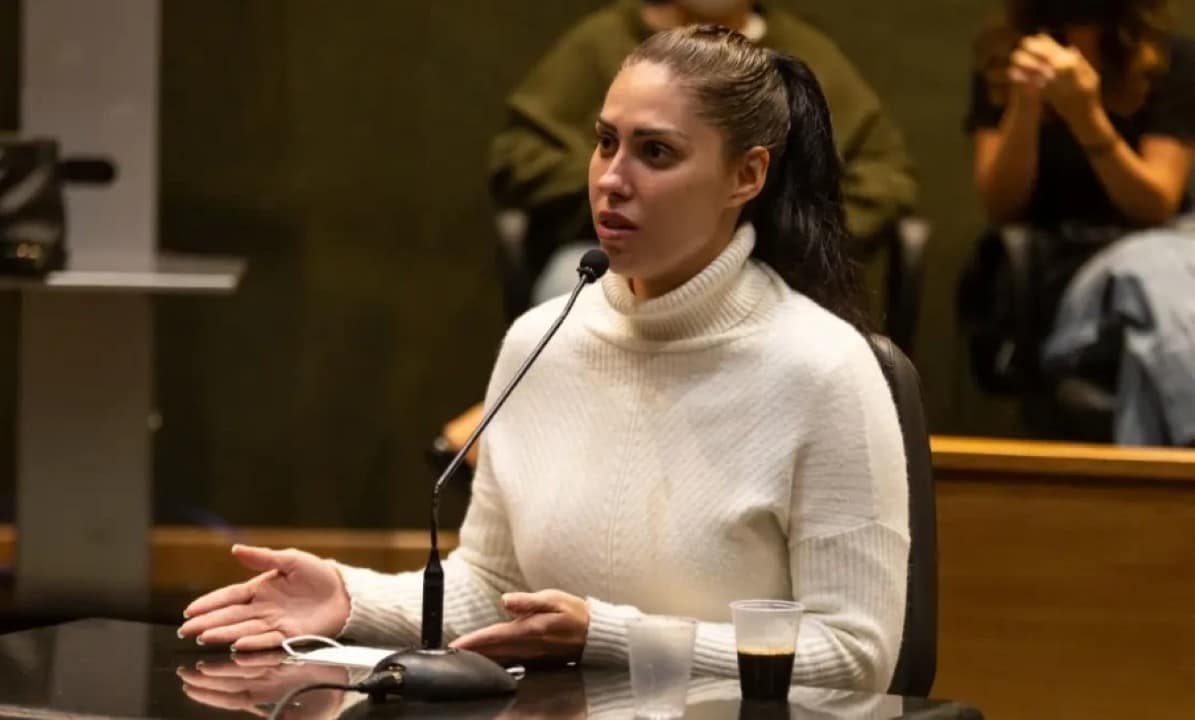
Ministério Público of Rio of Janeiro appealed the decision that granted judicial pardon to Monique Medeiros. The measure occurred after the trial in the 2nd Tribunal of Júri that dealt with the death of Henry Borel, in 2021. Judge Elizabeth Louro applied the benefit after the jurors disqualified the crime.
Monique Medeiros left prison on the afternoon of June 4th. Ela was in the women’s prison Talavera Bruce, in Complexo of Gericinó. The release permit was issued shortly after the sentence was read, in the early hours of the same day.
What is judicial pardon
Judicial pardon is an institute of Código Penal. Ele allows the judge to stop imposing punishment even after recognizing the commission of the crime and authorship. The application occurs in specific situations, mainly in culpable homicide.
The central criterion is to assess whether the consequences of the act have already affected the convict so seriously that additional punishment becomes unnecessary. The judge cited Monique Medeiros’s personal suffering throughout the almost five years of pre-trial detention. Ela also mentioned the intense public exposure of the case.
The decision also considered the profile of the primary defendant and other elements presented during the jury. The penalty imposed for failure to provide assistance or torture was one year and four months. Como the time spent in prison exceeded that period, the judge considered the punishment served.
Irregularidade appointed by the MP in the jury
Prosecutor Fábio Vieira, who worked on the case, filed an appeal to Tribunal from Justiça. Ele alleges irregularity in the reformulation of one of the questions submitted to the jurors. The change would have influenced the result of the vote that downgraded intentional homicide to culpable homicide.
- Inicialmente, the jurors would have recognized responsibility for intentional homicide in the first question.
- The defense questioned the wording and led to a new vote.
- The second round resulted in disqualification for guilty.
- The MP maintains that this changed the verdict and asks for the trial to be null and void.
- Caso accepted, there may be a new jury for Monique Medeiros.
The appeal does not directly challenge the judicial pardon itself, but focuses on the procedure of the questions. The prosecution seeks to reinstate the original charge.
Repercussão from case Henry Borel
Henry Borel died in March 2021, aged four. The stepfather, Jairo Souza Santos Júnior, known as Dr. Jairinho, was sentenced to more than 43 years in prison in the same trial. The sentence against him was upheld.
The case gained great national visibility. Ele even motivated the approval of Lei Henry Borel, which strengthens the protection of children against domestic violence. The boy’s death occurred under circumstances involving previous assaults.
Monique Medeiros has always denied direct involvement in the death. The initial accusation pointed to an omission in light of the injuries suffered by the son. The jurors opted for disqualification after analyzing the elements presented in plenary.
Detalhes of the sentence and next steps
Judge Elizabeth Louro read the sentence in the early hours of June 4th. Ela highlighted aspects of Monique Medeiros’s life as a mother. The decision extinguished the punishment for manslaughter.
The MP appeal is now being processed in Tribunal of Justiça of Rio of Janeiro. Não there is a defined deadline for judging the appeal. Enquanto that, Monique Medeiros remains free.
- The process involves dozens of witnesses heard over the years.
- Perícias techniques and medical reports were central to the debate.
- Monique Medeiros’s defense argued throughout the entire process for the absence of intent.
- The MP maintains the position that the sentence should have been more serious.
- Familiares and Henry Borel follow the development of the case.
Contexto from the Ten Day Trial
The jury lasted about ten days. Foram presented accusation and defense theses focusing on reports, testimonies and reconstruction of facts. The declassification of the crime was the most debated point in the questions phase.
The judicial pardon applied by the judge generated public debate about the limits of the institute. Especialistas disagree on the suitability for the specific case, but the legal discussion continues in the higher courts.
