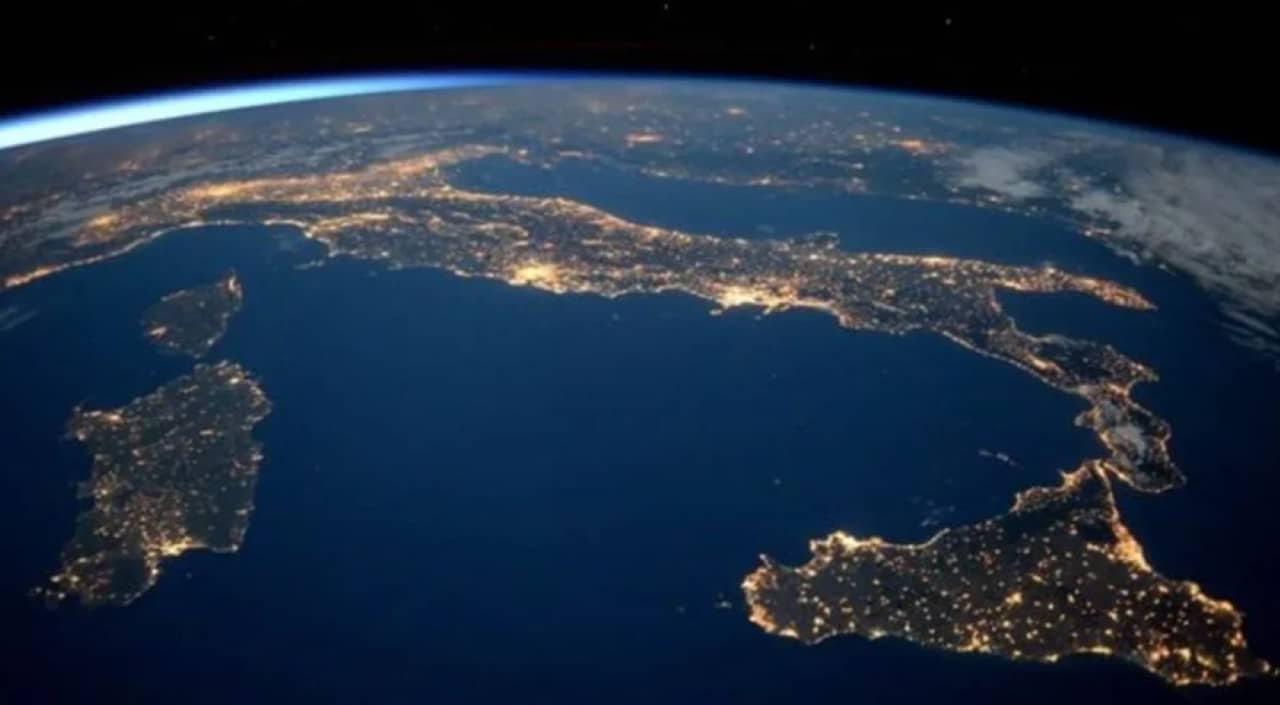
The total volume of water stored in Terra’s atmosphere represents a tiny fraction of the global hydrological cycle. If all the moisture, clouds and water vapor present in the air were to simultaneously precipitate onto the planet’s surface, the result would be a uniform layer just 2.5 centimeters thick. Esse amount is equivalent to approximately 12,900 cubic kilometers of water. The number contrasts with the vastness of the oceans and polar ice caps. The dynamics of this suspended reservoir, however, operate at an accelerated pace.
The renewal of this stock occurs continuously and quickly. Moléculas of water remains suspended in the air for an average period that varies between nine and ten days before returning to the ground in the form of rain, hail or snow. The hydrological cycle moves more than 500 thousand cubic kilometers of water every year through the processes of evaporation and precipitation. Essa intense circulation causes atmospheric content to be recycled almost 40 times each annual cycle. Strong Ventos transport moisture generated over the oceans directly to the continents.
Dinâmica thermal and global climate regulation
The water present in the atmosphere acts as the main driver of the planet’s climate circulation. The evaporation process absorbs latent heat from the Earth’s surface and oceans. The stored energy is later released during condensation, when the vapor turns into clouds and precipitation. Essa thermal transfer directly influences the formation of storm systems. The mechanism also transports heat from tropical regions, where insolation is more intense, to higher, colder latitudes.
Sem this energy distribution dynamics, the temperature differences between the Equador line and the poles would be considerably more extreme. Atmospheric water content is almost entirely concentrated in the troposphere, the lowest layer of the Earth’s atmosphere. The air’s ability to retain water vapor strictly depends on the local temperature. Equatorial and tropical Regiões harbor the highest concentrations of moisture. Áreas desert and polar regions record the lowest levels of this element in the air.
Variability in the distribution of water vapor defines the climate patterns observed in different parts of the globe. Modelos meteorologists track the movement of these wet masses to predict droughts or extreme volumes of rain. The interaction between ocean surface temperature and the atmosphere determines the intensity of daily evaporation. Esse continuous flow ensures the maintenance of perennial rivers and the recharge of underground aquifers in several river basins. The planet’s thermal balance depends on this natural mechanism.
Comparação of volume with other terrestrial reservoirs
The discrepancy between suspended water and water stored on the surface highlights the efficiency of the hydrological cycle. The oceans hold the overwhelming majority of the planet’s water resources. If the ocean volume were evenly distributed over a perfect sphere the size of Terra, it would form a layer about 2.8 kilometers deep. The atmosphere, on the other hand, houses only 0.001% of the total water on the globe. The mobility of this small percentage guarantees continuous distribution to continental areas.
The fresh water reserves on the surface also exceed the atmospheric volume by gigantic proportions. Geleiras, eternal snows, lakes, rivers and groundwater accumulate massive amounts of water resources. The dynamics of evaporation remove tiny portions of these large bodies of water to feed the air. Precipitation returns the resource to areas often far from the point of origin. The system works like an uninterrupted global transfer pump.
- The oceans contain approximately 97% of all water available on the planet.
- Freshwater reserves in glaciers and aquifers exceed atmospheric volume by thousands of times.
- The global average annual precipitation reaches the mark of 990 millimeters, with extreme variations between regions.
- The residence time of water in the atmosphere does not exceed the ten-day mark.
Quantitative data reinforces the importance of water recycling speed. A static reservoir with the dimensions of the atmospheric stock would be unable to sustain the biosphere. Constant renewal compensates for volume limitations. Global daily evaporation reaches significant levels, driven mainly by solar radiation over the vast oceanic expanses. Surface runoff directs precipitated water back to the seas, closing the circuit.
Impacto directly into ecosystems and human activities
The atmospheric circulation of moisture enables the existence of complex ecosystems far from the coasts. Florestas dense tropical and temperate zones depend entirely on this wind-borne water. Native vegetation also participates in the process through evapotranspiration, returning part of the moisture to the air. Esse mechanism creates local and regional microclimates essential for maintaining biodiversity. Rainfed agriculture, based exclusively on rainwater, bases its productivity on the regularity of this atmospheric transport.
Human supply in large urban centers depends on the predictability of the hydrological cycle. Reservatórios of hydroelectric plants and catchment systems operate based on historical precipitation patterns. The atmosphere annually processes volumes equivalent to multiple layers of rain over the continents. Essa operational efficiency allows modest amounts of steam to support increasing water demands. Alterações at global temperature has the potential to modify the air’s moisture retention capacity.
Warming of the troposphere alters the dynamics of evaporation and condensation. Warmer air can store greater amounts of water vapor before reaching the saturation point. Essa physical change results in more intense meteorological events concentrated in short periods. Drought Períodos may also linger in specific areas due to changes in the wind corridors that transport moisture. Water resources management requires a detailed understanding of these variables.
Monitoramento continuous and climate modeling
Satélites meteorologists monitor the concentration of water vapor in the atmosphere in real time. The instruments measure infrared radiation emitted by Terra to map the distribution of global humidity. The data feeds supercomputers that run weather forecast models and long-term climate projections. The accuracy of these tools depends on correctly reading the volume of suspended water. The crossing of information allows us to anticipate the formation of hurricanes, cold fronts and convergence zones.
The scientific community uses these measurements to understand the hydrological cycle’s responses to environmental changes. Atmospheric water, despite representing a tiny fraction of the global total, works as a thermometer of the planet’s climate health. Evaporation cools the surface efficiently, mitigating temperature spikes in equatorial regions. Condensation at high altitudes releases heat that eventually escapes into space. The energy balance of Terra directly depends on this constant thermal exchange.
The volume of water in the atmosphere illustrates the complexity and fragility of the Earth’s climate system. The suspended reservoir acts as the connecting link between the oceans and the emerging lands. The speed of renewal guarantees the balanced functioning of the global hydrological cycle, meeting the needs of all continents. Maintaining this dynamic ensures the continuity of biological and physical processes on the planet’s surface.
