Research reveals seven sensory strategies for eating healthier in everyday life

Researchers explore sensory mechanisms that shape eating decisions. The brain receives multiple signals before even tasting any food. Vision, hearing and touch create expectations that determine pleasure and quantity ingested. Small changes in the environment allow you to direct these influences towards more balanced options.
Studies indicate that humans rarely eat out of pure hunger. External stimuli often guide behavior unconsciously. Understanding these paths opens up practical possibilities for everyday life.
Packaging and colors dictate first purchase impressions
The visual design of packaging plays a central role in supermarket choices. Vivid, bright colors attract the eye and associate the product with immediate pleasure. Red, yellow or purple tones suggest indulgence while brown, green and white convey health.
Research showed that participants selected photos of healthy foods more often when the colors appeared reinforced. Salience bias directs attention to what stands out most visually.
Betina Piqueras-Fiszman from Wageningen University explains that the brain forms quick judgments about nutritional quality based on the appearance of the package. Storing cookies and sweets in opaque containers at home reduces the constant stimulation that leads to impulsive snacking.
This simple approach avoids direct confrontations with visual temptation.
Strategic location on the shelves favors or harms habits
Supermarkets position tempting items at eye level and close to cashiers. The principle of least effort leads consumers to opt for what is most accessible. Initiatives such as banning products rich in fat, salt and sugar near checkouts already exist in some countries.
Fruits and vegetables placed in this region increase healthy purchases naturally. Exploring lower or side shelves reveals more balanced options that go unnoticed in the normal flow.
Charles Spence from the University of Oxford highlights that these arrangements exploit mental shortcuts built throughout evolution.
- Transfer treats to neutral containers
- Observe less visible shelves in the market
- Use heavier dishes at meals
- Arrange dishes in a variety of colors
- Choose slow music during lunch
Weight and shape of dishes alter feelings of satiety
Heavier containers create expectations of greater fullness even before the first bite. Studies indicate that heavy cutlery also increases the perception of satisfaction with the meal. Round white plates make desserts appear sweeter than the same items on angular black plates.
Piqueras-Fiszman mentions that a single spoonful already activates this illusion of greater volume. The brain integrates tactile information with gustatory expectations.
This technique allows you to enjoy controlled portions with a greater feeling of comfort.
Visual presentation and sounds transform the table experience
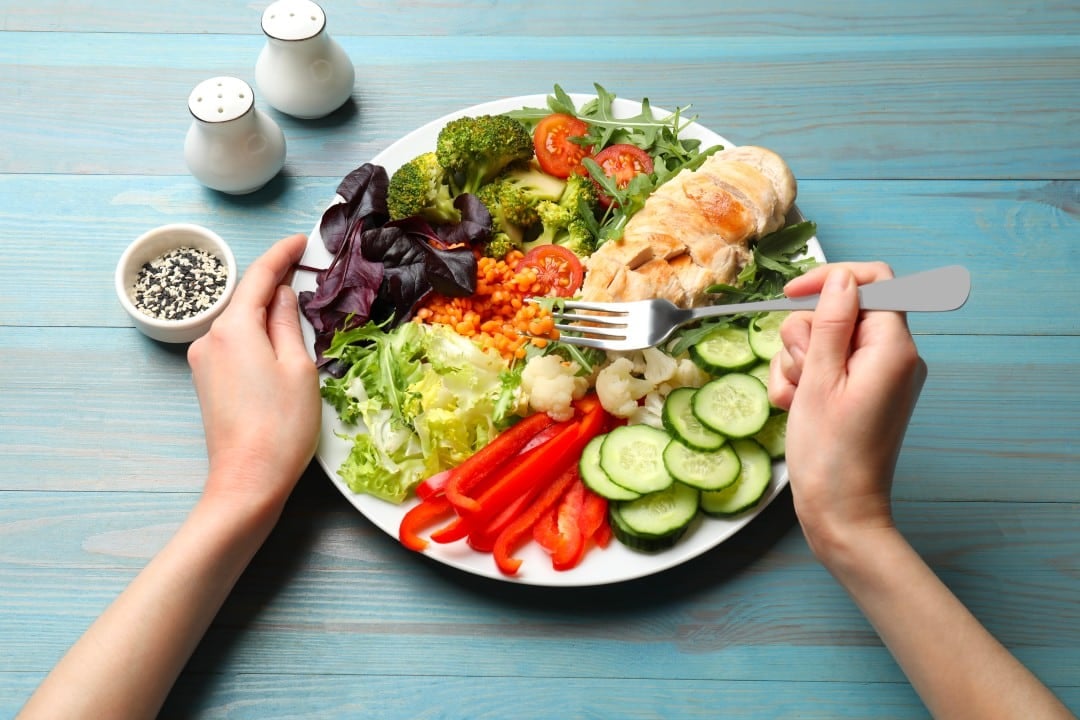
Creatively arranging salads like a work of art elevates notes of flavor and freshness. Adding colorful leaves and vegetables increases appeal and suggests higher quality. Spence recommends exploring contrasts to enhance light dishes.
Slow music reduces the speed of intake and consequently the total number of calories. High tones intensify sweetness while low tones highlight bitterness. Avoiding television and cell phones during meals contributes to greater awareness. Sounds of nature can also encourage sustainable choices.
Reducing caloric density while maintaining volume preserves satisfaction
Barbara Rolls of Pennsylvania State University demonstrated that adding pureed vegetables like spinach or cauliflower keeps the portion size the same. Participants consumed up to 25% fewer calories without noticing a difference and reported equivalent satiety.
The body regulates intake more by volume than by energy content. This feature allows you to adjust composition without sacrificing pleasure or fullness.
External stimuli often overcome internal hunger cues
The mere sight of dessert can awaken a desire even after a full meal. Spence explains that the brain integrates multiple senses to decide to continue eating. Understanding this effect helps to create environments that promote balance.
Consolidated research shows that sensory interventions produce consistent results with little change in routine.
Practical applications gain space in homes and establishments
Families that adopt opaque containers see a spontaneous reduction in sweets consumption. Restaurants and companies test ambient music and visual layout to encourage healthy choices.
BBC Future journalist Melissa Hogenboom has compiled recent evidence on the topic. Their work highlights the potential for lasting habits without radical restrictions.
These strategies complement traditional nutritional guidelines and offer an accessible path to gradual improvement.
