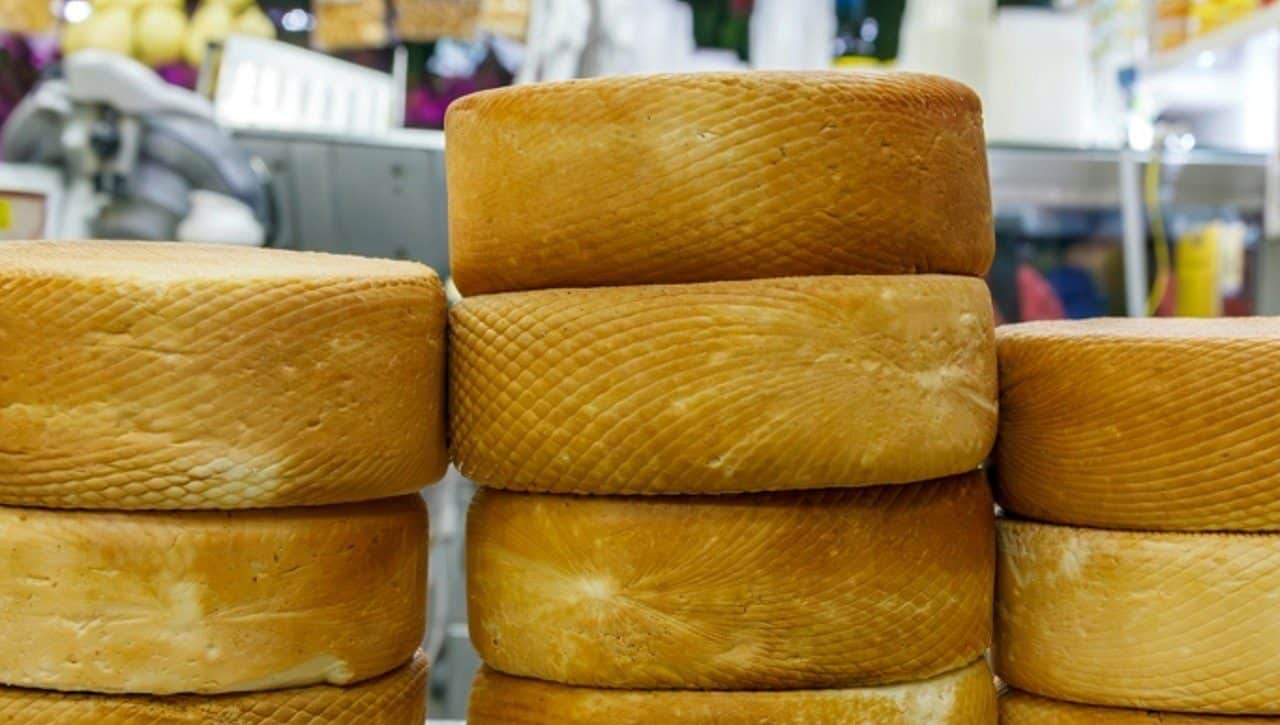
Scientists at Vayu Hill-Maini’s lab at Stanford University have developed a cheese-like product using food waste. The bioengineer leads experiments with fungal fermentation that convert leftovers into items with a flavor and texture close to Pecorino or Parmigiano. The initiative is part of larger efforts to reduce waste in the food chain.
The process uses microorganisms to transform substrates that would normally be discarded. Companies and researchers in different countries follow similar paths with the same reuse objective.
Cheese made from waste gains texture and salty flavor
The Stanford laboratory used a fungus from the genus Neurospora in one of the recent experiments. The result is a cheese that can be grated, has a salty flavor and a pleasant texture for use in pasta or gratin dishes. Hill-Maini highlighted fungi’s ability to break down cellulose, which humans don’t easily digest, and convert it into more accessible proteins.
Precision fermentation allows adjustments in aroma, digestibility and final appearance. The group maintains an innovation kitchen with a resident chef to test creations in real consumption conditions. Details about the specific residue used in Pecorino cheese have not yet been revealed, as they await scientific publication.
The work combines biotechnology with cooking. Hill-Maini, who has a background as a chef, seeks to inspire new ways of looking at waste. Around a third of the food produced globally is lost, according to common industry estimates.
Companies transform byproducts into valuable ingredients
In industry, companies are already advancing with commercial applications. UK-based Fermtech ferments discarded cocoa shells to create a cocoa powder substitute. The ingredient maintains an intense chocolate aroma and can reduce costs in brownies, cakes and chocolate recipes.
MOA Foodtech, in Spain, works with waste from pea protein production. The company uses artificial intelligence to identify ideal microorganisms that convert starch and fiber into protein-rich ingredients. The process accelerates the development of bioprocesses and reintegrates byproducts into human food.
- MOA trains AI to test hundreds of combinations per hour.
- Pea waste, once sold as cheap animal feed, has a new use.
- The focus is on proteins with good digestibility and functionality for processed products.
MicroHarvest and Mottainai explore fermentation in regional by-products
In Germany, MicroHarvest ferments molasses from the sugar industry to produce microbial protein for premium pet food. The process speeds up fermentation and transforms surplus food that would go to livestock into snacks with an umami flavor.
In Singapore, Mottainai Food Tech develops Jiro Meat from okara, the soybean pulp discarded after tofu production. The company tests microorganisms to improve flavor and minimize unwanted notes. The startup’s name refers to the Japanese concept of regretting waste.
These initiatives show how fermentation, an ancient technique, gains an industrial scale with modern tools.
Environmental and economic benefits of reuse
The use of byproducts reduces the need for disposal, burning or simple composting. Companies report resource savings, a lower carbon footprint and new revenue for the industry. Fermentation transforms materials rich in carbohydrates or fiber into bioavailable proteins and flavors.
Researchers highlight the potential to scale up substrates. Waste from pea production, cocoa shells, molasses and soy pulp are just examples. The approach could help tackle the global volume of food waste.
Advances in precision fermentation break new ground
In the Stanford laboratory, genetic engineering of fungi allows targeted production of specific compounds. The focus is on improving digestibility, aroma and nutritional value. Hill-Maini and her team publish studies and collaborate with chefs to translate science into appealing dishes.
The work inspires discussion about the future of food systems. Instead of discarding, the idea is to mine flavors and nutrients from underused materials.
