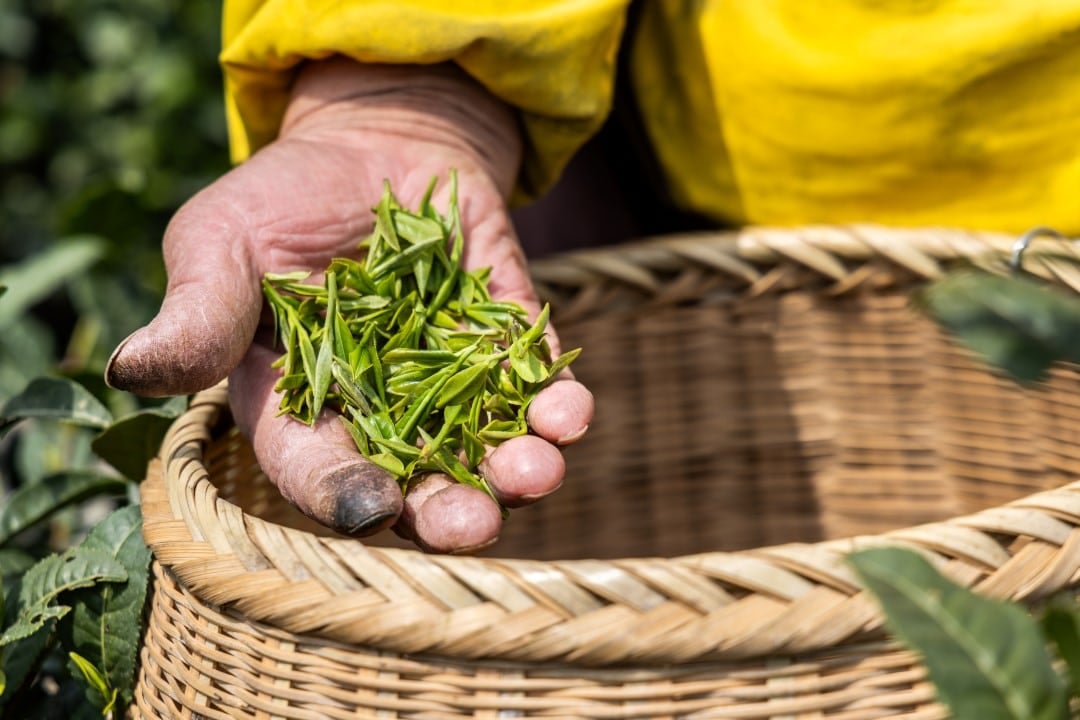
Longjing tea comes into its own during the harvest season on the verdant hillsides near Hangzhou. Farmers like Ge Xiaopeng spend days hand-selecting delicate sprouts. The mild aroma and subtle flavor win over connoisseurs looking for the genuine version.
Longjing’s fame dates back to the 18th century, when Emperor Qianlong granted imperial status to 18 shrubs in the region. Today, traditional production faces challenges with mechanization and the counterfeit market. Traveling to the villages offers the chance to follow the entire process from plant to cup.
Harvest prioritizes early shoots before Qingming
Ge Xiaopeng, a fourth-generation farmer, waits for the exact moment when the leaves reach about 2.5 centimeters. He highlights that timing defines quality. Mingqian lots, harvested before April 4th or 5th, are the most valued. A small package of 500 grams can cost more than 30 thousand yuan.
Climatic conditions directly influence the result. Light rains and gentle sunshine allow the shoots to grow slowly. This preserves the clean profile, without bitter or grassy notes. The mingqian harvest period lasts about two weeks and requires precision. Changes in climate complicate the annual forecast.
- Mingqian sprouts offer restrained chestnut aroma and delicate flavor
- Yuqian batches appear after April 19th or 20th with more pronounced notes
- Prices vary depending on the exact harvest time on the lunar calendar
- Demand exceeds limited supply of protected areas

Manual pan-firing defines tea’s identity
After harvesting, artisans roast in large woks heated to up to 200°C. Ge Zhenghua, Xiaopeng’s father, moves the leaves with precise movements and without gloves. The heat stops oxidation and shapes the leaves into the characteristic spear shape. He feels the temperature and humidity directly with his hands.
Zhenghua explains that thorough drying releases the aroma and allows for safe storage. Machines speed up the work, but he notices a difference in the body and final sweetness. Many young people have left the fields in the past. Now, some return, attracted by the market value and the preservation of the family business.
The artisanal process demands patience. An entire generation of knowledge could be lost without transmission. The scent of spring in the hills represents not just the tea, but the identity of the place for those who grew up there.
Experiences bring visitors closer to real production
The best time to visit Hangzhou is from mid-March to early April. Staying in the West Lake scenic area makes it easier to access the villages. Options include renting a car via the Didi app or participating in organized tours.
Places like the China National Tea Museum allow you to walk through plantations, watch demonstrations and taste different batches. The Suye Tea Institute offers roasting workshops and guided tastings. Traditional brands maintain shops and tea houses in the city.
In Longwu Tea Village, the Ge family runs the Yige Tea House. There, you can watch the roasting, participate in tastings and buy packages with an authenticity seal. The government restricted the area of authentic cultivation to 168 km² around West Lake. Stickers with QR codes help prove origin.
Tasting reveals subtleties that demand attention
Chen Yifang, an instructor at Suye Tea Institute, compares Longjing’s profile to the gentle aroma of pea flowers or broad beans. Light floral notes, a touch of nuts and a slight sweetness emerge calmly. More intense drinks like black tea or coffee deliver immediate flavor. Longjing asks for time to reveal himself.
Demand grew with the guochao movement, which values traditional Chinese goods. Regular visitors return to the farms to see the process for themselves. This proximity guarantees authenticity in a market full of imitations.
Renewed interest attracts new generation to the fields
Children of producers observe the economic potential of the activity. The craft offers sustainability where it previously seemed unfeasible. Zhenghua notes that the smell of the spring harvest carries memories of home.
The experience in the hills combines landscape, tradition and ephemeral flavor. The alignment of timing and terroir creates a short window that attracts those who value the genuine.
