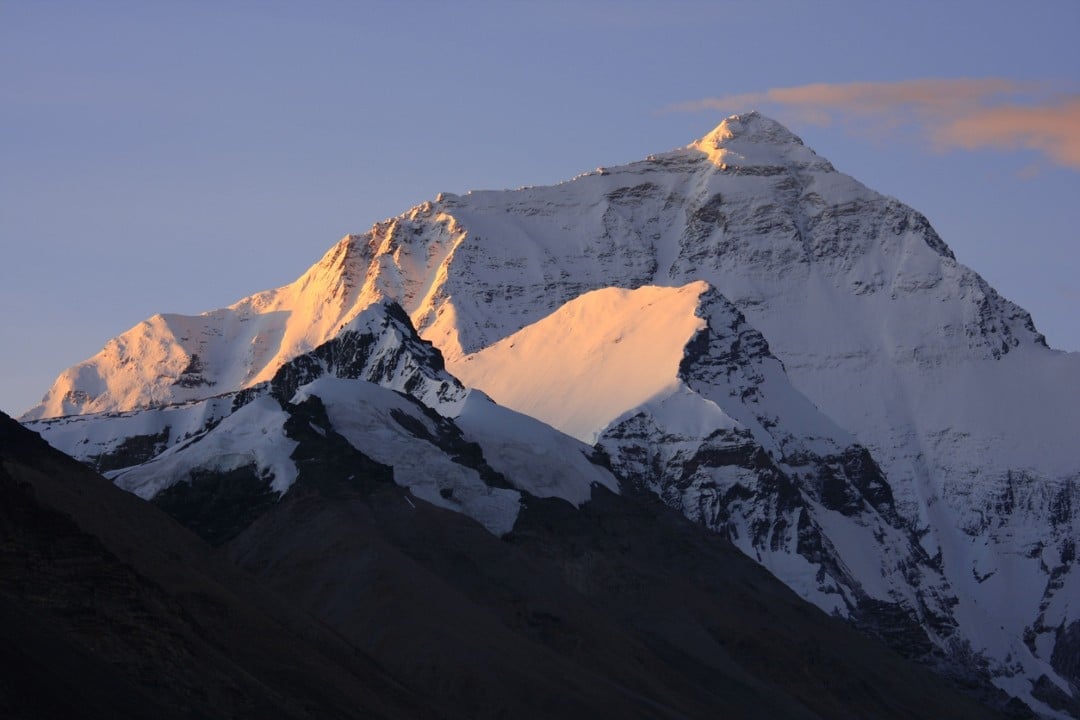
A Nepali mountain guide has reappeared alive at Mount Everest base camp. Hillary Dawa Sherpa, 52, spent almost a week isolated in extreme conditions on the world’s highest mountain. He was found by a cleanup team in the Khumbu Icefall. The Sherpa received immediate medical attention and was transferred by plane to Kathmandu.
The discovery occurred on June 4th. Family members and colleagues had already started funeral rites after losing contact with him since May 29. Dawa Sherpa was incommunicado by radio and had no sign of his location. He became separated from the group of clients and the team during the descent, one of the last of the climbing season.
Sherpa was last seen above Camp 3
Hillary Dawa Sherpa worked as a guide for a Nepalese expedition company. He was accompanying a Polish client who gave up on the summit. The Sherpa was resting on a rock above Camp 3, at an altitude of about 7,060 meters, when the group continued on. The fixed ladders in the most dangerous section had already been removed.
He did not carry extra food supplies or bottled oxygen. The radio went silent. The prolonged absence sparked immediate concern in the mountaineering community. Teams at base camp organized limited searches, but conditions on the mountain prevented extensive operations.
- The Sherpa separated from the main team in the final descent of the season
- Clients and other guides got off before him
- Radio contact was lost shortly after May 29
- Family members began funeral preparations after the sixth day
Cleanup Team Spots Sherpa Crawling in Khumbu Icefall
A southern route cleanup team found Hillary Dawa Sherpa crawling through the Khumbu Icefall. The Sherpa was exhausted, showing signs of freezing, but conscious. He received water, food and initial support on site. He was then transported by helicopter to a hospital in Kathmandu.
Doctors treated second-degree frostbite on her little fingers and first-degree frostbite on other fingers. He also suffered a fractured femur. The general condition progressed well after hydration and care. Dawa Sherpa was still wearing his mountaineering jacket when he arrived at the hospital.
Videos were circulating on social media. In one of them, another climber carried the Sherpa up a rocky section. Another recording showed the stretcher on the Kathmandu helipad. The community celebrated the return as a rare case of human resilience at extreme altitude.
Surviving six days without supplies sparks debate over safety
The Sherpa reported falling into a crevasse and spending two days trapped before freeing himself. He chewed ice to hydrate and found chocolates in his pocket. The solitary descent covered thousands of vertical meters across hostile terrain. Mountaineering experts highlighted the improbability of the feat.
The 2026 season on Everest recorded records. More than 1,000 climbers reached the summit via the southern route. A single day, May 20, saw 274 summit finishes. Images of queues in the “death zone” have reignited discussions about congestion and risks on the mountain.
Nepalese authorities have opened an investigation into the circumstances that led to the guide’s abandonment. The contracting company faced questions about security protocols. Family members of Dawa Sherpa demanded compensation and greater responsibility from the operators.
Rescue marks end of busiest season in Everest history
The incident occurred at the close of the climbing window. Crews removed equipment and performed final cleaning. The Sherpa was one of the last professionals still on the mountain. Their survival brought relief but also criticism about large group guiding practices.
Dawa Sherpa was recovering at HAMS hospital in Kathmandu. He spoke to the press and reported details of the ordeal. The case gained international attention for demonstrating the limits of human resistance. Experienced mountaineers compared the episode to classic Himalayan survival stories.
Mount Everest continues to attract thousands of aspirants each year. Success depends on preparation, weather conditions and logistical support. Cases like Hillary Dawa Sherpa reinforce the need for more rigorous protocols for professionals and clients.
