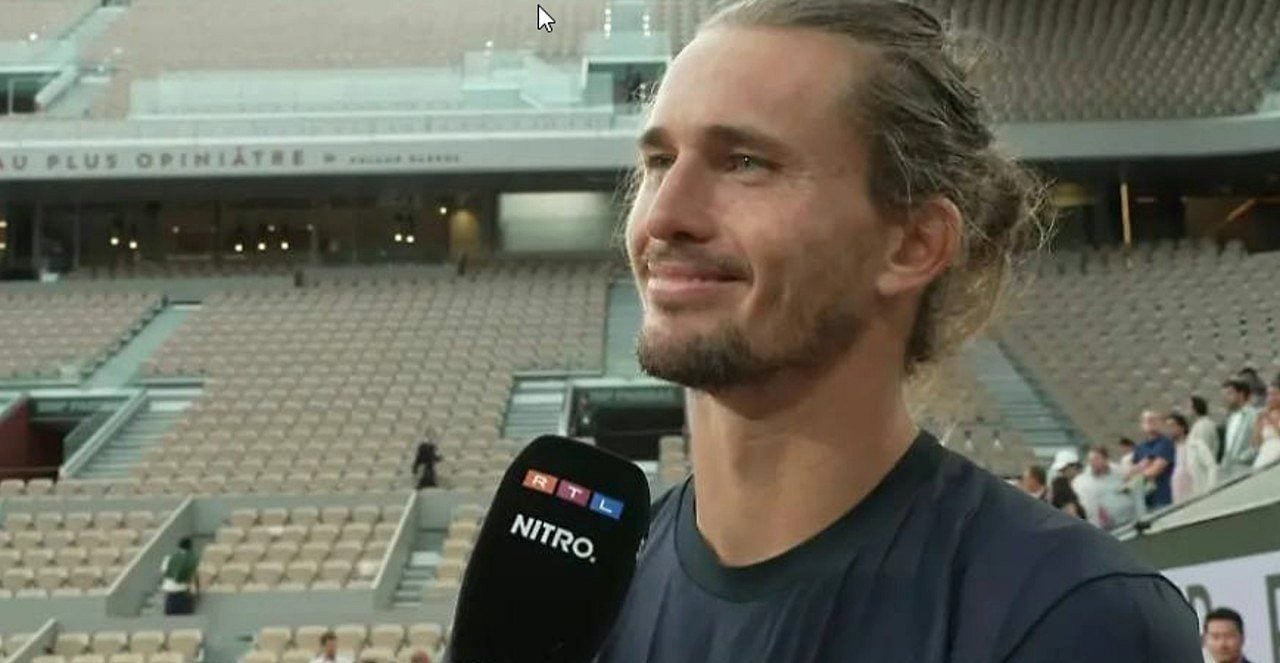
Tennis player Alexander Zverev, recent French Open champion, abruptly ended an interview with the French newspaper “L’Equipe” after being questioned about allegations of domestic violence. The interruption occurred at a time of celebration for the athlete, who had just won his first Grand Slam title. The publication’s questioning focused on how the player deals with concerns raised by previous accusations.
The conversation, initially described as “relaxed and even cordial” by “L’Equipe”, took place during a car journey. Zverev had covered topics such as his long journey to the title, the most important people in his life and his diabetes condition. However, the dynamics of the interview changed radically with the question about his personal history, leading the athlete to unexpectedly interrupt the dialogue.
Question from L’Equipe Causes Interruption
The pivot to the end of the interview was a direct question from “L’Equipe” about how Alexander Zverev positions himself in the face of those who still express concerns regarding the old accusations of domestic violence against his ex-partners. The German tennis player reacted indignantly to the questioning, claiming that the accusations had already been proven false. Immediately following his response, Zverev declared that it would be “better to stop” the interview, ending the session.
The player’s attitude and the repercussion of the interview were the subject of debate within the newspaper itself. “L’Equipe” even questioned in its pages whether the German champion should have been treated like any other Grand Slam winner, with the “shadows” of the accusations discreetly ignored. The publication’s internal reflection highlighted the sensitivity of the topic and the journalistic responsibility in addressing non-sporting aspects of the lives of public figures.
Context of the Interview and Zverev’s Reaction
The interview took place during a period of great euphoria for Alexander Zverev, who described winning the French Open as the “greatest moment of his life”. The expectation was for a full celebration of his triumph and his career in tennis. However, the history of allegations followed him even at this height of his sporting career.
Zverev’s stance in interrupting the interview highlights the sensitivity of the topic for the athlete. He emphasized that previous accusations “have been shown to be false”, expressing his displeasure with the newspaper’s approach. The incident highlights the constant tension between the right to privacy of public figures and journalistic interest in controversial aspects of their lives, even in moments of great visibility and professional success.
Previous Judicial Process and Its Developments
In June 2024, shortly before Zverev lost the French Open final to Carlos Alcaraz, a case against the tennis player in Berlin’s Tiergarten District Court for alleged assault was closed without a verdict. The end of the process was conditional on the payment of a fine of 200,000 euros. It is important to highlight that the agreement to pay the amount did not constitute a formal conviction, nor did it imply a confession of guilt on the part of Zverev, who continues to be considered innocent in the legal context.
- The details of the judicial outcome are crucial to understanding the athlete’s reaction and the public debate.
- The case was closed without a final verdict.
- A fine of 200,000 euros was imposed.
- Payment of the fine did not amount to an admission of guilt.
- Zverev is legally considered innocent of the charges.
This legal history serves as a basis for the player’s defense and for his stance in the face of public questions on the matter. The lack of a formal conviction is a point he often uses to dispute the relevance of further discussions on the allegations.
L’Equipe Editorial Decision After Victory
The controversy surrounding Alexander Zverev’s interview was also reflected in the editorial decisions of “L’Equipe”. The newspaper chose not to place the tennis player at the center of its printed cover on the Monday following his victory at the French Open. In recent decades, the publication’s tradition was to always highlight the triumphant champion in large format on the cover.
This time, Zverev appeared in miniature in the top left corner of the cover, while the central space was dedicated to the Metz handball players, who had won the Champions League. This editorial choice demonstrates the vehicle’s consideration of how to approach the tennis player’s victory amid discussions about his personal history, opting for a more discreet representation of the champion and prioritizing other sporting achievements.
